A Brief History of Mardi Gras

The celebration of “Mardi Gras” or “Fat Tuesday,” in the United States originates in New Orleans (NOLA). In Europe, Mardi Gras is known as “Carnevale” in Italy and “Fasching,” in Austria and Germany. In Brazil, the celebration is central to Rio de Janeiro. Across the globe, this extremely festive and costumed celebration is part of preparing for Lent season, which is intended to be a season of little indulgence until Easter. The celebration of Mardi Gras in the United States, in particular, is an emblem of rich community togetherness (I find the subculture of “Krewes” fascinating and how people find yearlong community through that) and a notoriety for endless partying. The Golden Globe winning actress, Patricia Clarkson, is a New Orleans native and has been known to attend the Krewe of Muses in celebration of Mardi Gras.

Aside from celebrity sightings in New Orleans, Mardi Gras there is illustrated by King Cake (a brioche dough cake filled with cinnamon and a lucky baby piece symbolizing baby Jesus – Joe Gambino’s Bakery has been making King Cakes since the 1920s. In Europe, the complimentary concept of King Cake is “Krapfen,” a refined version of the American doughnut), bead catching in the parade, and jazz music. The bead colors are purple, green, and gold, representing justice, faith, and power. The beads can be all colors for decorations, but in New Orleans, the color scheme is primarily purple, green, and gold. Jazz music, according to NPR, the music of “the Crescent City [New Orleans] has provided the thread that ties all these traditions together.” Jazz historian, Michael White, is a New Orleans native and clarinetist who has been playing in a brass band since 1979 and has been continuing a tradition of jazz there for many years. Mardi Gras in New Orleans undoubtedly brings the best to bear of a city rich in history.

The origins of the tradition trace back to Medieval Europe – to Rome and Venice, Italy, and the French House of Bourbons (the city of New Orleans having a deep French history). In New Orleans, “On March 2, 1699, French-Canadian explorer Jean Baptiste Le Moyne Sieur de Bienville arrived at a plot of ground 60 miles directly south of New Orleans, and named itΒ “Pointe du Mardi Gras”Β when his men realized it was the eve of the festive holiday. Bienville also established “Fort Louis de la Louisiane” (which is now Mobile) in 1702. In 1703, the tiny settlement of Fort Louis de la Mobile celebrated America’s very first Mardi Gras.” Source Mardi Gras New Orleans. The famous French Quarter of New Orleans on Bourbon Street is where most people know the images of Mardi Gras, with the beautiful iron wrought gates. The Royal Sonesta Hotel of New Orleans is a great option for a French Quarter experience if you visit NOLA.

Perhaps most iconic, wherever you may be when celebrating, is to have a mask. I am a huge fan of Venetian masks and my family and I have always collected them. Find yourself a mask and put one on this Tuesday. As Irish poet Oscar Wilde famous said, “Man is least himself when he talks in his own person. Give a man a mask and he will tell you the truth.” That, in a quote, sums up the festivities of Mardi Gras.

Bourbon Street in New Orleans

King Cake

Solfeggio Frequencies & Sound Healing

I recently came across the phrase “sound healing.” I had never heard of it before and I am not interested in the world of pseudoscience as I do believe that it is misguiding. However, I did learn that there are scientific studies around sound healing that are quite intriguing in terms of how the brain processes sounds. Ultimately, this can impact our overall health. During the pandemic, I started to meditate more frequently. I focused on how to learn meditation in a way that works for me and I also focused on not “ignoring” the inner voice that comes up while meditating. It’s a common misconception that you completely quiet your mind during meditation. That is definitely far from the truth. Meditation, with practice, enables you to focus and “go within” yourself so that you are able to better focus on what matters most in this life. For me, that has been focusing on honoring my prana (Sanskrit for life energy) and honoring the gift of our life force. Because we are blessed to be alive, I have found meditation to be a tool to improve and clarify the foci of what my I want in my best life.
I am also aware that mindfulness enables us to recognize that we are interconnected in a greater schematic – we are not alone in this universe, everything is interconnected. I do believe that meditation is a highly powerful tool that enables us to manifest the best in our lives, honoring ourselves and others because of it! In the same vein, what we listen to while we meditate impacts us. For me, I have found “Meditative Mind,” to be a highly valuable tool. The website, app, and YouTube channel all offer different sound frequencies to meditate to. I have listened to many of the difference sound frequencies and have found that listening to 417 – 432 Hz is best for me.

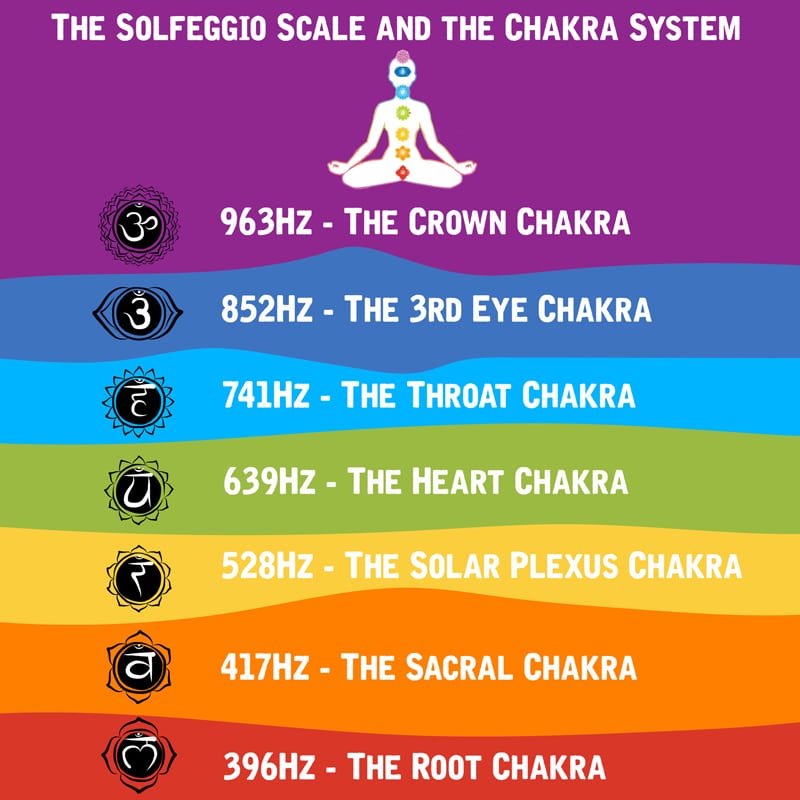
I notice myself feeling a deep sense of calm when listening to sounds in the frequency range of 417 – 432 Hz. Everyone is different and Solfeggio frequencies have a range. Listen to your inner voice. Solfeggio Frequencies are powerful. According to Better Sleep, “Solfeggio frequencies relate to specific sounds that promote mind and body health. These frequencies incorporate tones that date back centuries and include sacred music and chants. They were rediscovered in the 1970s by Dr. Joseph Puleo, a physician, and researcher. During his research, he discovered six measurable tones using mathematical numeral reduction. These tones were found to aid healing and balance out the body. Thanks to Puleo’s work bringing the solfeggio frequencies back into public awareness, many scientists after him have discovered more evidence about the positive effects these frequencies can have.” The best frequency to use for sleeping, if you need sound as a sleep aid, is the 417 frequency (below). Explore the range of frequencies and find what sounds best to you (Hz refers to Hertz, which is the unit of measurement named after German physicist Heinrich Rudolf Hertz). Sound healing has become an essential part of my meditative practice and I encourage you to explore what frequency of sound speaks most to you!

Yoga Nidra & Your Dinacharya

“We first make our habits, and then our habits make us.” -John Dryden

In Ayurveda, your most key tool to establishing balance in mind, body, and spirit is through your Daily Routine, or Dinacharya, in Sanskirt. The Dinacharya is a process which is tailored to you and for you, and should be one that you look forward to and ensures that you are adhering to practices that are going to revitalize, energize and balance your being. For me, in establishing this routine, I came across books by Dr. Marc Halpern, who is the Founder of the California College of Ayurveda. This was the first time I stumbled across the term “Yoga Nidra” and I was intrigued thinking it was a physical exercise, but learned it is a meditation. Yoga Nidra has become popular again, but renamed as “NSDR” or “Non-Sleep Deep Rest.” The practice of Yoga Nidra is incredible. It is a meditation that resets your entire nervous system. If you are having insomnia or sleep issues, this practice can enable you to rest and achieve sleep. Yoga Nidra is a holistic practice which can be done in tandem with your healthcare.

“This is self directing a state of calm through respiration and vision.” -Dr. Andrew Huberman

I have learned that Yoga Nidra brings me a deeper sense of calm than I usually achieve through my usual guided meditations (I often like to meditate listening to Boho Beautiful Meditations or Deepak Chopra), but something I have learned while practicing Yoga Nidra in Savasana pose is that my body really quiets down and resets its energy level. Therefore, in my Dinacharya, I usually integrate it as 10 minutes in the early afternoon before I have a coffee etc. It’s a practice that you can integrate into any time of the day, but the idea is that you are focusing on resetting your nervous system and calming down your nervous system, so it’s important to recognize when your are moving too fast throughout your day etc., and when it’s time for a break, even if it’s just 10 minutes.

Dr. Andrew Huberman recommends this practice ideally to be between 20-30 minutes and does not need to be daily. It is most realistic to not engage in this practice daily, but if you are working towards learning more about it and integrating into your Dinacharya, I would say 10 minutes in the early afternoon or later in the day is ideal. A basic overview of my Ayurvedic Dinacharya is the following:

  • Wakeup around 6am (the ideal is when the sun rises)
  • Engage in positive visualization when I wake up (positive visualization is anything that gives you joy – focus on whatever gives you joy as a visual cue)
  • Read a positive affirmation to myself from Miranda Kerr’s Treasure Yourself book
  • 20 minutes of light exercise (I actually love Denise Austin’s AARP workouts – they are really for all ages!) or a few sun salutations (Surya Namaskar) recommended in an Ayurvedic lifestyle by Deepak Chopra
  • 10-15 minutes of meditation
  • Shower / Get Ready
  • Early afternoon – 10 minutes of Yoga Nidra
  • Go to bed around 10pm or earlier

This Dinacharya has been most sustainable for me as I have busy work days and do not find grounding my Dinacharya later in the day as ideal. When adhering to an Ayurvedic lifestyle, it’s especially important to be mindful of the time of day and how your body naturally reacts because of the time of day it is. For example, going on more vigorous walks by noon time is great. The idea is that you are centering your health in the most holistic way possible. Health becomes a priority in a mind, body, spirit sort of way. While studying Ayurveda, I have learned that the topics are so vast, it makes sense to find yourself gravitating to a few topics in particular. For me, that has been studying meditation and Yoga Nidra. In my next blog post, I’ll be writing about the impacts that Solfeggio Frequencies have on the body whilst meditating.

Yoga Nidra, by definition, is “a state of consciousness between waking and sleeping, typically induced by guided meditation.” (Wikipedia). Its origin story includes a Goddess named Yoganidra, and she would appear in the Hindu text “Devi Mahatmaya.” In the modern age, neuroscientist, Dr. Andrew Huberman, of the Huberman Lab at Stanford University has been promoting the benefits of this practice on podcasts, which I think is a fantastic way to revitalize an ancient practice. Scientifically, Dr. Huberman states that a regular practice of this meditation increases brain plasticity (neuroplasticity) by 50%, which means you can learn and learn a lot much faster. You are rewiring circuitry in states of deep rest. Ultimately, you’re only benefitting your health in every way possible with this practice! Dr. Andrew Huberman’s lab website is a great tool for learning more about the scientific benefits of this practice. It is common to rest at the end of a Vinyasa yoga routine in Savasana pose. Recognizing the power of this pose in how it enables you to calm your entire nervous system gives you a stronger sense of autonomy over your rest and relaxation.

Aesthetics Trends + Style Going Into 2023

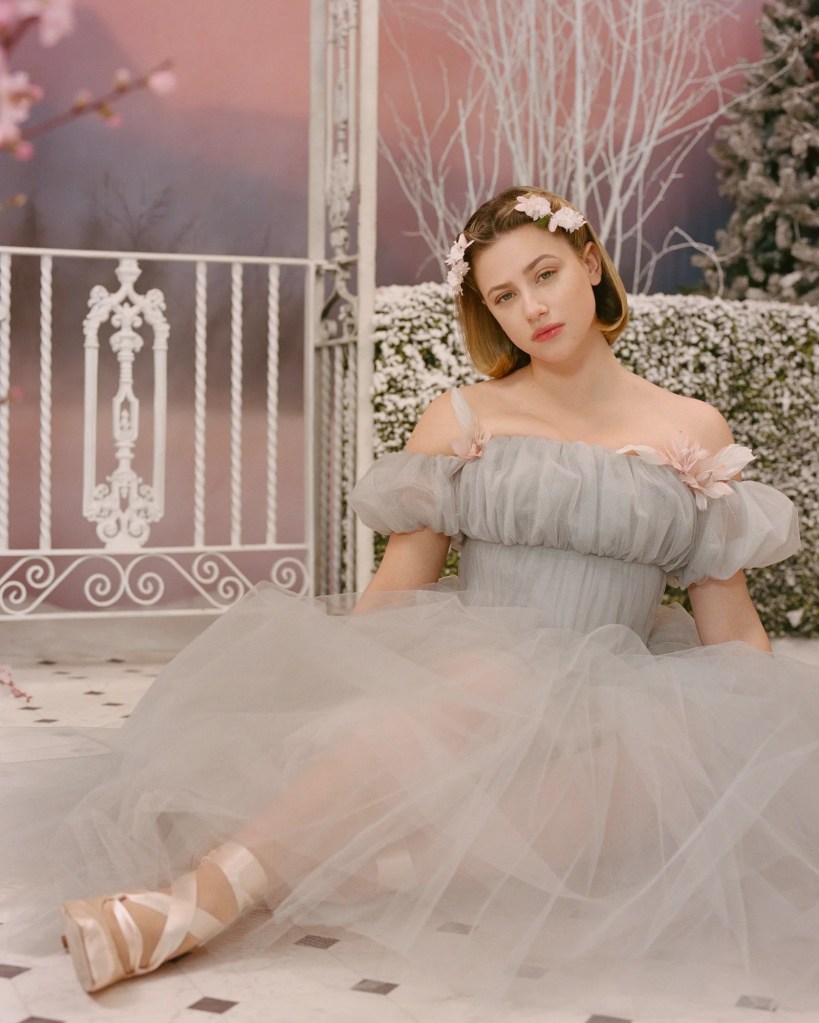
The Balletcore aesthetic as shown in this Rodarte advertisement for Fall 2022.

2022 was a complicated year – the world has seen increasingly complex issues surfacing and it is intriguing to see how social issues and awareness of them (or escaping of) are reflected back into fashion and style. Something noteworthy, especially in what is reflected across social media, was the emergence of trends such as Y2K, Barbiecore, and Balletcore. These trends are a definite combination of nostalgia and escapism, which is clearly indicative of larger societal themes in my opinion. I think the aesthetic loudness of Barbiecore indicates an aspiration of “being seen,” which is the entire idea of people involving themselves in social media for the most part. The aesthetic absurdness of these styles is actually pretty fabulous, too (Margot Robbie dressed as a Barbie cowgirl is probably the best outfit of 2022, albeit a film costume).

The emergence of these trends in mainstream adult fashion brands is also intriguing because it speaks to the timelessness of certain fashions and fashion icons and how they continue to be recycled through the years (Barbie will never go out of style). In 2022, the trends of Y2K, Barbiecore, and Balletcore all defined how women are rethinking their own sense of style and how small accessory changes can have a big impact. For example, the classic retail store Claire’s (typically geared towards the youngest shopper) has revamped many of their jewelry and accessories line to be adult friendly. 2022 presented an opportunity to reconsider kitsch style as real fashion in a new and fresh way and there were many avenues to proceed with. Of the styles that we saw this past year and going into next, I am most appreciative of Y2K style with Hawaiian beach style accessories. There is something so joyful about bright colors in small doses.

Additionally, I think there is nothing wrong with being ultra feminine if you want to be and this year’s fashion theme reflected that idea strongly. 2023 will likely carry many of these themes again and I am looking forward to that!

See this list for some accessories that defined the style of this year and will likely define most of 2023:

Two of my favorite accessories: Wildflower Cases limited edition dolphin case & charm; SHEIN’s flower hair claw in Watermelon Pink

Claire’s 20MM hoop earrings and Erin Condren Colorblends A5 Softbound LifePlanner

Margot Robbie in costume for the live action Barbie film this year.

Y2K style has dominated fast fashion brands this year such as SHEIN, REVOLVE, and Fashion Nova.

The Consistent Charm of Nancy Drew

Without a doubt, the mystery book series of Nancy Drew is prolific – and repetitive, but still prolific. The independent spirit that Nancy Drew has and her general fearless pursuit of justice is something that feels uniquely American. Nancy Drew, without a doubt, is a literary icon – she has remained popular since her original release in 1930 to boot. This holiday season, you may think about gifting a set of 10 Nancy Drew mysteries to a family member… or more. I am currently on #23 and I am not quite sure how I have read 23 of these mysteries… they truly start blending together after #15. In truth, the reason why it’s so comforting to read this many mysteries of a similar predictable format is that the formula of the story is predictable, yet the content of the mystery is different each time, which is the most enticing part of reading more than 10 of these mysteries. So, if you dare, perhaps reading past #10 of the Nancy Drew mystery books is a great way to occupy yourself this upcoming holiday break.

Nancy Drew’s ability to “get to the bottom” of the mystery at hand is adorably predictable, but the nuance which makes these mysteries continue to appeal for generations on end is the truth that mysteries are all around us. We should give ourselves the opportunity to open our eyes in our everyday surroundings which can sometimes become so very routine. We should let ourselves be willing to not be ignorant of our immediate communities, of our neighbors, and that caring for those around us in whatever way we can is one of the “coolest” things we can do.

Nancy’s ability to stay consistent is possibly the most inspiring part of this book series. And beyond her character, it is worth noting that an English major from Iowa, Mildred Wirt Benson is “Carolyn Keene,” and that Mildred’s development of the character is also a great piece of Americana and Midwestern history. The actual setting for Nancy Drew’s town remains a bit of a mystery (a suburb of Ohio; a small town in Vermont… all contenders), but it’s more likely that Nancy is based in either Iowa or Ohio because Mildred lived in Ohio for most of her life. There have been a number of pop culture portrayals of Nancy, and none of them have gotten it quite right, but I think there is still time to develop a film that could give Nancy the true credit she deserves as a character who is an American icon. The archives of the University of Iowa have compiled together an overview of Mildred’s life, and it is fascinating to ponder how much of Nancy’s spirit is infused with Mildred’s own zest for life.

Holiday Gift Guide 2022

Each year, it remains an absolute joy to think about larger themes of the past year in terms of aesthetic trends and also harmonizing lifestyle interests within the context of the world we are currently living in. There has been a strong wellness interest in my life in the past year, which has influenced how I approached putting together this year’s list. Hopefully, this end of year season will enable you to stay grounded and remember that spending time with loved ones is the ultimate gift of them all.

With love and gratitude,

Bianca

Beauty: Benefit Cosmetics Gift Sets

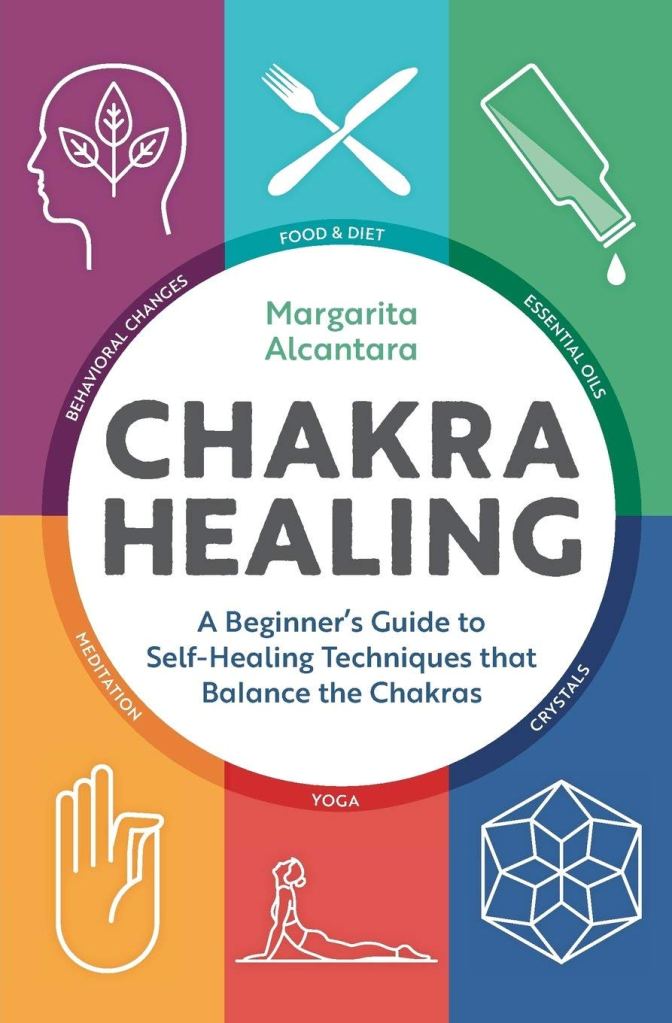
Books

Notebooks

Peter Pauper Press: The Universe & Gilded Tree of Life Notebooks

Wellness

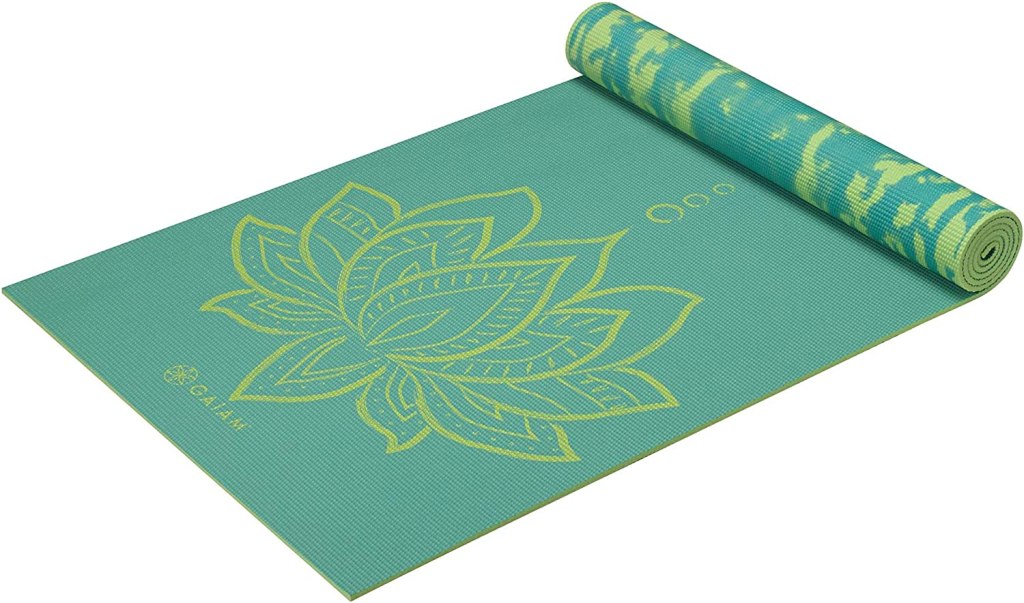
Yoga Mat + Bolster by Gaiam

For Him

Bombas Men’s Gripper Slippers + Etsy Obsidian Bracelet For Men

A Brief History of Ondine, A Ballet

“Ondine is a fairy of the water… she is as pure as the water is… she comes out looking for love.”

Ondine is a ballet in three acts by Sir Frederick Ashton and composer Hans Werner Henze. Its original production for the Royal Ballet was in 1958 (there was a production as early as 1843, by Jules Perrot, and this was noted by Ashton in 1958 that he was inspired by Perrot). There are many famous ballets that we all know of such as Swan Lake. However, Ondine, is most certainly an underrated gem in the ballet world and should be put into production more often. The choreographer is credited with establishing a distinctly “English style of ballet.” I am most fascinated by how this ballet explores the fluidity of movement and inspires one to think about how the human body connects to the natural elements (Earth, Water, Fire, Air, Space), in particular pushing our ideas around water, femininity, and human expression through fluid bodily movements.

The concepts explored in this ballet are unique characterizations of the ballet world itself. For example, the character of Ondine is not an easy one to portray – she is complex and translating complex characters into dance is never a simple task. The ballet was adapted from a novella titled Undine be German writer Friedrich de la Motte Fouque, and it tells the tale of a water nymph who is the object of desire by a young prince named Palemon. A revival of this ballet took place in 1988. This ballet should be revived once again.

Particularly noteworthy is the composition of the music of this ballet. Nothing about the rhythm is too predictable or stable, which feels reminiscent of the way the seas can be and how the nature of the sea can change quickly. English prima ballerina Margot Fonteyn, below, played the title role and the ballet was choreographed specially for her. Between 1958 and 1966, nearly every performance by the Royal Ballet saw Fonteyn reprise this role. There is something beautiful about her willingness to repeat this ballet over and over again, as it must have been emotionally intense to engage with expressing the character so often. Fonteyn is a true ballet idol. She was appointed prima ballerina assoluta by Queen Elizabeth II.

Today, Ondine should be reprised by ballet companies around the world. The character “bears a resemblance to The Little Mermaid,” and it is worth noting that this ballet was revived in 1988, one year before the Disney film was released. We are seeing continuous tropes in popular culture which involve water, fluidity, and the nature of the human spirit. If we continue to build a cultural understanding of the veracity of our connection to nature and our spirit, perhaps through elevating art such as this ballet, we can have imagery to remind us of just how deeply connected nature is to the human spirit.

Ondine potrayed by famous English ballerina Margot Fonteyn in 1958

An illustration portraying Jules Perrot’s first production of Ondine, which took place in July 1851.

Source: Wikipedia

The Idyllic Charm of Solvang, CA

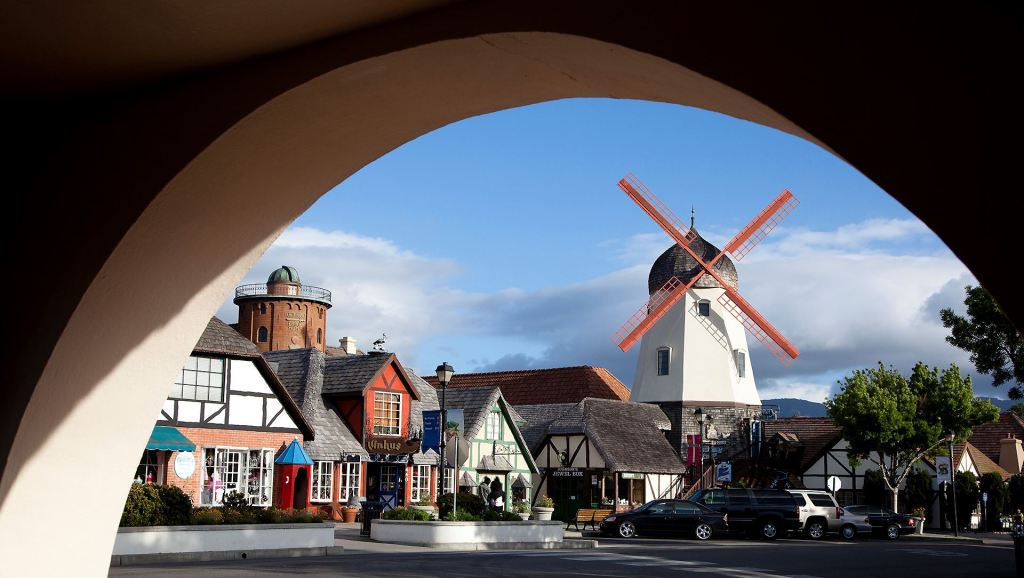
I am a native Californian and only stumbled across hearing about this town in Santa Barbara County while watching the iconic 2004 film, Sideways, by Alexander Payne. A small town with a population of 5,000, Solvang has been known as a “Danish village” because of its distinctive Danish architecture. It is also known for its wineries. Founded in 1911, the town has a museum dedicated to Hans Christen Andersen, the author of The Little Mermaid. Between 1850 and 1930, a considerable number of Danes left Denmark for economic reasons and these Danes who settled across the US were specifically Danish Lutherans. In 1911, Solvang was founded by purchasing 9,000 acres of the Rancho San Carlos de Jonata land grant.

In the film Sideways, scenes in Solvang are most notable in a restaurant where one of the main characters (played by Paul Giamatti) has a burgeoning relationship with a waitress named Maya, whom he initially looks down upon, but is actually studying horticulture and waitressing on the side, played by Virginia Madsen. The restaurant featured is still open today in the downtown area (aptly named Solvang Restaurant) and you can feel right at home with the completely fascinating world of Sideways. Additionally, in the neighboring town of Buellton, you can stay at the renamed “Sideways Inn” (formerly known as the Windmill Inn which is mentioned in the film). The town is only a 10 minute drive away from Solvang. California is certainly filled with wonderful destinations to serve all tastes and any sort of adventures you seek. I think Solvang is a forgotten treasure and it’s a bit like a real life Disneyland, too.

The Timeless Appeal of the Regency era

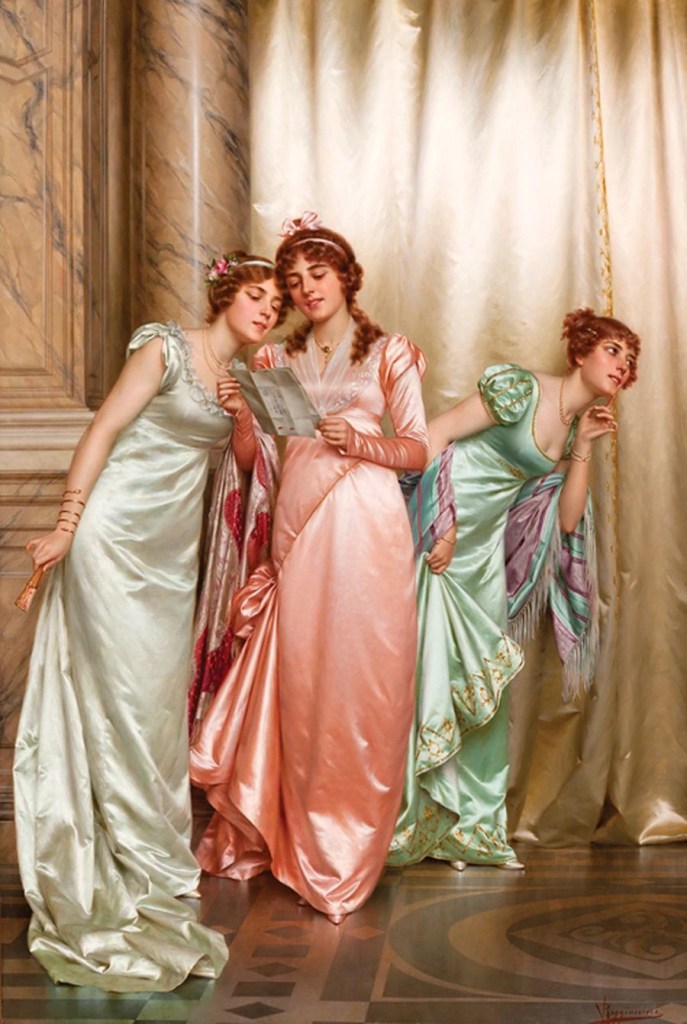
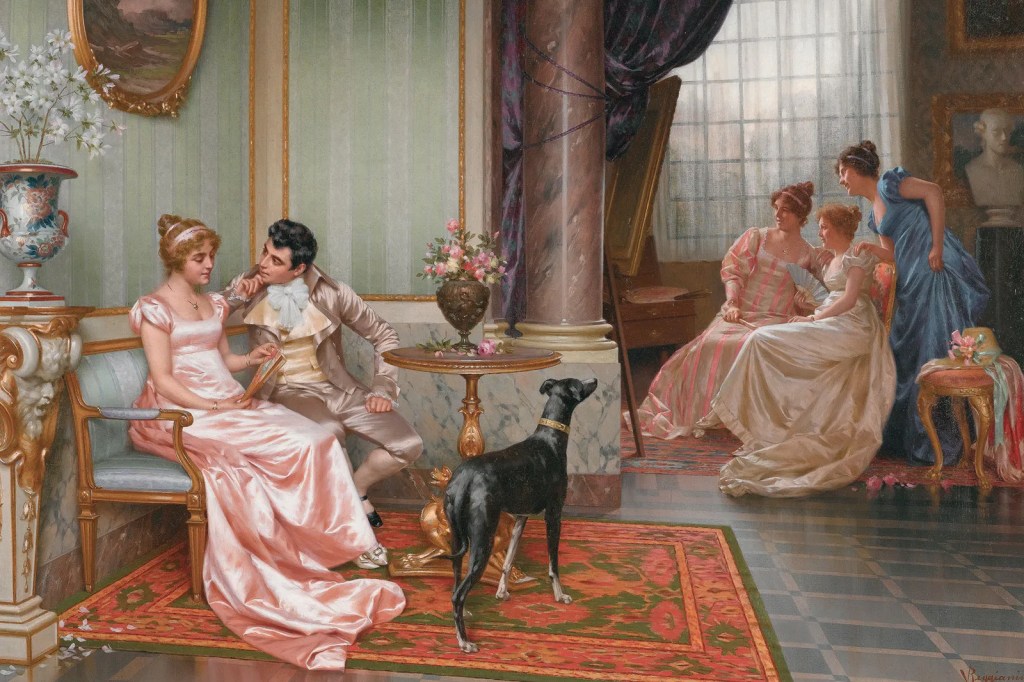
The Regency era is one that holds fascinating social, cultural, and historical appeal throughout the years. It has been reappearing in popular culture more recently with shows like Bridgerton and Sandition highlighting this bygone era. In some intriguing forms of irony, it is very likely that the structured social codes and ways of maneuvering society appeals to the present day, because while our modern era affords many freedoms, the structured societal “rulebook” of the Regency era certainly does not exist today. Perhaps people are seeking or fantasizing about what that structure may look like in a world as complex as today.

In particular, there was a practice during the Regency Era of the “Marriage Season.” This was a time where many society balls enabled unmarried men and women to find their mates and marry. This repeated ritual was so common that it was entirely expected as a way of living for the British upper crust. This was intended to make alliances and generally “social climb.” It was truly fascinating. The season ran from November through June. This was a large part of the year. In particular, the “Marriage Season” ran from March until June. These activities were concentrated in the fashionable part of London. For example, a common tradition would be to attend the theater multiple times per week! The plays of William Shakespeare were very popular during this period. This was truly a way of living for the entirety of British social society who effectively governed all of Britain at the time.

The Regency era was from 1811 to 1820. It is is a sub-era of the Georgian era, which spanned from 1714-1837. Beyond the rules and regulations of participating in society, the Regency era was one of greatly appealing fashions, art, and literature. In literature, writers such as Jane Austen, William Blake, Lord Byron, John Keats, Mary Shelley, and William Wordsworth were all defining voices of the era. Personally, I could not have imagined being an English major without having read titles by each of these writers. There is so much to be learned by these incredible authors. You can truly have an entire career based studying just one of these writers. That is how profound their impact has been on literature.

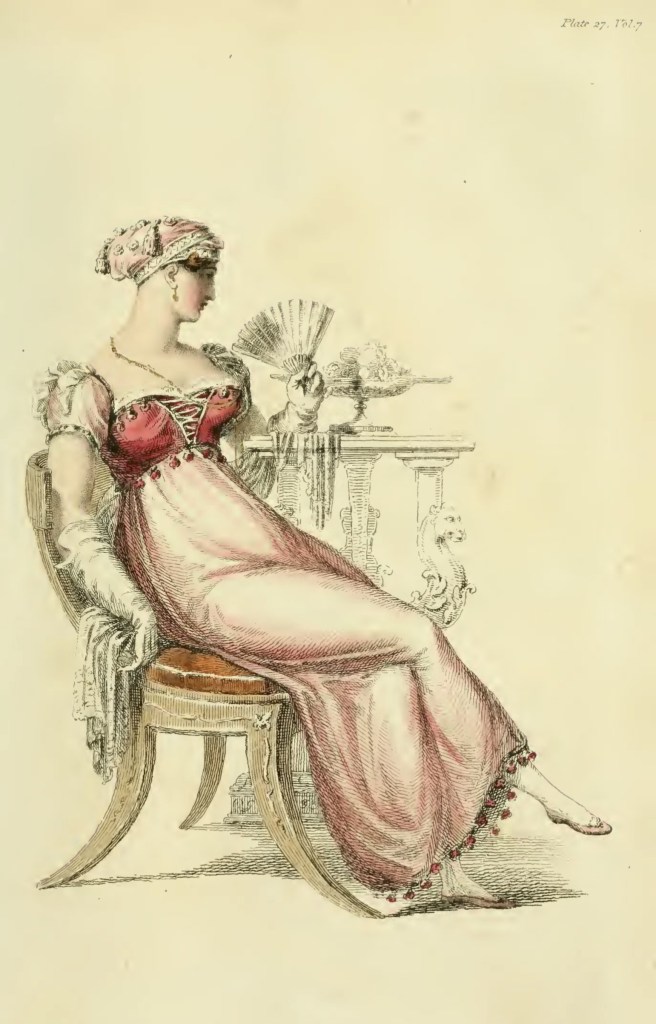
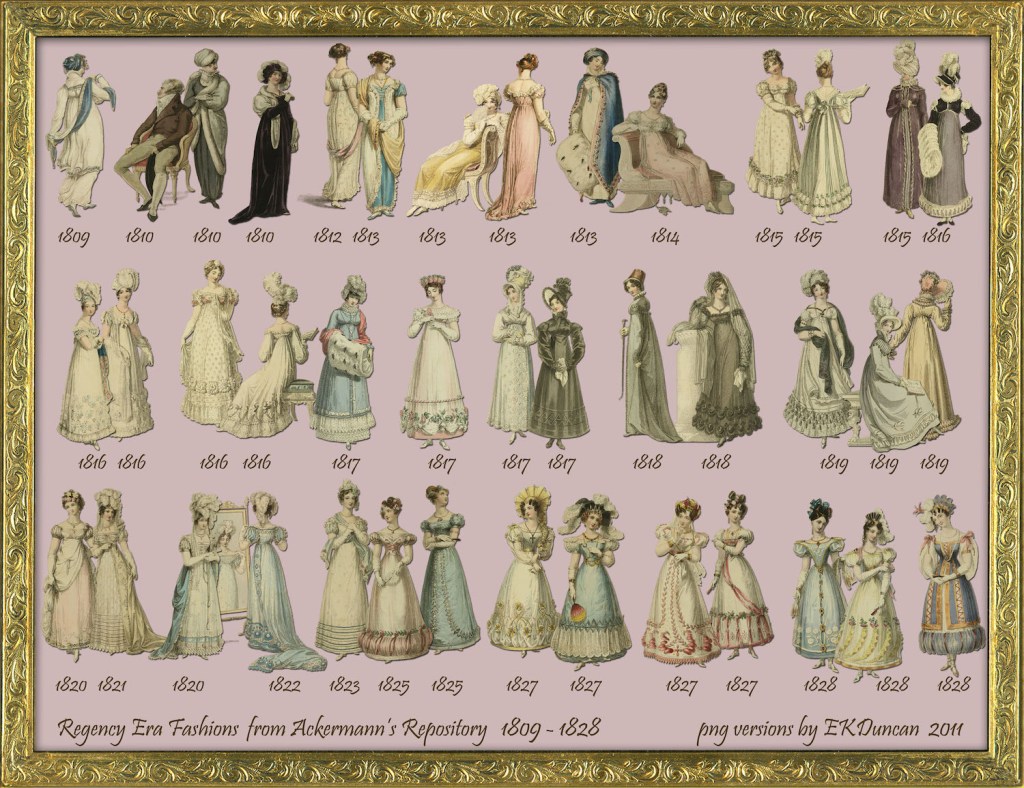
In fashion, the shift to using fashion as a way of self expression began during this time. In the aftermath of the French Revolution, nobility did not want to be associated with a particular kind of costume that was incredibly uniform. Therefore, the Regency era began to see more differentiation in dress (albeit still very conceptually standard – just for the time, it was quite of the box!). Fashion during the Regency era embodied new social values. This is most likely another one of the more endearing aspects of the era – it was a time of structured rule following, but it allowed for more freedoms (such as fashion for individual expression) which was a big shift in the ways that formal society dictated living one’s life. Even the character costumes of the Disney film The Little Mermaid are set in the Georgian era! Specifically, Grimsby’s costume is a tell-tale sign of the era.

Sir Grimsby in Georgian era costume is expounding on a topic to Prince Eric and Vanessa (Ursula in disguise)

The aesthetic appeal of the Regency era is timeless. And beyond the aesthetic, exploring its literature and theater is equally entertaining. You can certainly find yourself caught in some form of its endearment.

𝔁𝓸𝔁𝓸

𝓑𝓲π“ͺ𝓷𝓬π“ͺ

The World’s Most Beautiful Libraries

Stift Admont, Austria

All around the world there are breathtakingly beautiful libraries, which serve as monuments, museums, and of course, book repositories, which seem endless and all together wonderfully substantial. Literacy is arguably the most essential part of intellect. Having a passion for books and reading provides endless opportunities for learning, but it truly expands the human experience in a multitude of ways. If more people were focused on learning and reading, I strongly believe we would have much less problems in the world. While life is meant to be lived boldly and with an adventurous spirit, a huge part of that is learning and understanding the many lessons there is to learn through reading all sorts of classical stories and having a zest for seeing through the surface. Altogether, beyond the surface in life, we find deeper meanings because of literature we are exposed to. Supporting literacy efforts in the education space is incredibly important. Reading and writing are the building blocks to any subject matter.

Literacy has been a huge part of my life (I was an English major at UC Davis). Not everyone may have a passion for literacy, but having some intrigue for reading and writing will take you further than you imagined in life. If there is any topic you have interest in, find every book you can about it and read! I think it’s become especially important in today’s world (when we exist in such a primarily digital space), that we keep the magic of books and libraries alive. While these libraries may be the most beautiful libraries in the world, going to your public and local library and checking out a book that you’ve never read before can be just as magical of an experience. Literacy enables you to refine your own curiosity. The more you read, the more you begin to learn what sorts of literature speaks to you and what may not. You may find your niche and continue reading similar books your entire life. That is quite alright! For me, Regency Era novels are enticing. Reading is magical, so it seems well fitting that there are libraries of this kind in the world. Austria has many of the most majestic libraries in the world. If you take a trip to Austria, you must stop and enjoy one of the many illustrious libraries there.

π“π‘œπ“π‘œ

𝓑𝓲π“ͺ𝓷𝓬π“ͺ

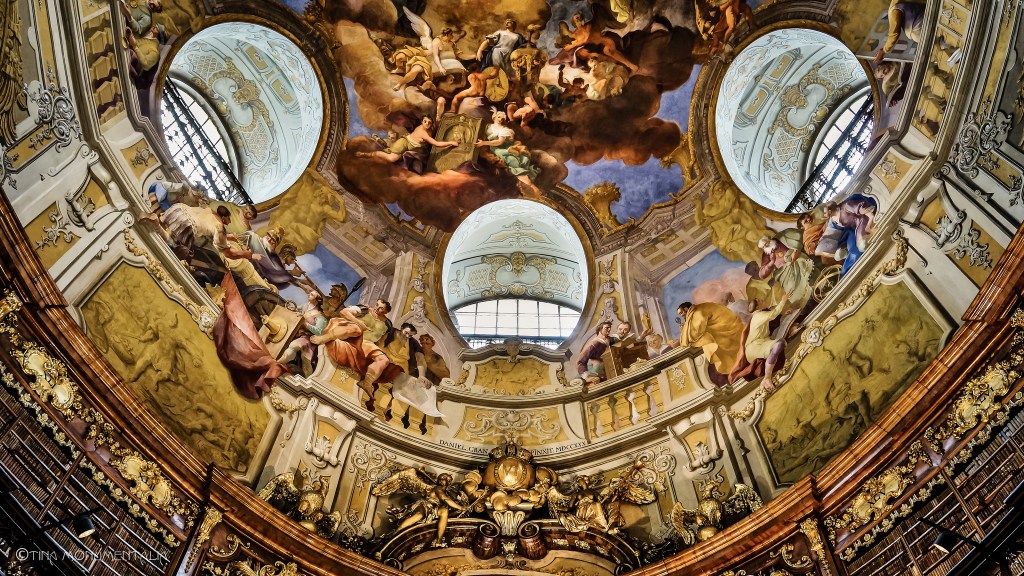
Austrian National Library, Vienna
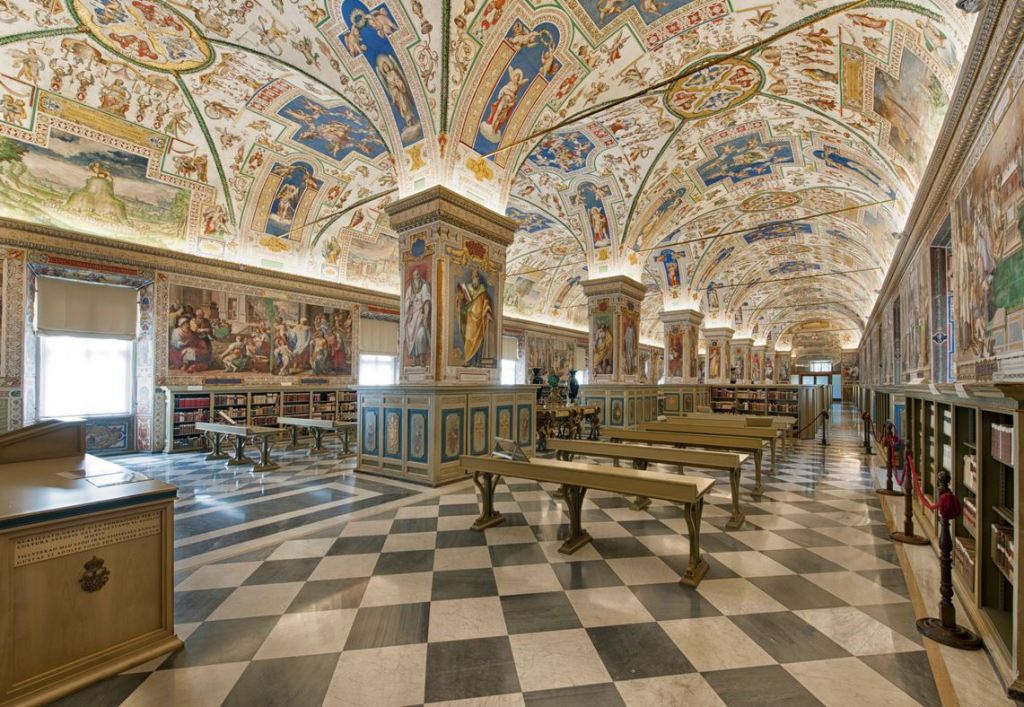
The Vatican Library
Abbey Library, St. Gallen, Switzerland
The Library of Congress