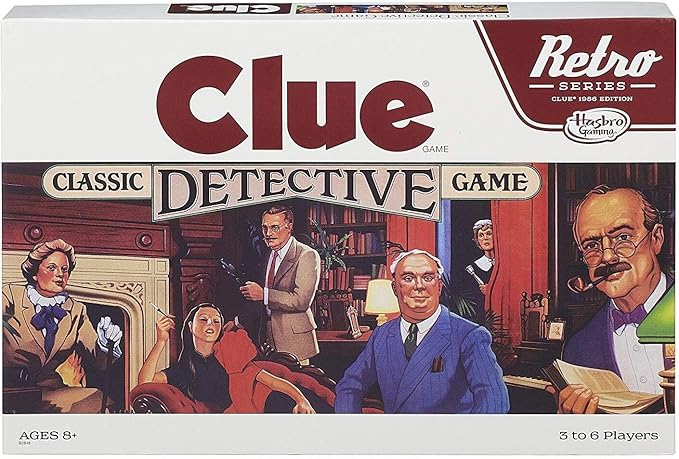
Each year, I enjoy finding unique and intriguing gifts that you can consider including in your holiday shopping when you think about what you’d like to gift. Despite the reality that consumerism is not the source of joy that this holiday season should bring, and focusing on togetherness with one another should be the emphasis, if you are so inclined to think about unique and out-of-the-box gifts for an Old Hollywood afficionado, or little luxuries that can elevate your home experience, these are just a few things to consider when you do your shopping this season! Consider this list as a jumping off point, for gifts related to the coffee table book collector, for the beauty product expert, for the retro board game enthusiast in your life.
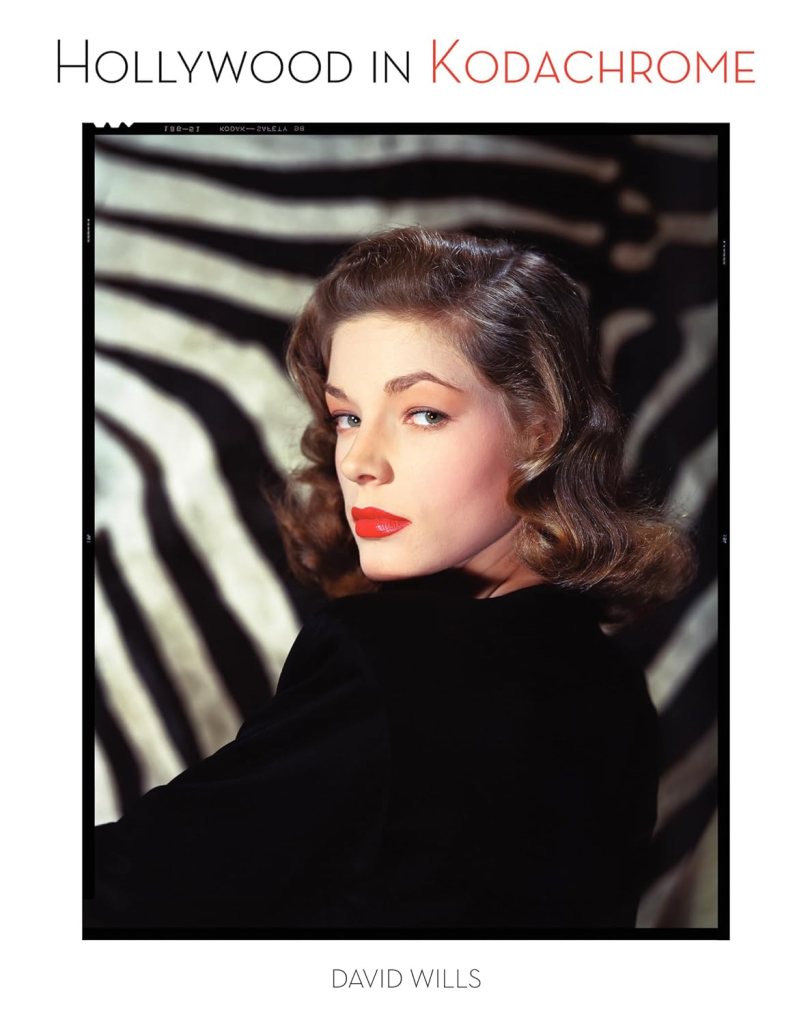
I like to think about how the picturesque beauty of Old Hollywood can be brought into our style today again, and in high definition… The makeup, hairstyles, clothing and overall style of 1940’s and 1950’s America are ones that can be brought back in subtle, contemporary ways. The shade of red lipstick that Lauren Bacall wears in Kodachrome or the daring pin-up artwork of Olivia de Berardinis, or the new “Supreme Crème” complexion perfector cream by Westmore Beauty, there is so much to appreciate about classic glamour, especially during the holiday season! Embrace being your most extraordinary, glamorous self this holiday!
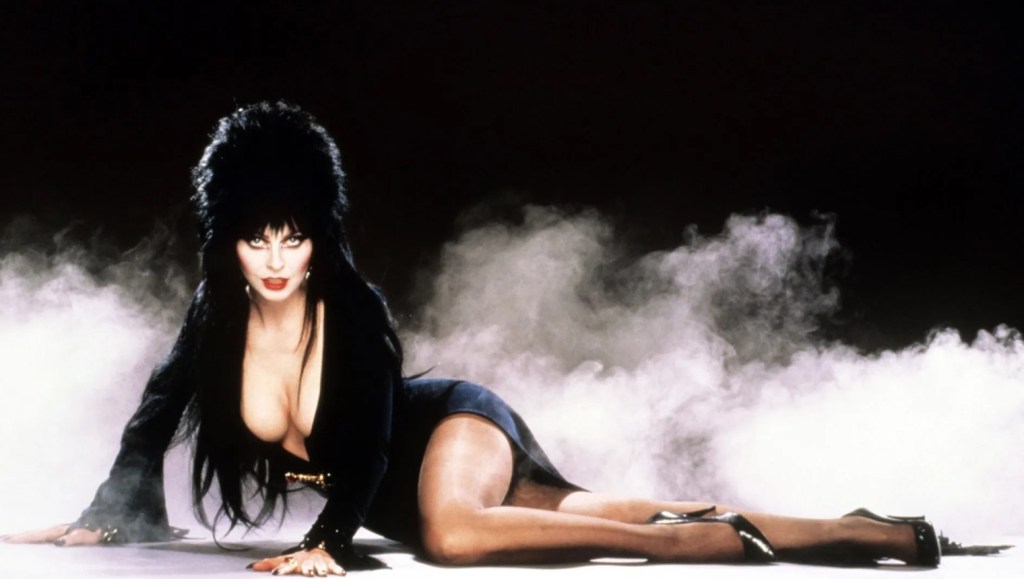
Happy Halloween! Elvira, Mistress of the Dark, is undoubtedly, the Queen of Halloween, for all time to come. Cassandra Peterson, the woman behind the character, has been in costume since her character’s spooky film debut in 1988. Since Halloween is upon us, I think it’s fascinating to highlight the feminine depths of Elvira’s spooky character, a legendary figure of the Halloween season since her campy film debut in the 80’s. She is perhaps one of the most fascinating characters of America’s Halloween culture. Her costume has not changed much since her debut, which means her character remains consistent and memorable for the public. In 2021, Julien’s Auctions held an auction of Elvira’s personal collection. It sold remarkably well! Her original costume dress sold for $10,000 alone. I think there is much to appreciate about how Elvira contributed to Halloween culture in general.
I am most fascinated by Elvira’s femininity and the overlap of the occult has with strong feminine energy, which has historically been relegated into arenas of witchcraft and became generally stigmatized as something to fear by mainstream Western society. For example, the origin of Friday the 13th, was a Pagan day for worshipping Divine Feminine energy. It would later be transitioned as a patriarchal day to fear in general (spooky Friday the 13th is quite feminine!) and has various religious and cultural roots. For example, it’s said that in Christianity, Judas was the 13th supper attendee of the Last Supper, who betrayed Jesus, and then Jesus was crucified on a Friday. This is one example of Friday the 13th being perceived as a fearful day, when in actuality, the historical origin of the number 13 for Friday the 13th is that women usually have 13 menstrual cycles in a year and Friday is a day to worship the female from Paganism. The various connection points of Friday the 13th are fascinating to observe. The belief of bad omens for Friday the 13th has been embedded in cultures for quite a while, though. Arnold Schoenberg, the Austrian-American composer, was so fearful of the number 13, he omitted the 13th measure in some of his musical compositions. The musician Taylor Swift has a deep belief in the good luck the number 13 has brought her throughout her life.
The feminine origin of Friday the 13th now been recently resurging through a renewed cultural interest in the history of the divine feminine again, which is ironically re-entering into mainstream discourse. I think this is similarly aligned with the mainstreaming of strong feminine energy for Halloween culture. For example, it’s become a norm for celebrities to dress up in the weeks leading up to Halloween in near perfect costume recreations of characters like Elvira. In 2022, Kylie Jenner famously recreated Elvira’s costume which introduced Elvira to a younger generation.
Kylie Jenner as Elvira
I appreciate how Cassandra Peterson crafted a persona and character which feels like a parody of the occult and continues to elevate femininity in spite of the fearful and spooky mask of makeup she wears. She is also a fashion icon for it. According to W Magazine, it was when Elvira was a child that she asked her mom if she could become the “Queen of Halloween” for her costume. That year, she ended up dressing as Morticia Addams, of the fictional and spooky Addams Family. The Addams Family was created as stand-alone comics by Charles Addams for The New Yorker between 1938 and 1988. The comics became films, and Morticia is seen as the Matriarch and feminine energy of a group of old-money people who delight in the macabre (perhaps a fascinating social commentary on institutions which do not reform become macabre). The TV series debuted on ABC in 1964 and ran for two seasons. The origin story of Elvira is most certainly tied into the origin story of Morticia Addams.
The Morticia Addams role reprised by Carolyn Jones, Angelica Huston, and Catherine Zeta-Jones through the years looks similar to Elvira, Mistress of the Dark for a reason… Elvira was inspired by her!
Elvira was born in Kansas in 1951. During her childhood, she has stated she was with fascinated horror themed toys instead of Barbies. Later into her career, she would become involved with Playboy and would guest star on the hit E! television show, The Girls Next Door, where she would often make jokes about how dying her hair blonde be a spooky thing for her — the macabre was always her element. She hosted the film, Hef’s Halloween Spooktacular, which was about the making of the annual Playboy Halloween Party, often known to be the most spooky Halloween party in all of Hollywood. She bonded closely with Bridget Marquardt (the real-life woman who inspired the film The House Bunny) as Bridget was the resident of the Playboy Mansion who was most committed to Halloween and the horror genre. To this day, they remain connected over their feminine connection the macabre. I think there is something noteworthy about how women can find common ground in any topic, and genuinely support one another, no matter how different their personality and style may be!
Bridget Marquardt and Elvira at the Playboy Mansion in 2006
In 2021, Elvira released a memoir about her life entitled, Yours Cruelly, Elvira: Memoirs of the Mistress of the Dark. Her book is a must-read if you’re a fan of Halloween culture. In the meantime, enjoy watching her many films this Halloween night!
If you are from California, or have lived here for a while, you most likely have encountered the “Keep Tahoe Blue” stickers that many folks put on the back of their vehicles – perhaps most especially if you are making the drive up to Lake Tahoe. The League To Save Lake Tahoe, started in 1957, is an environmental watchdog organization comprised of dedicated volunteers that focus on a variety of topics of the lake’s health and ensuring that invasive species do not alter the water’s clarity and transparency – thus, focusing on keeping Tahoe blue! This organization also has UC Davis researchers studying microplastics in the lake and also has released research that algae is the primary factor in Lake Tahoe’s blue color, not clarity. Beginning in 2017, UC Davis researchers examined the entire shoreline with a helicopter and drone several times per year, which enabled a clearer understanding of the algal blooms occurring in the lake and as a growing threat to Lake Tahoe’s ecosystem. This is occurring due to warming weather temperatures and changing water levels. Public funding is scarce and private funding must be at the forefront of this cause. Additionally, advocacy and awareness are integral to this cause as well! According to this year’s research release, the lake’s clarity depth is now 68.2 feet as of 2023, compared to 71.9 feet in 2022. This is a pressing environmental cause, especially related to the summer due to warming temperatures (many people go and visit the lake to escape their lower elevation home temperatures, so it’s especially important to be mindful when visiting).
The work of the League is to focus on tackling invasive species, combatting pollution, and advancing lake restoration. Also, the League is combatting any sort of expansion or industrialization in the Tahoe Basin region which could negatively impact the lake’s overall health and clarity. In addition to that, the League also promotes best practices to respect the lake while visiting. We are certainly in a global environmental crisis where the weather forecast is not simply the weather forecast any longer, and I think it behooves all of us to become more prescient and aware of organizations such as this one. The League has already been institutionally known for spreading environmental awareness and encouraging citizens to get involved! While Tahoe is known for being a seasonal getaway for many, and the reasons why people visit are numerous, from snow sports to enjoying the lake’s beauty, Lake Tahoe’s clarity remains in danger and should continue to be protected by groups such as these. You can make a difference, too. Please help by donating and volunteering, and be sure to care for the lake if you visit.
If you plan to visit the lake anytime soon, please be aware and practice the following:
Keep the beach clean
Throw away all trash (even if it’s not yours and put in a trashcan or dumpster)
Collect food scraps
Carpool
Take public transportation
Remember, we all want to Keep Tahoe Blue. The second deepest lake in the United States, this lake is visited by millions of visitors per year, but with the right effort and care taken by its many visitors, the lake can continue to stay pristine and beautiful!
Survivalism or “Prepping” has become a social movement, with the essential belief that proactively preparing ourselves for emergencies such as natural disasters or events related to social disorder will enable better chances at surviving various crises. There is no explanation needed for how disorderly our current world affairs are to know that preparing for crises is essential. The spectrum of crises is vast and there is certainly a range of preparedness tactics to use, especially with learning skills related to military grade tactics (building shelter, learning how to make a fire for survival, procuring food, foundational first-aid, and signaling for help). The “Bug Out Bag” is going to be a 72-hour kit which will be personalized to your needs and environment. Personally, my guiding principle is to use common sense and follow FEMA’s guidelines from their Ready.gov Checklist as a way to begin preparing on a household level. There is no need for the country to fall back into the toilet paper hoarding craze of the early days of the pandemic. Using good sense is essential and an important pillar for preparedness is also understanding that in a crisis we will need to share resources and support one another. The key is to be knowledgeable about a variety of scenarios and prepare within good reason, to keep products up-to-date (not expired items) and to actually know how to use your tools. I believe prepping is a symptom of the problems that we face and it is a natural reaction to unrest, so it should be incumbent for you to learn the basics.
Another approach to considering emergency scenario planning is considering scenarios related to your environment (wildfires, earthquakes, floods, tornadoes) when studying how to navigate emergency scenarios. One thing is certain – complex, multi-layered crises are not going to go away and we need to understand that is our shared reality, especially with regards to climate change events. Mass migrations will become more common when the environments we inhabit become unsustainable for living. In America, however, I think social unrest is a more pressing issue, in addition to climate change events. In my opinion, the instability of the global geopolitical arena is more than unsettling and preparing with common sense is critical. FEMA has guidelines for a reason – there are many different sorts of emergency scenarios and scenario planning is an important part of learning how to adequately prepare. You should be following government standard planning procedures, so in most instances, having a 72-hour emergency backpack prepared and in reach is the most basic step to being a prepper. These are referred to as “Bug Out Bags,” and the bag should be filled with essential items and tools that will get you through at least 72-hours if you were placed in an emergency where you were required to escape your home imminently.
In addition to your Bug Out Bag, you will want to have a handbag on hand that keeps your everyday items (wallet, keys, etc.) to supplement what you have in your emergency backpack, also called a WUSH Bag (Wake Up, Something’s Happening Bag). Another critical part of preparedness is considering how heavy the weight of your backpack is – this is something you would need to be able to possibly hike with on for prolonged periods. Anything too cumbersome will not be suitable… Also, keeping a low profile backpack is best (neutral colors without logos) to blend into environments is an important thing to consider. For example, 5.11 Tactical backpacks are military backpacks with logos that you could consider removing or concealing the logo, as some wilderness experts will go so far to point out that the logo on a backpack can be conspicuous in certain situations. Anything related to being mindful of your situation and circumstances is going to be most critical.
Something I have not read as often while studying this topic is the importance of mindfulness techniques and meditation. Andrew Huberman’s Lab at Stanford University often discusses NSDR – Non Sleep Deep Rest, another name for Yoga Nidra. Learning a 10 minute Yoga Nidra meditation to calm the entire nervous system will also be an important tool in especially stressful circumstances. It is also a technique used by the U.S. Army to offset PTSD.
If you want to have military level discipline for this venture, you could consider having everything right next to you when you go to sleep. This seems excessive in theory, but it is quite prudent given how the world will remain unsettled for the forseeable future. The Bug Out Bag and WUSH Bag is going to be your start up chance at survivalism. Now, you can begin building out your emergency supplies and learning tactical skills for emergency scenario planning.
Bug Out Bag Supply List
Bottled Water
LifeStraw Personal Water Filter
Reusable Water Bottle
Protein Bars
Beef Jerky
Dried Fruit
Essential Documents (Waterproof Folder) + USB Sticks
The Westmore Family is a well known name, yet perhaps now overlooked in the current beauty industry narrative, yet this family was so integral in the shaping of our contemporary beauty standards that this family created what we know as the “makeup chair” in Hollywood. The Westmores are an esteemed family who led makeup departments of film studios, wrote numerous books and worked to have the makeup chair as a standard norm in Hollywood studios. The family would go on to advocate for there to be an Academy Award for Best Makeup and Hairstyling. The family’s name made an impact in Hollywood beginning with George Westmore, who created the first makeup department in 1917, where he freelanced through major film studios of the time. This experience also acquired a deep knowledge of how Hollywood studios operate, which would impact generations to come, with the achievement of a star on the Hollywood Walk of Fame for the family.
George would go on to have six sons in leading makeup department roles in Hollywood studios, out of his 19 children during his marriage to Ada Savage. I am fascinated by the idea that each of so many of his sons were passionate enough to pursue a burgeoning industry, which undoubtedly crafted our idea of glamour and classic beauty, which holds firm in its concepts today. The family also found success in the emerging field of classic horror films, such as Frankenstein (1931). When Bud Westmore led Universal Studios, he took over for the role of makeup for Frankenstein – a truly artistic endeavor to create such an impactful and iconic film monster. According to Wikipedia, by 1926, four of George’s sons, Monte, Perc, Ern (Perc’s twin), and Bud all became chief makeup artists of four different Hollywood studios. They each became the champions of beauty in Hollywood, and they formulated the ideas of how women should look on screen. Their passion and impact was truly for the betterment of Hollywood studios. Monte, the first makeup artist to use airbrush makeup, tragically passed away due to a heart attack because of the demands of working on the film production of Gone with the Wind (1939). Monte was the only makeup artist working on such an extensive and expansive film production. His work on that film was the first use of airbrushing of makeup. Remaining family members went on to build the House of Westmore Salon, which served both Hollywood stars and the public alike.
The Westmore family brought innovation to Hollywood. They enabled Hollywood studios to have an in-house makeup artist, but they also crafted a narrative for the public to also hold themselves to a personal standard of grooming, which is to say that when you feel your best, you look your best. This is something that stands true today and will remain a timeless concept!
I own one of their books on the topic of 1940s beauty and most of the ideas presented are focused on ensuring skincare that suits your skin type and the overall enhancement of natural beauty with specific tools that are geared to bringing out the best of the features that person has. I think that’s more inspiring than some of the beauty standards we are seeing today, which emphasize so much “change” in the features of someone, so much so that people have normalized the idea of plastic surgery. This is not healthy for the most part to believe that changing oneself is a good thing, and it’s important to remember that we are all unique for a reason! Social media has unfortunately created unrealistic beauty standards through photoshop and filters and have impacted an entire generation to not be comfortable with their own features now. Beauty should be about elevating your best features and not changing them. It’s important to remember that beauty does come from within and that the attitude and mindset one carries is also reflected in your style makeup!
The Westmore family was not only critical in its development of major film studio makeup departments, they also learned to collaborate. Ern Westmore, for example, went on to work closely with Max Factor, another well-known Hollywood name. Ern, for his part, worked on Bette Davis giving her a fuller more natural brow and focused on creating the classic lip line we know her to have.
In contemporary Hollywood, the family has continued to work on major productions, including films like Blade Runner in the 1980s, and perhaps most notably, for the Star Trek series. Ultimately, the passion and commitment to quality and understanding of character development and presentation in Hollywood is how the Westmore family has persisted for so many generations. Today, the brand lives on through Westmore Beauty with his great-great granddaughter’s commitment to timeless beauty sharing its commitment to 100+ years of innovation.
In our complicated modern world, we see bursts of expressions in people which reflect what can be understood as the “divine feminine.” According to The Good Trade, “the divine feminine is the spiritual concept that there exists a feminine counterpart to the patriarchal and masculine worship structures that have long dominated organized religions.” For example, the most well known being the Virgin Mary in Roman Catholicism. However, the idea goes beyond religious iconography.
This concept of the divine feminine also inhabits a space outside of religion and explores the idea of how feminine representations show up throughout cultural discourse. The term “divine feminine” is not a mainstream term quite yet, but I think it is approaching mainstream now. The idea of the divine feminine is not necessarily holding a religious connotation, but it holds the ideas around how femininity appears in its many forms, and not solely represented in the female sex. The ideas surrounding femininity and spirituality have a multi-faceted way of being understood and are subject to opinion and transcend any boundaries of gender norms or heteronormativity.
Divine femininity is a good thing for civil society as it enables people to achieve a full expression of their sense of self. As such, the ideas which underpin divine femininity is an inherently inclusive structure that enables the embracement of feminine concepts in fashion and beauty as a way of expressing oneself in any context. This has widespread implications for our idea of how we “show up,” in society – for example, how dress codes are perceived as appropriate in certain work environments as one example. This also extends to how comfortable women feel in their own bodies as well. According to Women.com, the idea of coquette style is being “unapologetically feminine.” This is a great description around embracing femininity without qualms. Byrdie.com described the style as “reclaiming hyper-femininity.” Across the range of ways that one can express their own style, the coquette aesthetic is one which gives ample freedom to embrace womanhood.
To clarify the expression of the divine feminine and its appearance in popular culture, it is important to note the intersection of social media and fast fashion due to the popularity that hashtags signify for the fashion industry. Within that space, there is an opportunity to identify particular styles which then take on trend based representations of what might be a response to popular culture events happening at that time. For example, most recently “Barbiecore” for the release of last year’s hit movie, Barbie, or “Mermaidcore,” for the Disney The Little Mermaid‘s release last year as well. For the divine feminine, all of these trends can be understood within the broader umbrella of femininity. However, I think the emergence of the style “Coquette Core,” is likely the most clear embodiment of the divine feminine as an aesthetic sensibility.
In summary, embrace your rosy style. Embrace it.
For example, Coquette Style can be described as including such through fashion:
Pastel colors (especially light pink)
Lace
Bows
Victorian Era style
1950s style
Balletcore aesthetic
Cottagecore aesthetic
Princesscore aesthetic
As described on Wikipedia, “This aesthetic has been characterized as both a way to relive and express creativity… and a way to fully escape into femininity without feeling guilty about it.” This is a particularly fascinating description, because so much about contemporary fashion and style elevates the idea that successful women can look more “manly” and therefore be equated with being more “respectable.” This is deeply untrue. I strongly believe that self expression takes on many forms, but I also believe that trends do impact us more than we may admit, so the reality that women may shy away from their feminine style is something not to be ignored. I fully embrace the idea that women can be both very feminine, successful, intellectual, and career driven without compromising the integrity of the other.
Betty Grable made an impact on America. In the 1940s, Betty Grable was the highest paid woman in America. She had the highest salary of a woman in the country in the years 1946-1947. Throughout her career, she made over $3 million. Betty, undeniably, held a grip over American culture… over the course of her 42 films during the 1930s and 1940s, they grossed a net of $100 million. For those times (and today), those numbers are astounding. During WWII, she surpassed Rita Hayworth as the top pin-up girl, which Life magazine referred to as “100 Photographs That Changed The World.”
Born Elizabeth Ruth Grable on December 18, 1916 in St. Louis, Missouri, she was the youngest of three children of a Midwestern family. She was pressured to become a performer by her mother and achieved many accolades and won beauty contests frequently. Despite this, she suffered from a fear of crowds and sleepwalking. Her career in Hollywood began in 1929, shortly after the stock market crash, when she traveled with her mother to California. She studied at the “Hollywood Professional School,” and attended dance classes as well. In 1930, she signed under Samuel Goldwyn and became one of the original “Goldwyn Girls.” She led one of the musical numbers titled, “Cowboys,” yet received no on screen credit for the performance. She went on to sign with RKO Radio Pictures in 1932. It is infamously remarked by Marilyn Monroe how she used to stare longingly at an RKO tower from her orphanage window as a child, which helped her solidify her dream of becoming a performer – Betty and Marilyn would later perform together alongside Lauren Bacall. The stars do align!
Following her time with RKO, Betty would sign with Paramount Pictures, even further advancing her career in Hollywood. However, her performances at the time were being overshadowed by those of Judy Garland, especially from The Wizard of Oz, which captured America’s heart in the 1930s. However, she persisted in Hollywood and by 1939, she was performing alongside her husband, Jackie Coogan, in a film called Million Dollar Legs. For a time of such embedded objectification of women in Hollywood, it feels rather ironic that a woman’s career successes could be rooted in that. However, I believe much of female performances by leading ladies in Golden Age Hollywood have been overlooked tremendously for the actual work that they did, with too much emphasis on the idea of their image. This is especially commented on in Richard Barrios new book about Marilyn Monroe’s performances, On Marilyn Monroe, which details the incredible body of work she helped create (and how she was a discerning script reader for films and characters), and this was often overlooked or heavily critiqued by film critics who had no tact in understanding some of the nuanced genius of these performances.
Grable would continue to move film studios, landing in 1940 at 20th Century Fox, and by then, she stated that she felt “sick and tired” of performing and that she was considering retirement. She was given close attention by the head of Fox at the time, Darryl Zanuck (who infamously did not like Marilyn Monroe and held her career back as much as he could). In 1940, this was far before Marilyn’s beginnings at Fox, Grable was cast as lead in Down Argentine Way, replacing Alice Faye, who had been the most popular musical film star at the time. For many who study Golden Age Hollywood like I do, it becomes exceedingly clear that men were deciding the career outcomes of women and they were playing puppet master to who would advance in their career. This does not, however, negate the quality of these performances.
Often, even in times of career burnout (as Grable had discussed wanting to retire), she again stepped up and did a fantastic performance. Over and over again, women have shown persistence in times of tremendous challenge and strength in the face of male dominant, chauvinistic systems created to cast them out just as quickly as they arrived. I would argue that women of Golden Age Hollywood were true icons for this reason. They carried the weight of contractual burdens of the system, performed nearly to no end, and maintained an image of near perfect good looks… no wonder their personal lives were often left troubled.
If there is anything to be truly appreciative of in these remarkable storied lives of Hollywood’s bygone icons, is that there are ways to renew your own appreciation in the importance of living a balanced life, and of the understanding of our limitations for our own health and wellness, not to see as a hinderance, but as a way to guide your decisions in healthy living. Many of these female performers were pushed to limits which became unhealthy. Betty Grable, among many other women in Hollywood, were being stretched to maximum capacity, were excessively critiqued, and yet, created and generated so many profits for Hollywood (and were considered incredibly attractive). The best way we can appreciate their impact today is by remembering their work and respecting them for it.
In 1943, Betty Grable was voted the “Number One Box Office Draw,” by moviegoers – outranking male icons such as Bob Hope, Clark Gable, and Humphrey Bogart. This favorite box office vote was again regained in 1950. By the early 1950s, Betty could not find scripts she wanted to perform for and her career began to decline. Marilyn Monroe replaced her in Gentlemen Prefer Blondes.
Holistically, women in Hollywood were put in competition too often and were isolated in that way, too. Betty was a pioneer through some of Hollywood’s most incredible times. According to director Martin Scorsese, “Looking back at the pictures of the ’30s and ’40s, the period now known as the Golden Age of Hollywood, you can feel, more and more, just how controlled many of the performances were, especially in relation to movies made after the arrival of Brando and James Dean in the ’50s. There’s a tension between directors and actors that I find extremely interesting now.” Scorsese summarizes all there is to be said about the time that Betty performed in. I think we should celebrate her for this.
Betty Grable passed way of lung cancer in 1973 at age 56 in Santa Monica, CA.
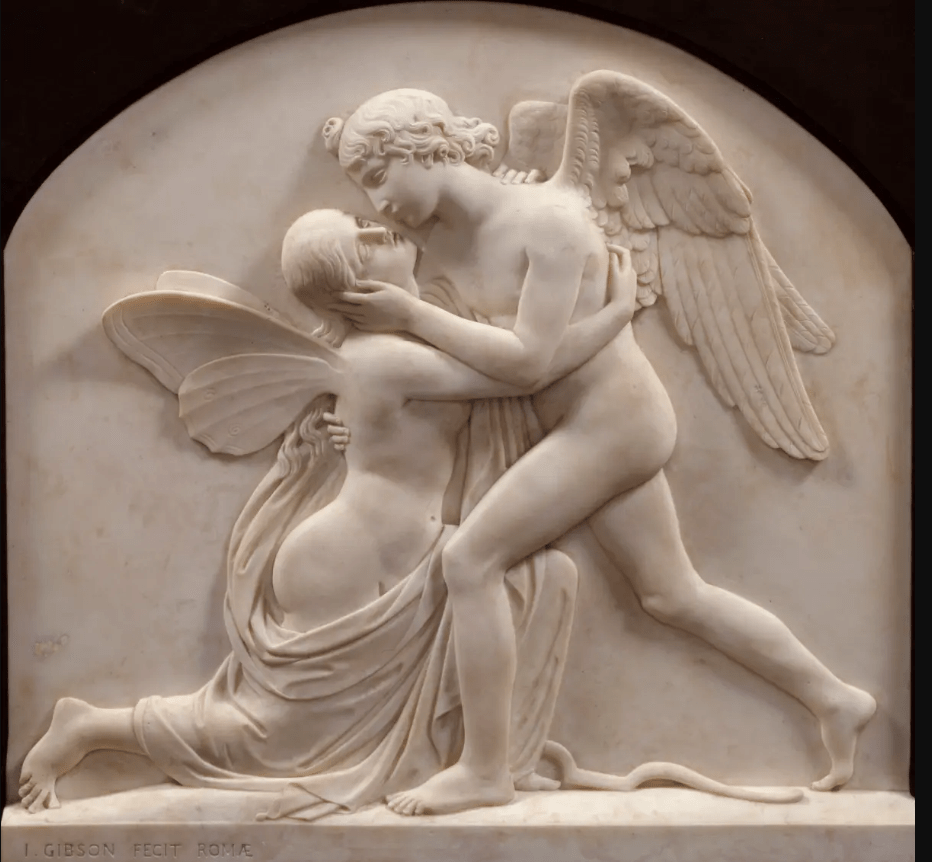
March is Women’s History Month… An integral part of the empowerment of women is the protection and advocacy by men of women in ways which enable women to thrive and grow, and not hinder or control. In Greek mythology, the mythical figure of Eros (or his Roman counterpart most broadly referred to as Cupid), has a story which embodies the protection of women through love. Eros is the son of Aphrodite in Greek mythology, he is best known for setting the stage for lovers to come together. He is symbolically the son of love. He is also signified by carrying his bow and arrows, where he symbolically strikes people with love. His role in mythology is a complementary one, which has made tales or Eros much less prominent in the subjective discourse of Greek mythology.
Stories about Eros remained popular in the Middle Ages and Renaissance, with the main tale about him being his own unique love story – his falling in love with Psyche and ultimately protecting her. The tale of Eros and Psyche is one that originates in Apuleius’s classical The Golden Ass. This work is the only ancient Roman novel in Latin to survive in its entirety. In this tale, the storyline is focused on obstacles of love (ironically, Psyche in Greek means “Breath of Life,” so the entire idea of love coming together is the idea of life itself). Throughout the tale, there are various punishments and tests which mark the entire scope of how Psyche is set to find love with Eros.
The tale begins rather simply – there was once a king and queen who had three beautiful daughters. The youngest and most beautiful of them was Psyche. Her admirers neglected to worship Aphrodite and instead prayed and made offerings to her. Aphrodite finds out and becomes offended by this, concerned that her power would be usurped and she sends Eros to have revenge. She wants him to strike Psyche with an arrow of love so that Psyche falls in love with a hideous man. Instead, Eros scratches himself with the arrow on accident and falls deeply in love with Psyche. A wind takes Psyche into a beautiful meadow to bring her together with Eros, but she promptly falls asleep. She awakes to find herself looking at a majestic house with golden columns and with a carved ceiling, silver walls, and a jeweled floor. She is guided to a bedroom where she takes a lover in the dark and eventually becomes pregnant. In all this time, her family wonders what became of her and and Eros allows her sisters to pay a visit.
When her sisters discover the majestic house she lives in, they become jealous of Psyche. As a result, they prod her to unveil her husband’s identity. She does this, but while in the process, and being so surprised by Eros’s handsome appearance (expecting her disguised husband to be one of shame), she accidentally injures herself and he awakens in the process, flying away and then leaving Psyche on a river bank. The other two sisters offer themselves as a replacement, except they are sent to their deaths. During this time, Psyche comes across a temple of Ceres and offers to help, where she soon finds out that she will be serving Aphrodite herself. She is brought to her two handmaids, named “Worry” and “Sadness,” and then she is tortured by them. She is left in a heap of wheat and barley demanded by Aphrodite to organize. An ant takes pity on her and then forms an ant colony to take over and do this work for Psyche. Aprhodite is furious that the work is completed and only gives Psyche a crust of bread.
Psyche faces additional tasks under Aphrodite – she must cross a river and fetch golden wool, as well taking a crystal vessel to collect black water from the infamous river Styx. The god Jupiter takes pity on Psyche and sends an eagle to collect the water for her. Beyond these tasks, then Psyche is sent to the underworld itself. Aphrodite believes a beauty potion is there as she thinks her beauty has begun to fade by taking care of her son, Eros. Once Psyche arrives at a tower in the underworld, it gives her instructions and speaks to her. This tower tells her to stay silent and ignore the strange things she will see. She achieves finding this potion in the underworld and becomes curious about it herself, only to discover that the potion is nothing at all, except sleep. She is then sent into a deep sleep – like Sleeping Beauty.
All along the way, Eros has healed his wound and flies out the window of Aphrodite’s house. He finds Psyche asleep and awakes her and puts the sleep back into the box to give to Aphrodite (who assumes this is a love potion – another ironic thing is to recognize that sleep is great for beauty). Eros brings the story of his love for Psyche to Zeus and makes a case to him: Zeus then allows Psyche to become an immortal god and this union ends in a happy marriage. Perhaps the most fascinating element of this tale is to recognize that love never has a clear path in life. We can conceptualize all the rights and wrongs of how we can go about finding love, but ultimately, life itself has its trials and tribulations and it is the fact that love exists and that love finds its way to us in the most unlikely ways do we realize how there is no methodology to love. This is greatly exemplified in the storyline that Eros accidentally strikes himself and finds love in an entirely unintentional way, yet he persists and protects his love.
The entire scope of our experiences in life is shaped by our willingness to accept its ambiguity, and to do good and act wisely, in the best ways we know how. Furthermore, Eros embodies a protector of women through his love of Psyche.
The story originated in 1566 and its truths remain unchanged in times of modern technology and AI.
Gandhi said, “You must be the change you want to see in the world,” and that is something I truly believe at the core. It takes one person to mobilize a movement. It takes one domino to affect an entire chain reaction. It takes you. It takes me. It takes all of us to learn about the roles we play in systems which impact the environment, our shared home, of planet Earth. The land we inhabit is as spiritual as the food we consume. The Earth is an extension of ourselves, of our capacity to share love, and love Earth back. We can choose to love Earth. Loving Earth means stopping any form of senseless ignorance over climate mitigation tactics. It will be our own demise if humanity chooses its own type of existential self-destruction if it opts to continue pursuing mindless consumption and a general mindlessness of the unsustainability of our current resources (and how they may or may not regenerate aspects of life on Earth). Regarding extinction, I will not dive into the specifics here, as extinction is a broader topic which undoubtedly has a shocking domino effect on our ecosystems and unfortunately it may already be in an irreversible pattern. Beyond the painful realities of global animal extinctions, it is our duty to mindfully consume, step into shared resource generosity and reciprocity, and collective learning, action-taking and policy-making, as cultures and nations join together in global cooperation.
Despite all of the machinations of modernity: from the emergence of complex technologies such as Artificial Intelligence (AI), which brings about complex and confusing implications across industries (and it is being massively developed only a few miles from where I write this from). This does not mean you should ignore these developments. It makes it all the more important to step up and learn across as many topics as you can. We are at a precipice in America, and globally, of how we decide what we care about most. I hope, beyond a doubt, we choose every single policy that favors our planet before mindless ideals of “market viability,” when it comes down to gas prices or trivial economic realities we have a tendency to falsely blame short-sighted economic behaviors, surrounding topics such as inflation, as the source of all of our “problems” in this country – believing inflation is our biggest issue is a deflection without a doubt, and within that deflection is the reality that many Americans are economically hurting. Americans who feel they “pay more at the pump” certainly hurts when working hard for every dollar made, including myself. However, conceive of a nation which is no longer dependent on gas, nor electric vehicles either, as we will also certainly have power grid issues emerge in a long-term environmental crises.
It almost feels nonsensical to consider a world where Americans could potentially adapt to life without their cars, but these are some of the looming large problems we face. At a minimum, I believe that we will need to begin restricting the number of vehicles per household to reduce carbon emissions to start to spur real change. This is an imperative and policy belief that I stand by. I am a proud American and I also face environmental realities: the days of Hummers for fun are long gone and were always irresponsible (which garner an average of 11 miles per gallon (MPG), whereas a Toyota Corolla garners an average of 40 MPG by comparison). I don’t currently have a car and know that my carbon footprint is significantly reduced. This is one way that I have mindfully contributed to the environment and chosen to maintain that perspective for some years. Public transportation works well for me and my family. On average, it is a reduction of 1,000 pounds (.5 tons) annually per household of carbon emissions when not driving a car. Imagine how this could make a positive impact on the environment with reduction rates made by millions of people.
We are entering into an economic space globally which may transcend the imperatives which are isolated to the economic metrics which measure inflation. We are going to be entering into a resource scarcity era soon, if not already. This is not about “being right” or “feeling right,” anymore for anyone – the power we each have goes beyond our opinions of topics or politics, we are existentially under threat from ourselves. It is no longer the time to stay silent about issues like the environment, to fret about which side may not be “right,” to enter in on. Every single part of this global crisis is messy and complex. Accept the complexity and learn to embrace it. Learn about Complexity Science to enter into complex conversations around the environment with everyone in your life. Learn about how to grow your own food. Learn about how to access locally grown food. Learn about minimizing your consumerism as a whole – stop shopping for senseless things (I need to tell myself this, too) – actively live as mindfully as possible, this if anything, is part of a global solution to lowering carbon emissions. Beyond our individual lifestyle choices, there are entire industries which will need to face facts and see what their choices will do to further complicity in environmental damage or choosing a new path forward, if entirely stopping some production lines.
Eckhart Tolle often speaks of collective consciousness and awareness as a way of transcending individual and cultural pains. I do believe we must make sacrifices from our own impulse based consumerism and step towards deeply sustainable lifestyles. The pace we have may not be the pace that Earth chooses to respond back to us, but confronting our shared reality is far better than stepping back and remaining ignorant. This is a form of complicity that should be called out from the top, from the government policies we work to enact during these times. We cannot waste any more precious time for our planet’s sake and for the future of our planet’s sake.
The world holds questionable attitudes related to dualities – as if nuance cannot exist within duality, as if there is only science or only religion, as if the two cannot exist side by side; the same goes for identity and religion. They do exist, side by side, and they will. The tremendous accomplishment of developing and deploying billions of COVID vaccines globally proved that we can work together in global cooperation. We can and we must going forward. Every component of our existence is duality – our bodies have two sides mirroring itself into symmetry, that in of itself is a duality. The way the eye perceives and receives light is the same meta scaled image as how the Earth receives light from the sun. We are layers on top of layers of complexity in our existence. The dualities such as Light and Dark; Yin and Yang; Peace and War; within every duality are truths which reside in states of contradiction. If I can communicate a truth within our contradictions, I can say that we are going to confront ourselves repeatedly in crises due to the environmental crises which will accelerate.
It is within these complexities there emerges patterns. Patterns will determine our combined fates. Ultimately, fate is a choice for engaging in patterns. Do we choose to mindlessly consume and squander our beloved Earth’s resources? Or do we work to actively mitigate this and learn how to become closer to the land and live in existence with it? How do we do that without going to such as extremes as believing we need to be “off the grid” to accomplish this as a modern country? Perhaps “off the grid,” simply means becoming in community with your neighbors again and giving them extra fruit you have and engaging in reciprocity. It starts with the little things – little things become big things. Sharing our resources: we have the capacity within us to do this. Re-wearing our clothing without the incessant focus on trend-based style – stop buying clothes mindlessly at the minimum. Learning about renewable fabrics that actually act for the environment is one way to pursue a sustainable wardrobe.
At the end of the day, the climate crisis is not a ‘communism’ vs. ‘capitalism’ type of debate. This is an existential survival debate. I am starting to believe in the ideas around being a “prepper” – the idea of preparing for the worst. This is how everything feels nowadays. I believe no external incentives will work well at the scale we need it to: I believe that all incentives are activated through internal motivations. Our passion for the Earth and the betterment of the world needs to be activated deep within us, not through misguided visions of success, which is no longer about the excess accumulation of material wealth. We are part of the answer. We are part of the movement and we can decide to be better.
Our only chance in the climate crisis is to believe in the contradictions as its deepest truth. Our environmental state (and the states which this multi-layered crisis will generate in other countries), cannot be spun as a fairytale for commercial purposes; greenwashing for commercialization purposes which have limited large-scale viability is not the outcome we need to pursue in these crises. Marketing is going to be a critical tool, in some ironic demise of its own industries, to how we can enact large-scale changes.
It is our imperative to believe in full systems change approach to living – it is our deepest responsibility to the land and our lives. We will all need to stop consuming mindlessly. We will need to cohabitate ideally in small communities at scale, share resources in peaceful reciprocity – rooted in the belief that humans can be generous, kind, and loving at the core (no more “winner takes all” mentalities in this lifetime). This is the best we can possibly hope for in a world that is set to descend into resource scarce chaos, which I believe is preventable if we become collectively aware of what we face. The beauty of truth that we can rely on is that humans are capable of love and generosity, despite how we may view the state of humanity right now.
Beginning in 1933, Sears released their Christmas Book catalog in August or September, which was later rebranded to be called the Sears Wish Book. Even as early as the 1890s, Sears sold Christmas related items, such as wax candles for the tree and the first Christmas tree ornaments appeared in 1900 from Sears. In 1910, Sears began selling artificial trees and stockings for Christmas. In a truly fascinating study of American life, Sears had an all-encompassing lifestyle brand going – from lawn mowers to washing machines, from clothes to toys, at one point, Sears even sold full-scale mail-order houses you could build (Wikipedia page on this here), homes built from 1908 to 1942. These homes undoubtedly spurred the American DIY (Do-It-Yourself) movement. Sears sold more than 70,000 home building kits, which are mostly located in Illinois, Ohio, Pennsylvania, and New York. Some of these homes still stand today and with great quality materials to boot. Some homeowners today decide to create modern replicas of the templates of the Sears homes from the original masterplans of those homes. It is actually incredible how much Sears, as a brand, embodied the American Dream and inspired the American DIY spirit.
A Sears Modern Home in Benson, North Carolina
As far as the catalogs went for Sears, by 1968, the Wish Book was a whopping 605 page catalog. The catalog, in particular, has charms and style that created the template for American trends in consumer style. Up to 7 million copies of the catalogs were printed each year as well. The catalog was also an opportunity for there to be no racial bias in folks making purchases, whereas in the Sears stores, there could be ‘better products saved for white people,’ according to PBS. The catalog allowed anyone and everyone to purchase nice things. Additionally, if you did not write well in English, there were linguists who translated orders written in different languages. This is an example of pursuing the American dream in an equitable form.
By 1998, the Wish Book was transitioned online, and by 2023, it seems to have been phased out all together, but the Wish Book of the 1940s is available for print from PBS and is a fantastic Christmas present for your loved ones – a peek back into the years of a very different America, one where some aspects were joyful and festive, and other elements which were tremendously problematic. Additionally, due to the wartime based context, the consumer demands became revitalized and in new ways. Nonetheless, the ways in which Americans pursued their ideal lifestyle of “having a home and better life” certainly arose from wartime hardships. While this theme of the American Dream can resonate with many Americans even today, it is fascinating to note how the Sears concepts shaped so much of our conceptions of American style. The mainstream styles which Sears presented to Americans gave people the opportunity to step into the ideal image of their “hopes for a better life.” I find it especially fascinating how clothing in the 1940s, for example, had so much thought put into the outfit for the activity. I think the Sears of a bygone era is a great template for a company which can find its place in our current times again.



















 rosybvm.com