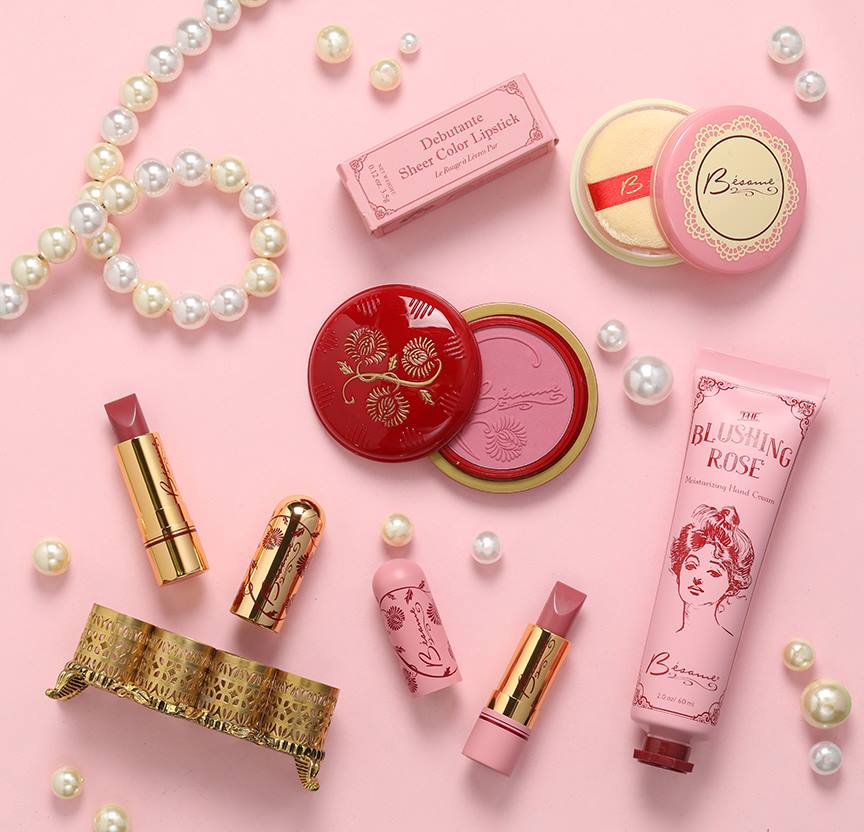
In my last blog post, I covered the cultural shifts that brands should be making to stay most relevant. The Mermaid Lagoon collection by Bésame Cosmetics, in collaboration with Disney’s Peter Pan, is exactly that – the novelty provided by this collection is outstanding. The mermaids of the 1953 film are a highlight and have a remarkable amount of personality for a short appearance; the mermaids are in the film for about two minutes.
These feisty little mermaids embody charisma and attitude that is a lovely choice to inspire a makeup collection. This is Bésame Cosmetics second partnership with Disney. Their first was with Snow White and all of the products are authentically recreated in relation to the color archive.
Bésame Cosmetics is a wonderful company: their founder, Gabriela Hernandez opened the company in 2004 with her family; she wrote a book about the history of makeup, Classic Beauty: The History of Makeup and has a boutique in Burbank, California, that is recreated to be out of the 1930s. Her original 1940s style lipstick is also featured in the 2012 Academy Award winning film, The Artist. Quality, novelty, and history are all provided by this brand, and I am incredibly impressed.
It almost goes without saying nowadays that the most agile organizations will do better: they are more equipped to withstand unforeseen stormy markets or changes in consumer behavior, etc. However, it is culture that is at the core of an organization; it’s the values that the organization has and furthermore how this affects the services that they provide. This does not always take into account all of the factors that affect why or how services are used.
From the list provided by Richards, his first point is most important for brands to be most thoughtful of: “redefining” can entail roles, structures, and ideas – and it can make or break how organizations are able to adapt to external factors. Through this concept of redefinition, there can also be more emphasis on accountability internally and externally for organizations. That can be part of an organization’s redefinition of self. An ability to be highly adaptable in constantly changing times is what allows for brands to be most formidable.
A sense of extreme adaptability leads into his next point… tribalism. Tribalism is being seen in negative lights because of complex political climates globally. However, it’s natural to rally around something to understand it as part of the cultural ethos of something: for example, Benefit Cosmetics is synonymous with pinup culture of the 1950’s, which is what consumers expect from the aesthetic of that brand. Benefit has also generated a large community of women who are inclusive and support each other. Brands can generate communities for positive outcomes if they are keen to how this plays into their brand’s identity.
Communities beyond brands can be activist communities as well. Never before has it been more simple to generate capital for a specific cause (GoFundMe) or to sign a petition for change (Change.org). The most important aspect of these tools, however, is remaining authentic, though. Richards states, “No matter what your product or service is, there can be huge benefits in aligning yourself with a relevant and worthwhile cause. Meanwhile, the risks of being called out for inauthenticity are enhanced.” His statement is absolutely right; when companies miss the mark, they will hear about it. It’s important to be conscious of what causes you take ownership of.
Last, but not least, Mr. Richards mentions “naivete,” and “conscious consumption,” as important cultural shifts. Naivete presents an opportunity for brands to create joy and novelty in consumers lives, and there is still a plethora of opportunity for that. In hard times, it can be small joys that make one happy. And lastly, “conscious consumption,” is something that brands always need to keep top of mind; this plays back into the accountability aspect of the topic of redefinition. Consumers will hold brands more accountable these days, and it’s a world of opportunity we have towards a more sustainable future.
The Marie Antoinette inspired living room.A 50’s housewife inspired kitchen.
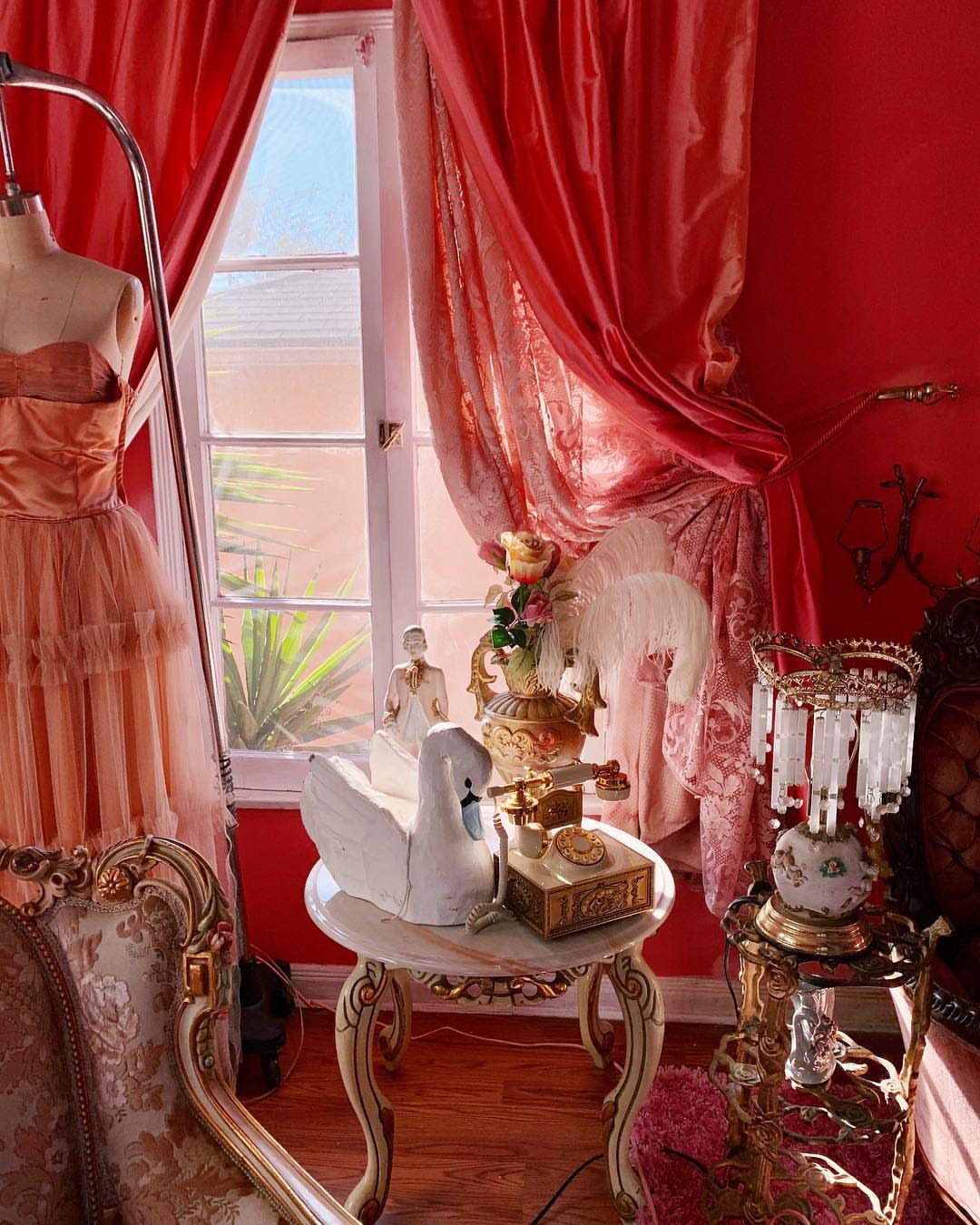
The RagDoll Pink Palace in Los Angeles is a life-sized dollhouse created by Carol Chavana. The venue has become a premier destination for professional photo shoots and film sets for Hollywood. Inspired by a combination of styles including the infamous Pink Palace owned by the late Jayne Mansfield, The Madonna Inn of San Luis Obispo, vintage Barbie, red and pink lipsticks, and Lana Del Rey’s music, the house is a “girly girl” dream come true.
The origins for what propelled Carol to pursue her creative dreams comes from a tale of horror that she witnessed in 2015. Carol witnessed a car accident where a young man was struck by oncoming traffic and was left paralyzed by the accident. The trauma of the imagery that she witnessed gave Carol the understanding and inspiration that she should pursue her creative dreams.
The house has themed rooms that are meticulously styled with antiques and a clear passion for beauty and glamour. They also include original art pieces by Carol (such as below). I think this brings an especially unique touch to the house that she styled so fabulously! Renting the space for photo shoots and film sets is great, but I also think Carol’s story for how she pursued her dreams is an important one and all the more reason to use her space: our time in life is limited, and remembering to pursue our dreams is all that matters at the end of the day.
Artwork by Carol ChavanaPop singer Loren Gray posing for a photo is in the Valentine’s Day themed bedroom.
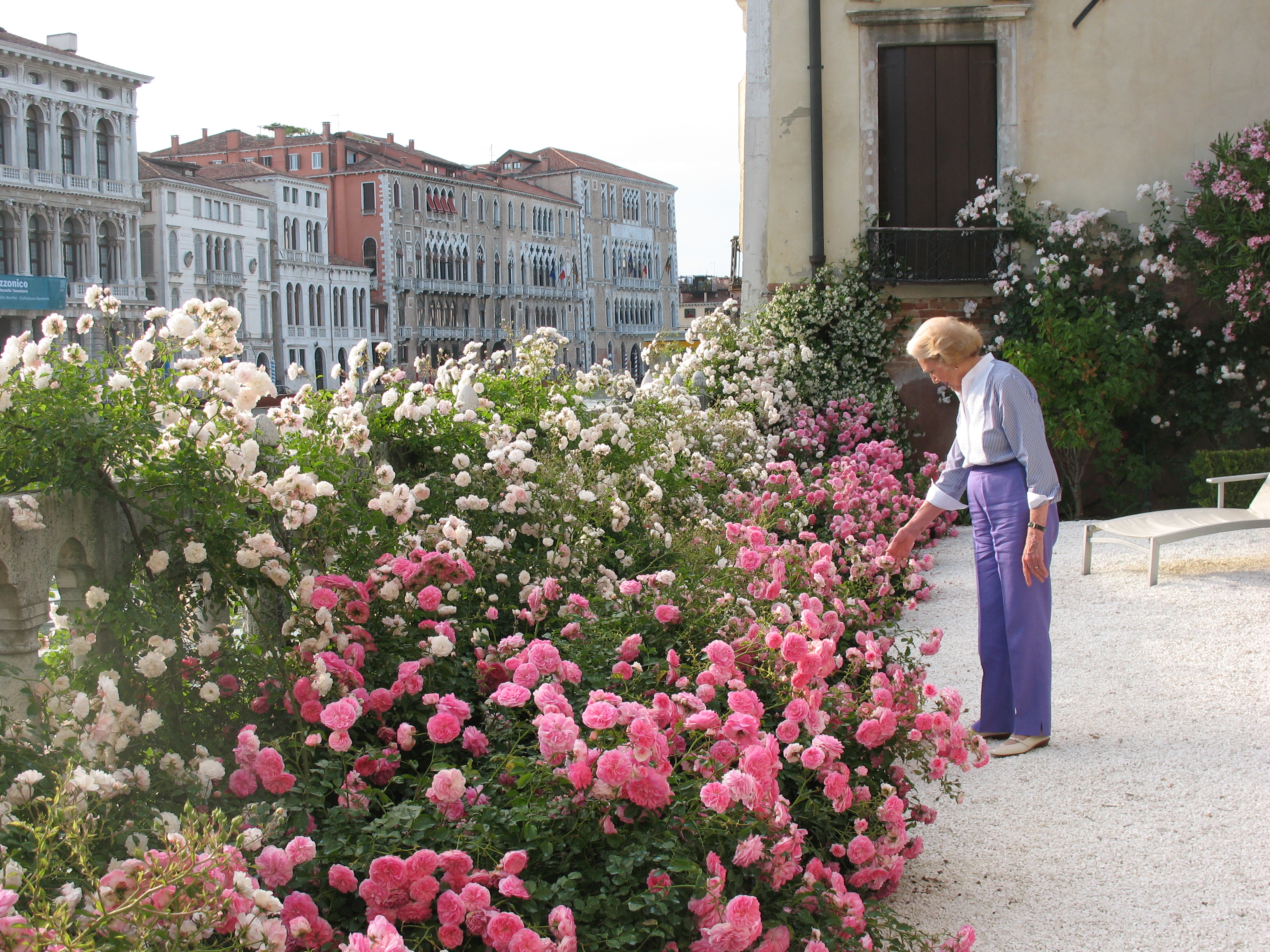
Countess Anna Barnabò in her garden.Pink roses are found throughout her garden, which I adore.
Life naturally has an uncanny way of sharing illustrious surprises; a rose garden exists in a palazzo that is situated along the Grand Canal in Venice, Italy. The palazzo and now-famous rose garden are owned by Countess Anna Barnabò, and her property has been described as a “sumptous antique-filled palace with verdant gardens spilling onto Venice’s Grand Canal.” When I first learned about this rose garden in the center of Venice, I could barely believe that it existed – the luxury to have the space and the opportunity to create a rose garden, it’s almost unbelievable! I hope to visit this garden someday.
The Countess has put much effort into tending her rose bushes along the salty waters of the lagoon and making sure that it stays well taken care of: this is a good lesson for us all. We must always bring a caring touch to what we care about most and remember that blooms come from love.
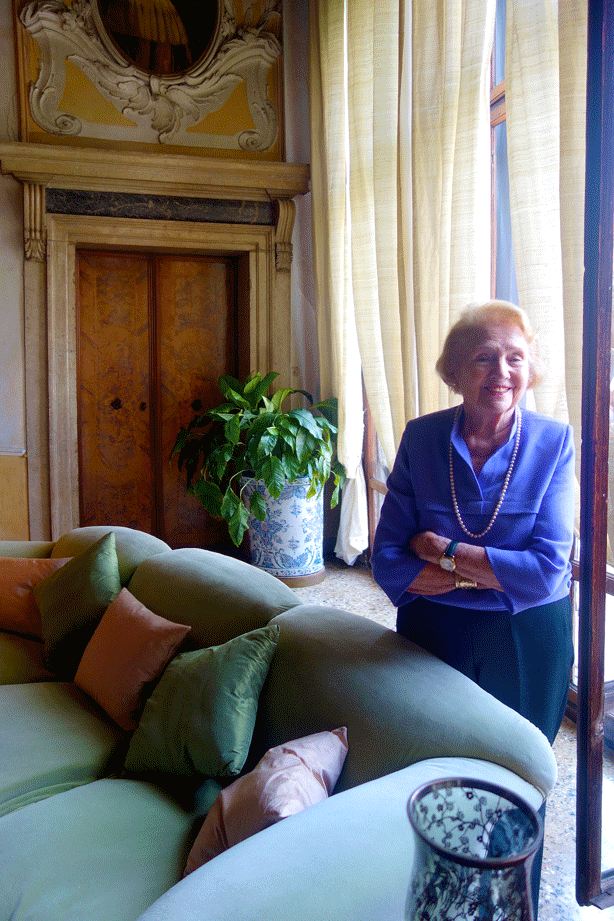
A fresco in her drawing room.A Murano chandelier in her drawing room.The Countess in her home. Her gates have the letter B mongrammed into it – something I hope to have in my home someday.
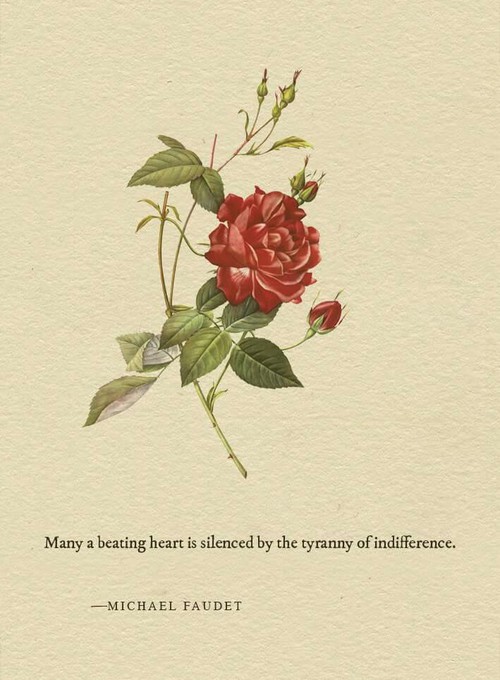
“I never lost sight of the real you – the goodness that lived within your heart. Even when you did your best to convince me otherwise.” – Michael Faudet
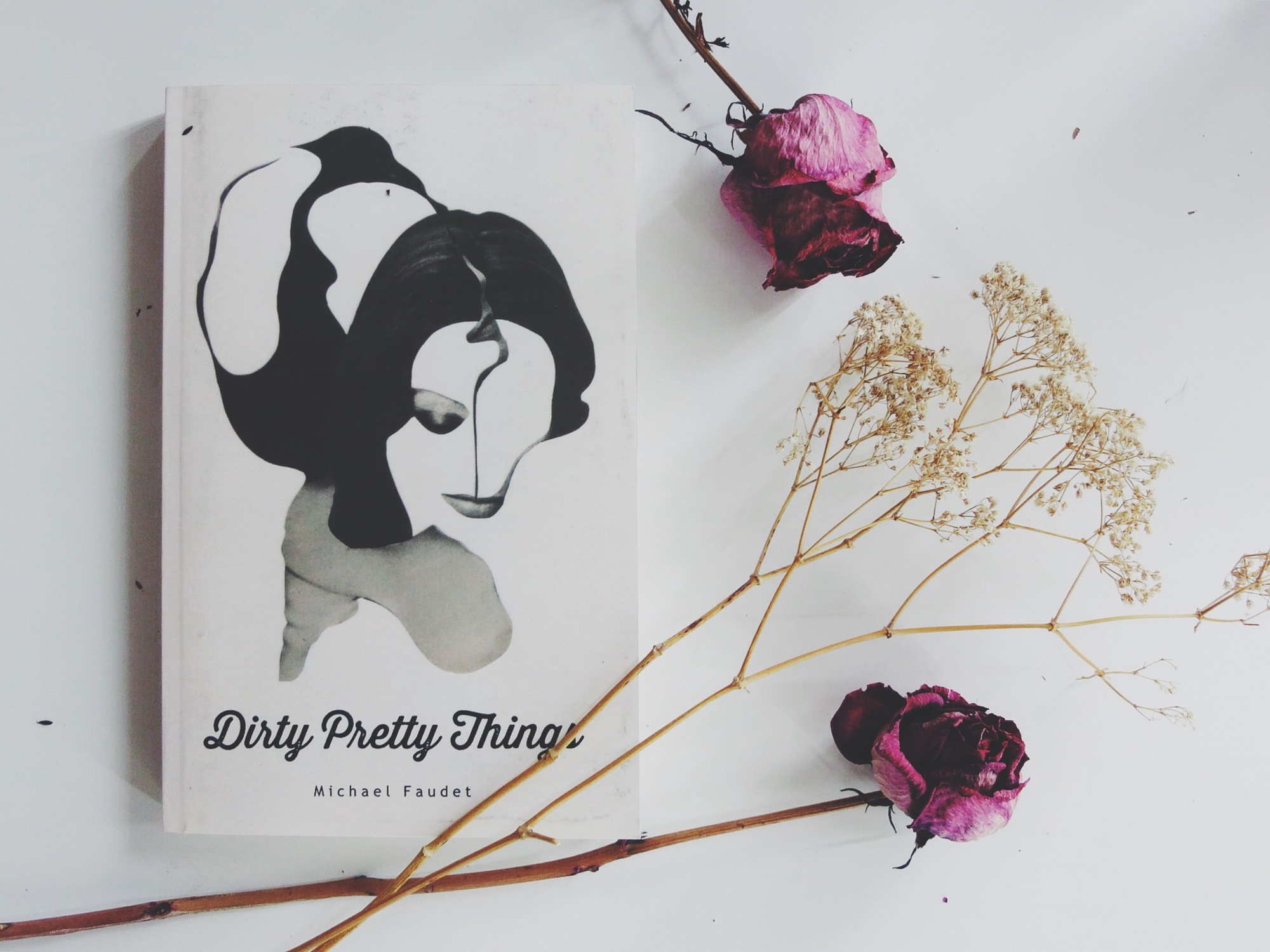
Michael Faudet, international best selling author of Dirty Pretty Things, Bitter Sweet Love, Smoke & Mirrors, and his newest book, Winter of Summers, which was released in Fall of 2018. Michael, truly, is a magician of words and is a natural at expressing and putting a spotlight on how love plays a central role in the human experience.
His writing has captured the hearts of many around the world. With over one million followers on social media, his books about love, emotion, and the human experience can touch us all. He has undeniably inspired readers and his talent has generated much-deserved adoration for the mysterious writer.
Mr. Faudet generously answered a list of questions for me, and I am incredibly thrilled to share them here. From his famous relationship with fellow best selling author, Lang Leav, to reflections on how his writing has spread across the Internet, to how New Zealand and his little house by the sea has been a source of inspiration for him, Michael has certainly brought fragrant roses to Rosy BVM, and I hope you all enjoy this interview as much as I do.
xx Bianca
Bianca: How long have you been writing and did you always want to be a writer?
Michael: I’ve always written in one way or another. Even as a child I had a habit of writing weird and wacky stories. I also enjoyed many years working in advertising as a creative director, creating campaigns for numerous international brands. So writing and playing with words has been an integral part of my life.
In 2008, I walked away from the hype and hustle of advertising and moved to New Zealand. It’s here that I wrote my first book, Dirty Pretty Things, and every book since. And I hope to write many more in this beautiful part of the world. (Including my first novel.) Of course, none of this would be possible without the wonderful support of my readers.
Bianca: Much of your poetry comes in short bursts (short resonant bursts) and there’s a distinctly human quality to them – themes of love, erotica, and the human experience: do you think this resonates more intensely with readers today because our experiences have become so digitally based?
Michael: I believe it’s a blessing and a curse that so much of our lives have become digitally based.
The internet presents a world of information within reach of our fingertips, which in itself, is truly amazing. Social media allows us to connect in ways that previous generations could only dream about. However, on the flip side, it’s so easy to become sheltered from the real world. To lose touch with nature and relegate the human experience to a handful of clicked emojis.
I think the reason why my writing resonates with readers today is less about digital alienation, but perhaps more due to the fundamental truth that unites us all and never changes. The basic human desire to love and be loved in return.
As for brevity, there are times when just a few words can capture an emotion more succinctly than overwriting an idea to death. Other times, a couple of lines isn’t enough to do a particular piece justice. (Often far too many words to post up online.) Which is why I tend to keep the more lengthy examples of my poetry and prose contained to my books.
Bianca: Your poetry is so compelling and I think there is quite a bit of marketing genius in how your poetry appears across the Internet. Do you think Internet lore has helped to build your following? Given your experience in the advertising industry, did this come naturally to you or did the spread of your work occur organically?
Michael: There is no doubt the internet can provide an author with exposure and a great opportunity for their work to find a much wider audience. But it’s certainly not any guarantee of success. The same rule applies to writing as for any other piece of posted content. If people like it, they will share it. If not, it goes nowhere.
Any following I have built has happened more organically rather than by intention or some ingenious masterplan. If my experience in advertising taught me anything, it’s that the real power always rests firmly with the customer. Books are no exception. Like I hinted at earlier, it is all thanks to my readers that my books sell and make it into bestseller charts. Something I am truly grateful for every single day.
Bianca: You and Lang are certainly a literary power couple: do you consider your works to be symbiotic or in dialogue in some way? I consider this as you write, “I write because you exist.”
Michael: There is no doubt that Lang and I inspire each other in many ways. And yes, a few of the pieces we have written are certainly dedicated to each other. Having said that, we tend to put our creative energy and focus into our own individual books. There are times we discuss ideas together, but on the whole, we prefer to operate as single entities. Lang likes to write at home in her studio. Whereas I prefer to write sitting in cafés with a coffee or a glass of wine. Having a bit of space between us seems to work well. Especially now that Lang is working on her second novel. The less distractions, the better.
Outside of writing, we naturally spend all of our time together. We live a pretty quiet life in a little house by the sea. Which we share with a crazy dog, two cats, and my son, Oliver. I often get to travel with Lang when she does her overseas signing events too. At the end of last year, we visited the United States. Where Lang did sold out events at Barnes & Noble bookstores in LA and New York. (I also got to do some stealth signings, including the legendary Strand Book Store.)
A real highlight of the trip for me was meeting some of my readers at Lang’s New York event. They were just so lovely and asked me plenty of interesting questions. I also got to chat with authors Amanda Lovelace, Cyrus Parker, and Yung Pueblo. Which was a lot of fun too!
Bianca: Do you have a magnum opus among your works? My personal favorite poems of yours are “Roses” and “The Gift.”
Michael: To be honest, that is a difficult question for me to answer. My personal favourites change with every book I write. I think I’ll leave that one to you and my readers to decide.
Bianca: The artwork on your book covers and in your poetry is distinct. Is there an era in time that inspired your style and aesthetic?
Michael: All the front covers, including my latest book, Winter of Summers, are created by the amazing Tinca Veerman. A brilliant artist based in Amsterdam. I consider myself very lucky that she allows me to use her collages for my books. There is something classical about her work, yet at the same time, the aesthetic is contemporary and highly distinctive. The first time I saw Tinca’s artwork online, I instantly fell in love with it.











 rosybvm.com