Nathaniel Rathbun, otherwise known as his stage name, Audien, is a 27 year old DJ from Connecticut. There are thousands of DJs in the world who specialize in Electronic Dance Music (EDM), some of the more notable being like fireworks in the night sky: rest in peace Avicii. My passion for EDM music began in my first year in college when I came across a free download from Grammy Award winner, Pretty Lights, from Colorado. I will never forget the moment that I first heard “Hot Like Sauce,” and knew that this was a different kind of music that would change the electronic music industry, and it did. It was pure marketing genius for Pretty Lights (Derek Vincent Smith) to give away his music to download on his website. The exposure eventually brought him to a Grammy Award. I was intrigued by the politics of him giving away his music before he became famous; Pretty Lights set the stage for a very fluid industry in the EDM world.
EDM festivals like the now MTV owned SnowGlobe festival in Lake Tahoe, as well as the infamous Electric Daisy Carnival (EDC) in Las Vegas have been unique culture carriers for electronic music. There is even an electronic music cruise called “Holy Ship!” that sails from Florida to the Bahamas. I personally think the most incredible festival would be the Electric Love Festival in Austria, where Steve Aoki stated that it was the “most beautiful” place he had ever performed. Hopefully Audien is invited to perform there next year, because I think he deserves to be on that stage.
Electric Love Festival in Austria Holy Ship! Music FestivalSnowGlobe in Lake Tahoe, California
All of these events have their tragic stories, but they also have brought millions of young people together to enjoy music together. With Audien’s emergence in the past couple of years, I think he brings a fresh air to the EDM genre, and furthermore, perhaps allows for this particular music genre to prove itself as more intersectional than music critics may see it as or have a tendency to pigeonhole. When I first heard “Hot Water,” which was a collaboration between Audien and 3Lau last year, I knew that the music industry had something special on their hands. Audien is continuing to prove himself, and I think his music is worth elevating; personally, while I enjoy Diplo to an extent, I think Audien is much better. It’s clear to me: the future of electronic music has arrived.
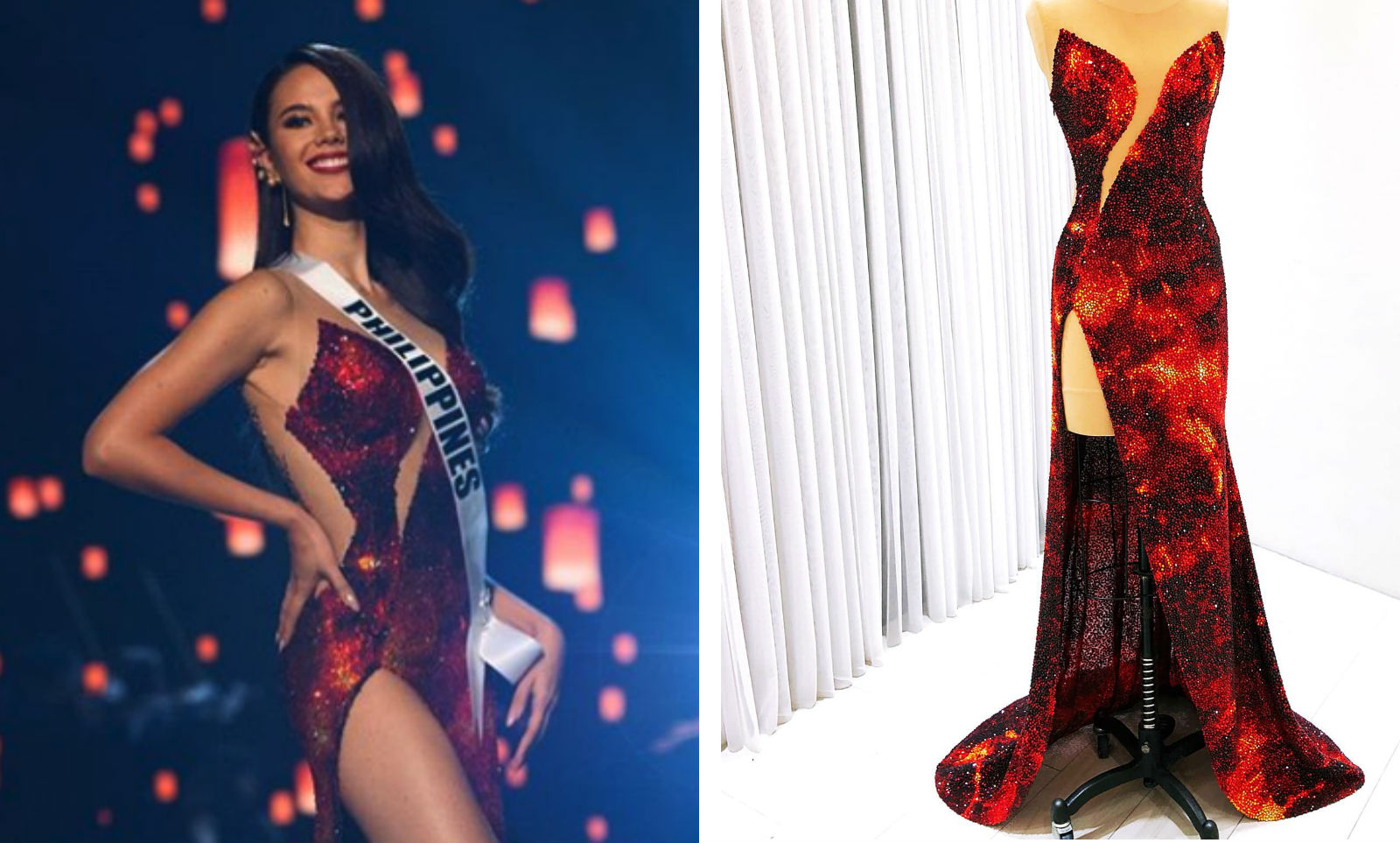
Haute Couture is evolving: from designers like Teuta Matoshi Duriqi and Valdrin Sahiti, and now, Mak Tumang, these designers are proof that you no longer need to be apart of the largest fashion houses in the world to produce exceptional couture. While ateliers have particular craftsmanship, it’s the name brand that no longer needs to stand as a signal for quality: designers who are not affiliated with a large design house can make it. Filipino designer, Mak Tumang, is a testament to this. He designed the winning gown at Miss Universe this year.
Catriona Gray wearing the now famous “lava gown” by Mak Tumang
Catriona Gray, representing the Philippines, wore her gown with great pride for her country, but beyond the opportunity to give recognition to the gorgeous designs of her country, this also allowed for her to be more confident by wearing Mak’s lava gown while she made her now famous “lava walk” down the runway at Miss Universe! Catriona showed the world that great couture doesn’t need to come from a famous design house, great couture is designed by designers with talent, and not always a famous design house behind them (yet!).
You can search far and wide for astonishing couture, and Mak Tumang, after designing the winning gown for Miss Universe is surely going to have an incredible career ahead of him. Fellow Filipino-American designer, Monique Lhuillier, was on the selection committee for this year’s Miss Universe competition, which I hope helps him expand his reach: I hope to see these designs on the red carpet at the Oscars this year. Congrats to Mak and a what a wonderful way to highlight the designs of the Philippines!
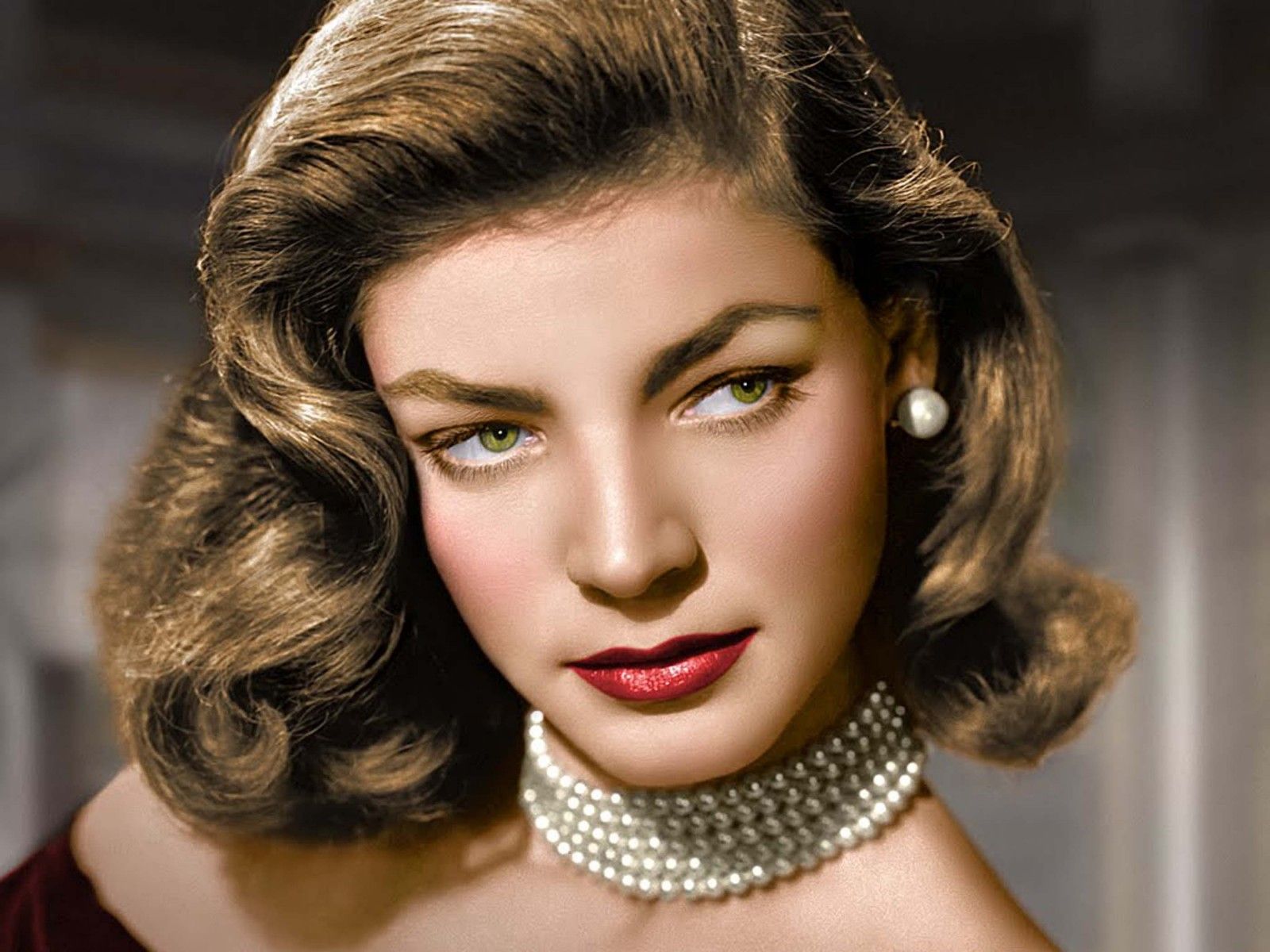
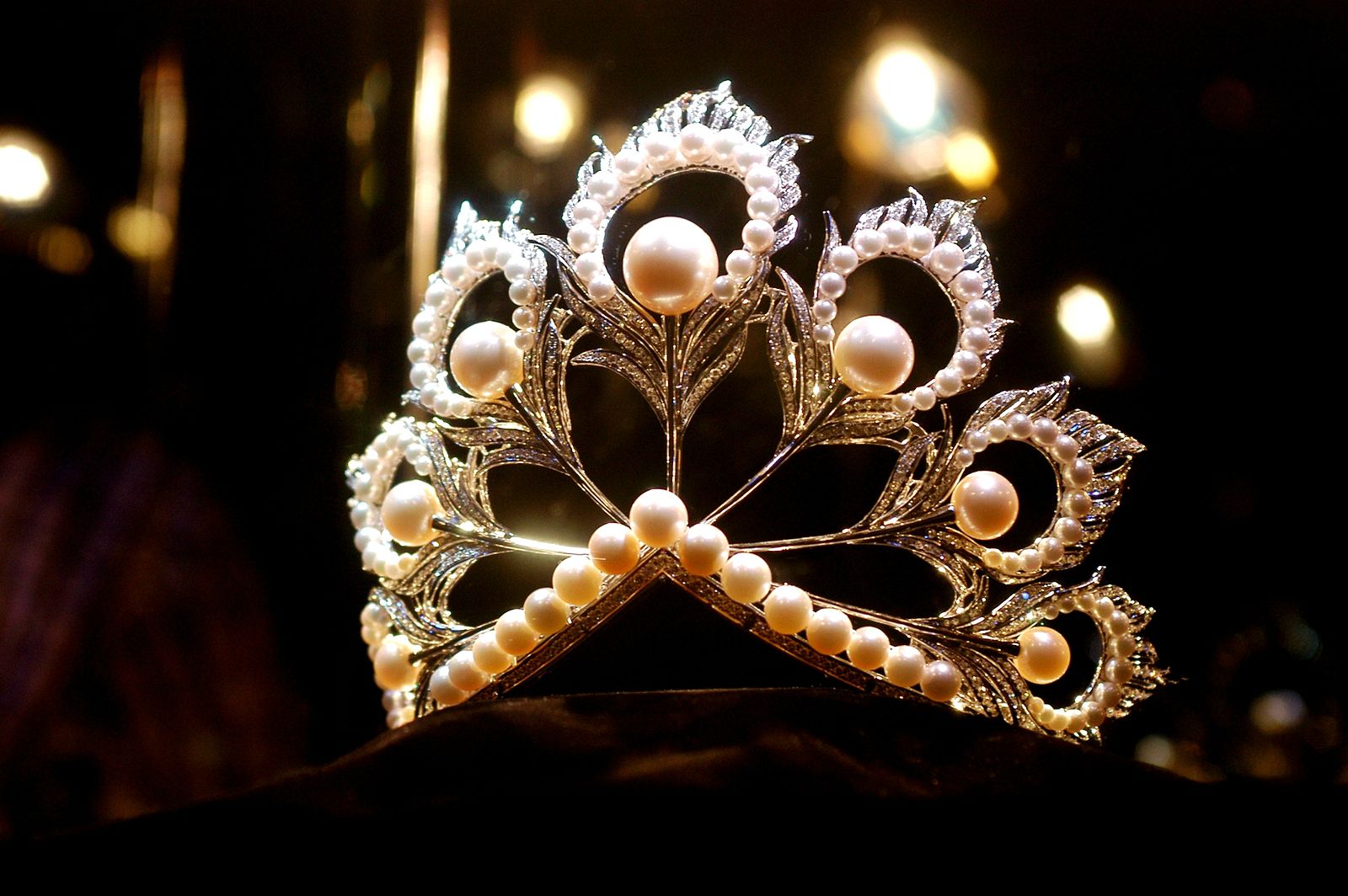
Lauren Bacall wearing pearlsMIKIMOTO’s Miss Universe crown requires a security detail wherever it’s worn.
The stone of sincerity and purity, pearls have long been associated with classic style, but I think pearls are timeless in any context. Its powers are supposed to enhance peace of mind and concentration, which given my love of pearls, I would say is quite accurate.
Pearls have been worn for centuries and I think they are arguably better than diamonds. Elizabeth Taylor and Rita Hayworth wore pearls by Imperial Pearl from Rhode Island, and Miss Universe is crowned each year with a crown of pearls by MIKIMOTO of Japan. The pearls on the crown are so precious and valuable that a security detail is required wherever it’s worn. The crown is valued at approximately $250,000.
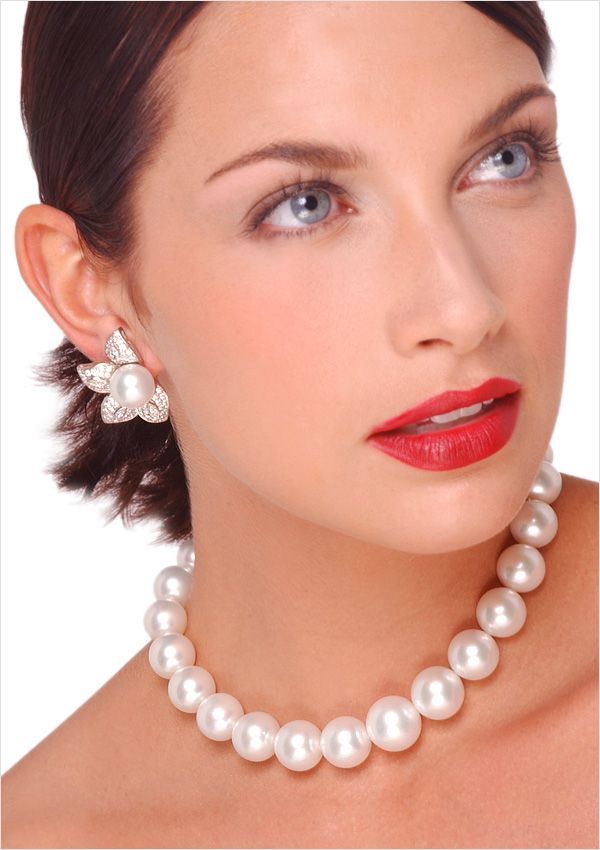
Pearls are stylish for every occasion, from casual to formal. It’s also my personal opinion that pearls are ideal to complete bridal looks: whether it be with statement earrings or a beautiful necklace, pearls are the best choice for a bride on her special day.
American Pearl has stunning pearls at a great value.
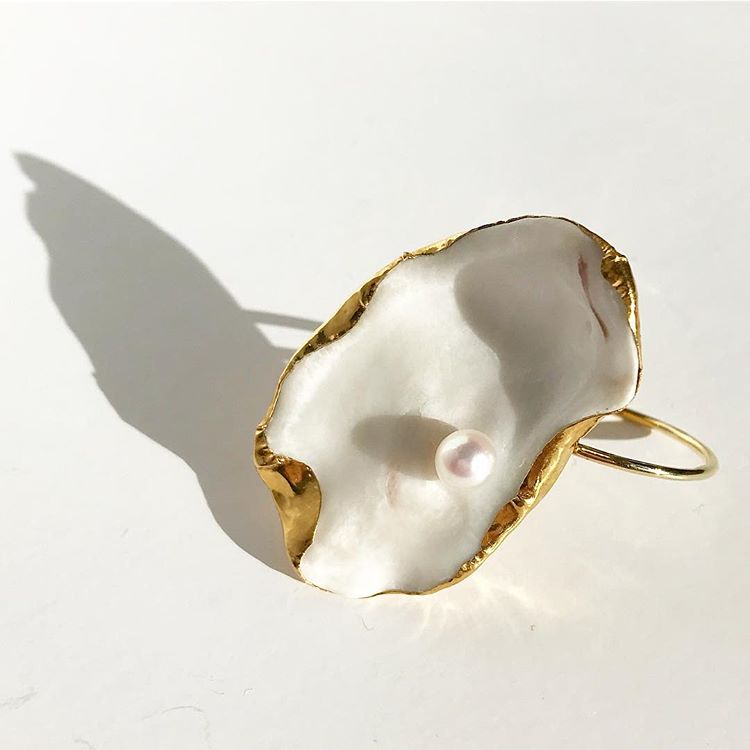
Beyond the classic choice of pearls (I’ve included a chart with pearl sizes below). I think that pearls can also be used in more modern pieces, such as this piece by Olga van Doorn from The Netherlands, where a double ring holds up a mother of pearl oyester with a pearl, I love that piece! Pearls have endless size and color combinations, and to me, they are more versatile and beautiful than diamonds.
Olga van Doorn’s double ring piece is extraordinary.
Admittedly, I was a Gossip Girl fan from when I first read the book series in middle school and elatedly saw the first episode when I was in high school in 2009. The quick wit of the characters is truly a highlight, in the book, and on the TV show. With that said, it goes almost without saying that the elitism that many of the characters know as a way of life is something that is questionable.
A couple weeks ago, I ordered a few seasons on DVD from Amazon and watched them on the weekend, reminiscing on how valuable I saw this show when I was younger, for its complex plot twists and overall raunchiness. However, I didn’t have the eye as a young teen that one thing is strategically omitted, albeit lightly touched upon throughout the duration of the show, philanthropy and the need for social good.In the TV show, the characters use charitable works as a way for personal social achievement, but not as a way of improving the life circumstances of those who are less fortunate than the characters – and the characters are all UHNWI, which puts them in a position of great privilege and scrutiny.
I was mentioning to a colleague that I had been re-watching the show in my spare time, and they quickly said to me, “Did you notice that they all ride the bus to school in the first season and then they’re driving Porsches in the next season? How did that happen?” I was totally struck by his observation: it’s true, the first season shows Dan, Nate, and Chuck all riding the bus to go to their prep school, St. Jude’s, and the next season shows Nate receiving a Porsche as a gift from his grandfather in the Hamptons and Chuck always being seen in the back of a limo, practically as his permanent lair.
There is definitely a lack of “normalcy” in these high school students lives. Realistically, the youth of the ultra wealthy may not be living it quite as glamorously as the show depicts, but then again, the show is intended to reveal the lives of the 1% in the US who can live as lavishly as they can imagine… from Chuck using his trust fund to invest in a burlesque nightclub to Nate being caught up in the dark world of underground high stakes poker games, where the buy-in is many thousands of dollars. Hedonism is a recurring theme of the show, but it also serves an allegorical function: when you can have everything in the world, can you stay humble and not let your position in society get to your head? The answer is yes, you can.
Blair Waldorf is the ultimate example of the “cookie cutter” perfect debutante, but beneath that veneer is a troubled young woman who seeks social approval wherever she turns and continues to grapple with issues like her father’s departure to another country, his relationship with another man, her best friend’s abrupt departure from NYC, and an eating disorder that she develops. All of this happens while her mother is concerned with the IPO of her fashion company, Eleanor Waldorf Designs.
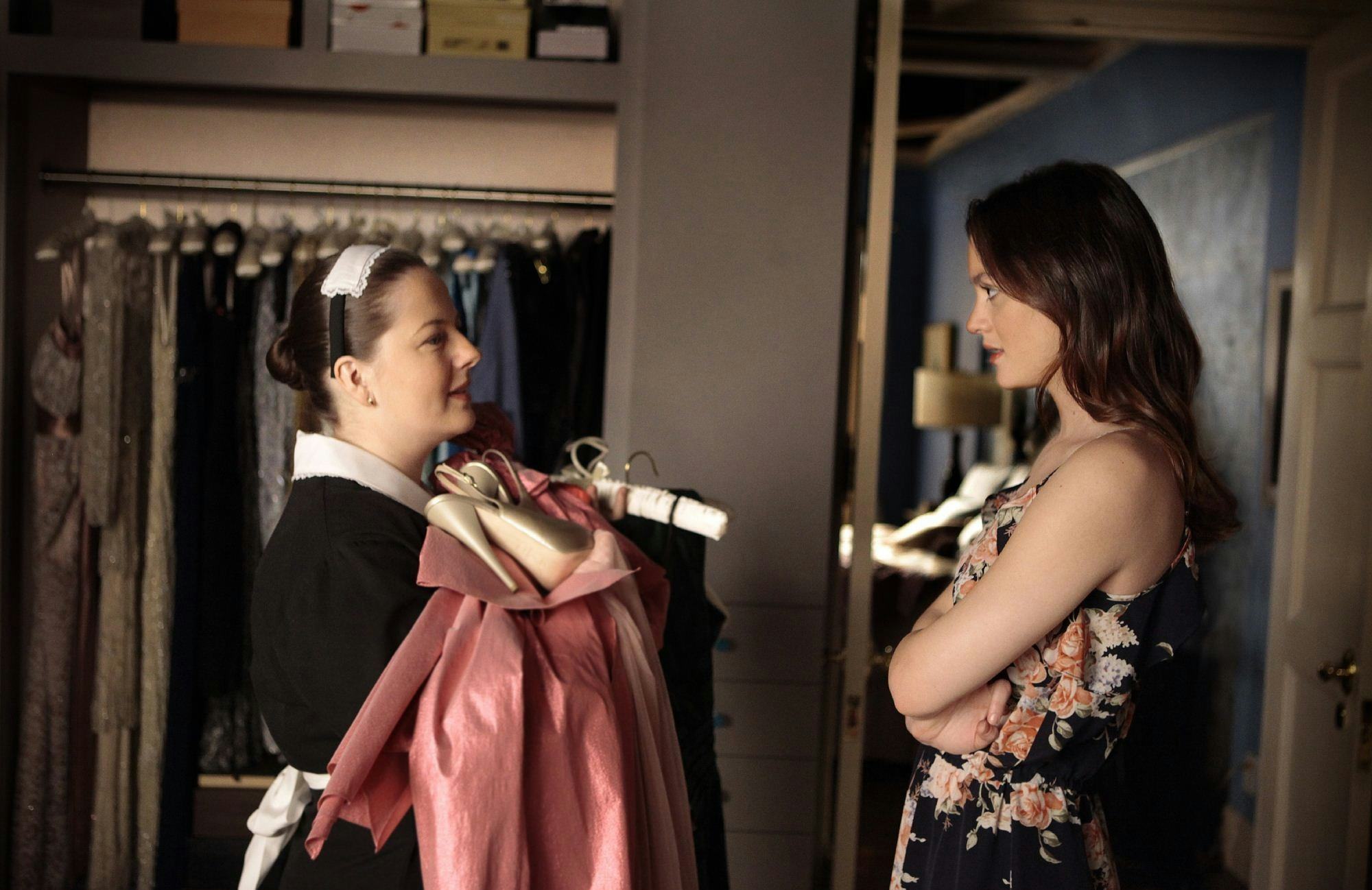
Beyond all of the problems that she faces though, Blair is a complex character who knows right from wrong, even though she does not always act upon it, and has a cruel streak that is questionable – especially in how she treats her maid, Dorota. Their friendship is arguably one of the highlights of the entire show. Despite all of this, there is not a moment where she dwells on how she can create real social change in the world, as she does sit atop of the hierarchy of New York society as “Queen B.” It’s truly unfortunate to see where her priorities are in that way.
Dorota and Blair
When attending her debutante ball in the first season, Blair’s announcement to the guests at the event by the committee chair reads that she plans to devote her time to “children’s charities,” and when Serena, Blair’s frenemy, plans not to attend the event, Serena’s gin-loving grandmother, CeCe, has it written into the event that Serena “plans to join the Junior League and the board of The Nature Conservancy.” Serena is essentially bullied by her grandmother to attend the ball with a young man, Carter Baizen. CeCe deems him suitable for Serena, while he is a shady character with gambling debts, but he has the superficial title of being suitable for Serena in her social circle. Her lover, Dan Humphrey, isn’t deemed suitable to escort her because he’s from Brooklyn and isn’t part of a lineage of old money.
When Blair’s Yale acceptance is on the line, her father commits to “donating a study abroad program in France” as an attempt in securing her acceptance to Yale. On the show, Blair is not accepted to Yale, but in the book she is. This is basically the extent of their philanthropic endeavors depicted on the show. These are all great things, but I think this show perfectly depicts the need to step away from the classic institutional giving model and think outside of the box – a way of giving that can truly create social change.
The only notable mentions of social change is thematically with the character Vanessa, a biracial young woman living in Brooklyn and her time she spends with the Humphrey family in Brooklyn. Rufus Humphrey is a former rock star who is still living on the glory days from his band’s fame in the 90’s, his son Dan is a literary phenom who gets his poems published in The New Yorker and gets accepted to Yale, and his young daughter Jenny, an aspiring fashion designer who eventually gets caught up in the dark world of trying to become something she’s not (an ultra wealthy debutante).
Vanessa is Dan’s childhood girlfriend and is living on her own trying to make a living at a coffee shop and likes to make documentaries in her spare time. She is only in high school, but living with the stresses and pressure of life like an adult. Vanessa’s life is an extremely far cry from the ultra privileged lives of the rest of the cast. Her parents are radical liberals and believe that “knowledge should not be for sale,” thus propelling Vanessa in attempting to live a life that is more integrated in society than living entirely off the radar like her parents do in Vermont since she wants to attend New York University. Throughout plot twists and turns and her romantic relationship with Nate Archibald, a “Van Der Bilt,” relative, and her unlikely friendship with Chuck Bass, Nate’s best friend, she eventually gains entrance in the complex world of elite families. She is still an “outsider” though, but there’s nothing wrong with that. Maybe there’s something wrong with how society functions.
The complex social strata that Gossip Girl depicts combined with high fashion is arguably much better than Sex and the City. While Sex and the City was revolutionary for the time, depicting life in NYC in the 90’s, it definitely did not have the complexity in exploring social class issues that Gossip Girl did. I am forever thankful for how Gossip Girl has a breadth of complex plot lines, but it also prompts readers and watchers to consider the following question: what is the world that you would prefer to live in?
You are most likely familiar with the cartoon style art of Gil Elvgren by his famous Coca-Cola ads of the late 40’s and into the 50’s, which was classic Coca-Cola, and now has become imagery that is classic Americana. While Elvgren’s art is important for intersecting with art, advertising, and the origins of the commercialization of sex, it’s most fascinating to explore how he shaped the American view of the ideal body type for women.
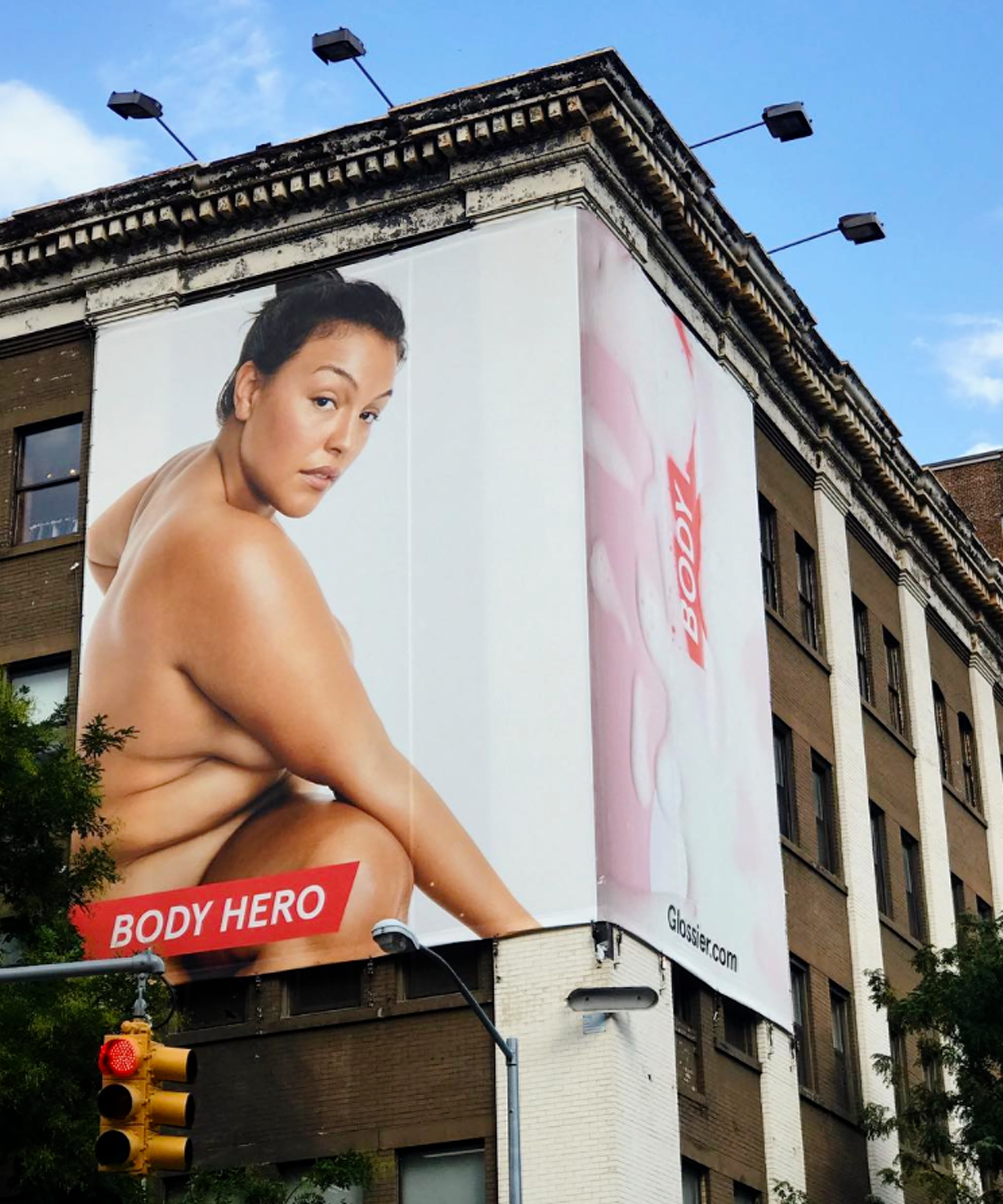
Glossier’s Body Hero ad campaign in NYC
Enter into the time of the Glossier “Body Hero” product campaign, a body wash and complimentary body lotion that has been marketed to be inclusive to women of all shapes and sizes. Ideally, our global society is shifting; shifting towards an inclusive culture towards embracing the body types of all women and that one body type should not necessarily be held as a complete “one size fits all” ideal, which is simply not the case. The fashion industry and Victoria’s Secret Angels are most well known for being guilty to marketing a certain idealized body type, and it’s simply not sustainable to keep those ideals alive anymore. Dove’s “Real Beauty” campaign is a testament to the shifting tides.
Dove’s Real Beauty campaign models
Ashley Graham, Sports Illustrated Swimsuit model has made history for her curvy body type being used in the infamous swimsuit spread. Given the fact that Sports Illustrated Swimsuit, has been notoriously known for the objectification of women (similar to ads run by Carl’s Jr. where models bite into hamburgers), it’s a welcome change in being inclusive to all body types. Gil Elvgren’s paintings may have defined an era of women’s ideal body types, but it is certainly not going to be the definitive body type for the current era we are in.
The USC Song Girls program at the University of Southern California began as a way to improve attendance at basketball games in 1967. Just recently, the Song Girls celebrated their 50th anniversary on campus. They have turned into a program that are the official ambassadors for the USC campus, and they attend events that are outside of the sporting obligations that they have. The university, however, does not consider them as athletes.
I have been a fan of the USC Song Girls dance team for quite a while now and these young women train like athletes: the dancers have practice for 3 hours a day Monday – Friday during the school year at USC; yet, they do not receive priority registration to enroll for classes or have the opportunity to work with trainers as any other athletic program does. Their rigorous training sessions reminds me of a similar problem that ballet dancers often face: as a ballet dancer growing up, I was often told by my peers in school that ballet was not a “real sport,” which couldn’t be further from the truth. I can empathize with what the USC Song Girls are facing.
Essentially, all of their hard work as ambassadors for the university does not have the perks that the football team or other campus athletic programs receive, yet it’s arguable that the Song Girls carry the most spirit for the USC campus. The program is prestigious: there are only 11 positions on the team. They also carry a heritage with them that extends beyond the USC campus, and includes the broader scale of the Greater Los Angeles area, which includes their participation in the Pasadena Tournament of Roses, as well as a number of other social functions.
USC Song Girls at the 2017 Rose Parade in Pasadena
The parallels to other university dance programs such as the University of Mississippi’s Rebelettes are very similar. However, the Rebelettes are given access to trainers and priority registration, which is what any world class university should be offering to women who are apart of the official dance program on campus. I think this policy against denoting the Song Girls as athletes should change as these young women are athletes in how they train, therefore, they deserve the perks of the university’s athletic programs. The USC Song Girls program deserves to thrive as they are part of the heart of a spirited campus. #FightOn Song Girls
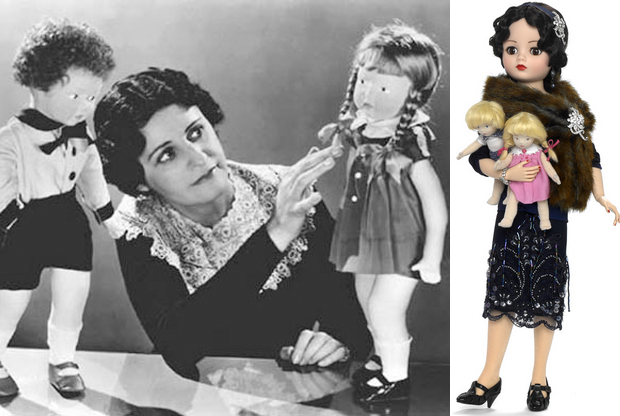
The Alexander Doll Company was founded by Beatrice Alexander in New York City in 1923. Her stylish dolls were fashioned to be of famous personalities and characters from books, films, and art. Historically, their “Cissy” style doll is the first fashion doll which preceded the Barbie doll four years before Barbie’s release in 1959. It’s undeniable that Madame Alexander has shaped the history of dolls. Most notably, the dolls are well known for representations of Dorothy from The Wizard of Oz and Scarlett O’Hara from Gone with the Wind.
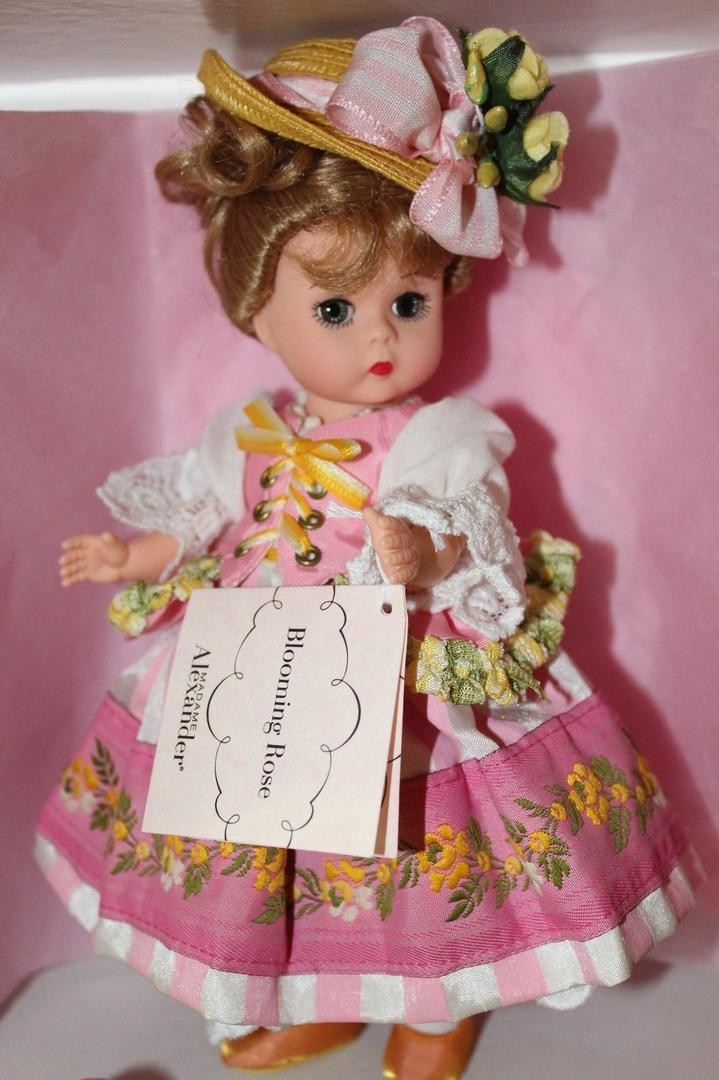
Madame Alexander has an array of doll styles: baby dolls, Disney themed dolls, but they are most notable for their 8″ collectible “Wendy” doll who comes in countless different character offerings, and skin and hair colors. My first Madame Alexander “Wendy” doll was “Victorian Marigold,” a fabulous doll stylized after the Victorian era, lace bonnet et al. The beautiful garden themed “Blooming Rose” was gifted to me shortly after. I have (ever since) an undying passion for collecting these gorgeous dolls and sharing what a positive impact they can have – on girls and boys alike.
Madame Alexander and a doll version of her
Recently, they transitioned their online web store to an Amazon Store found here. These dolls can also be found in select stores in your area (check the map on their website for spots near your home), as well as eBay, where you can go about finding some of the older editions of the collectible dolls.
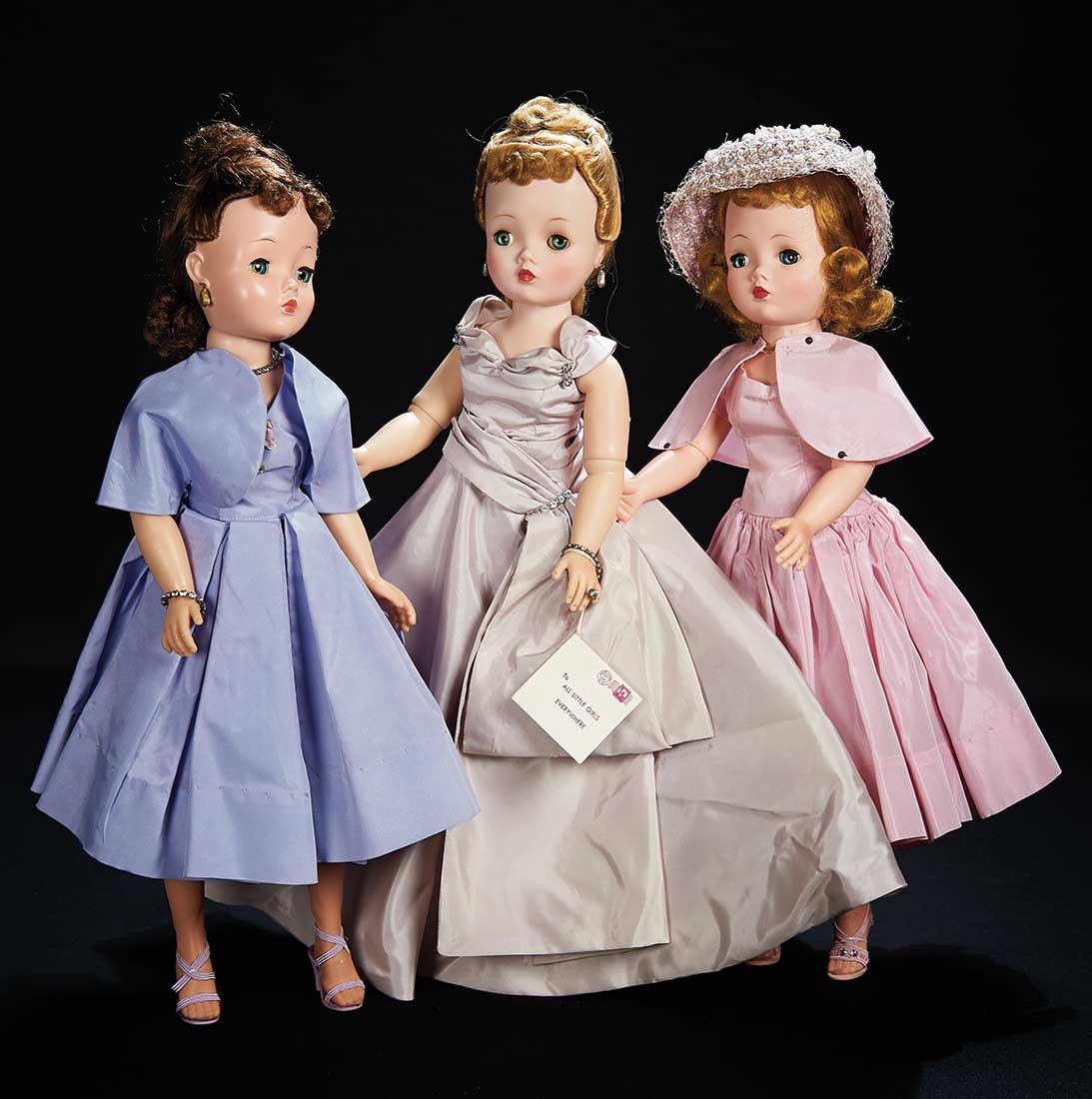
Madame Alexander Cissy dolls (circa 1958) for purchase from Theriault’s, the prominent appraisal and auction house for antique dolls in the US.
Madame Alexander dolls are a treasured tradition, and I think appreciating their historical value and realizing how they are a collectible to keep for years to come, there is true value in them. They are a gift to be given and a gift to receive. These are timeless dolls that should not be undervalued.
One of my passions is learning about different CSR (Corporate Social Responsibility) programs and how they impact their respective fields. The imperative to collaborate across fields has become apparent in recent years, and I enjoy studying how these efforts come about in a global context. CSR is an integral tool for sustainability. A recent article published on CSR Europe’s website discusses the future of how collaboration among major players in the NGO field will drive sustainability. BMW is leading the path for this with a collaboration with CSR Europe called “Drive Sustainability.” The article I’m referring to is entitled, “Collaboration: Lack of trust is the main challenge to overcome,” where Ferdinand Geckeler, the Sustainability Manager at BMW is interviewed to discuss his perspective on how collaboration in the auto industry (and across industries) can ensure there is a collective effort for sustainability across NGOs.
As the article asserts, the largest barrier to collaboration is a lack of trust, which is usually justified across industries by the concept of marketplace competition. It makes sense (in theory) that NGOs do not want to share too much about their proprietary works, which would cut into competition. Geckeler thinks this trust issue can be overcome, and I believe this to also be true: Geckeler proposes that the trust issue across industries can be overcome by adhering to a common good (and a common ground) as there are common issues that competitors share together. For example, climate change will affect all NGO competitors in the auto industry (and across industries).
There are significant drawbacks, but they aren’t insurmountable. As Geckeler states in the article, “The main drawback is that our economic system in Europe does not recognize sustainability. I think that we need to add legislation like a supply chain transparency regulation to improve the system step by step, in order to tune the economic machine in a sustainable way.” Policy change in Europe and a shared understanding that sustainability is a shared issue will be setting us all on the right path to ensuring that we are globally on target to reach the UN’s Global Goals by 2030. If this is modeled well by the EU, the US most certainly should follow suit as as there is a shared imperative for sustainability and fears related to competition in the marketplace should not be the barrier for NGOs to collaborate. The program that BMW is leading in collaboration with CSR Europe is setting the stage for how the world can begin standardizing their CSR practices, and the enormity of the good that can do is invaluable.
Every year of my life has included watching the Vienna Philharmonic’s New Year’s Concert (Neujahrskonzert). The annual concert is now a global tradition for ringing in the new year, listening to classical music which is part of the fabric of Austria. I was privileged to have grown up listening to this music and it’s a joy to continue honoring the tradition of the New Year’s Concert (I am making it a goal of mine to receive the coveted tickets for the concert one year!) to enjoy this tradition with my fellow countrymen. You can watch the performance on PBS, as well as stream the concert from the PBS Great Performances website.
Another glorious part of the tradition of the concert is the Vienna Ballet’s involvement: each year, a group of the dancers are featured in a segment on Great Performances on PBS during the concert to dance in beautifully designed costumes alongside the music. Each year, the designer who is given the honor to design the costumes is able to express their artistic flair however they like – they are truly given artistic freedom.
The Neujahrskonzert is a “glorious and enduring representation of the spirit, passion, and respect held for the Austrian tradition of music, song, and dance… the elegance of an era that blended high art with popular entertainment.” (Austrian Information, November/December 2003). Truly, this is the best way of describing how the New Year’s Concert rings in the new year: it’s honoring the past with the tradition of this music and refreshing us all for the future, which holds excitement for what is to come, exactly what this music conveys. Johann Strauss Sr. “Radetzky March” is performed as the closing of every single concert (below) refreshing us all for the new year. ENJOY AND HAPPY NEW YEAR!
















 rosybvm.com