Reflections on Tolle, Jung, and Individuality

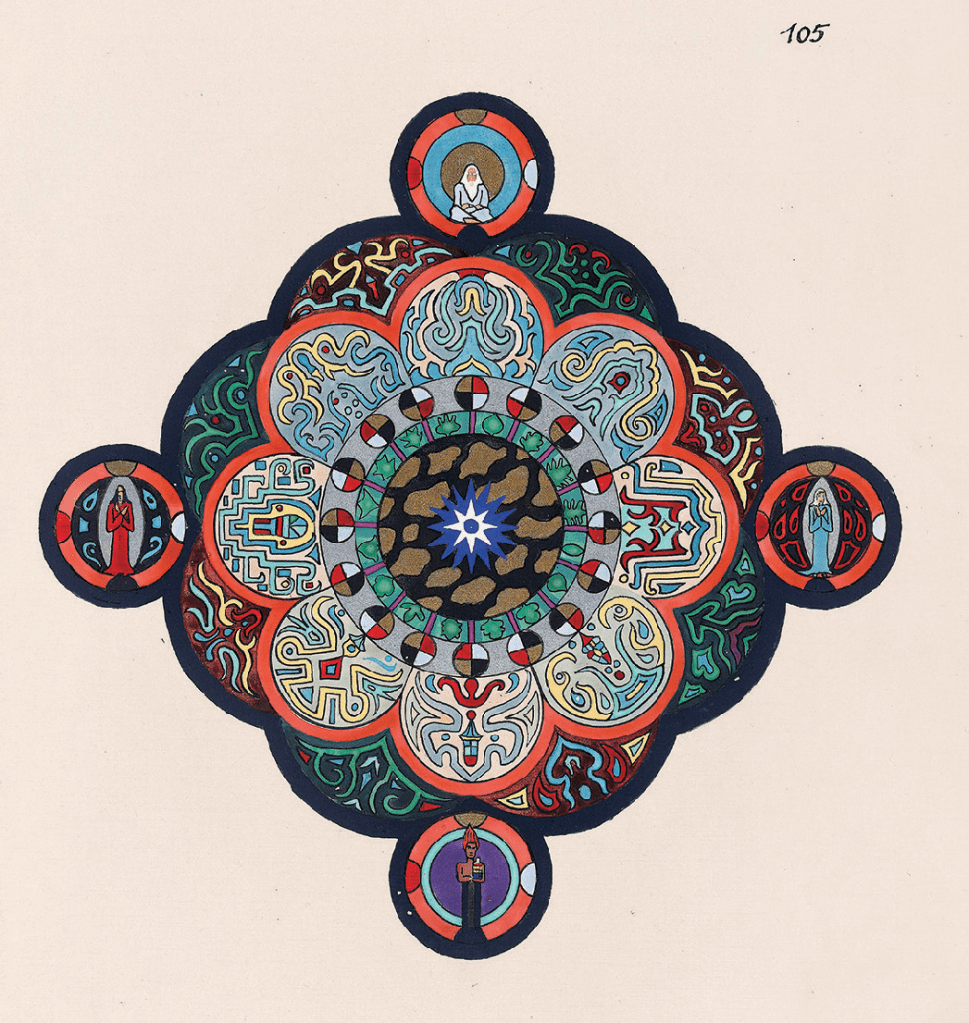
The Art of C.G. Jung

Over the past couple of years, I have been committed to learning about ideas which focus on cultivating and enriching spiritual enlightenment and liberation for a health focused and purpose-led life (perhaps this came to the forefront of my mind because of the pandemic causing existential considerations of what matters to people and systems).  For me, this exploration came in the serendipitous encounter of Eckhart Tolle’s book A New Earth in my neighborhood’s Little Free Library book stand.  I went on to read his first bestseller The Power of Now, which ultimately led me into reading and blogging about an entire spectrum of New Age writers including Louise Hay, Wayne Dyer, Masaru Emoto, and then Deepak Chopra and my journey into studying Ayurveda as in depth as possible as a novice to a complex topic that includes thousands of years of tradition from India. 

Overall, many of these New Age writers had me in an intellectual grip without a doubt…I felt a sort of spiritual transformation reading these books, which is not a small thing to say. I began meditating quite often and learned different ways of meditating. I think meditation is a tool to unlock subconscious thoughts and believe it’s a tool that should be taught earlier in our lives than later. It affected my approach to how I thought about what matters – how we approach each and every day and how our attitudes shape our micro and macro experience in the world is what defines our human experience.  However, this is not to say that it transformed my personality.  If anything, it affirmed what I already had set forth with creating: a world of rosiness and softness as a vehicle for navigating complex information.  My New Age studies became an opportunity to journey into understanding the “self” vs. the “Self.”  The work of egoic detachment never stops, and in my opinion, is a rather fruitless endeavor over time.  From the ideas Eckhart Tolle presents around “presence” and “nowness” as the only state of our lives to be concerned with, I have found there to be some essential faults with his teachings when put into practice.  Ultimately, those lived experiences led me to two truths that I can separate and examine: The first truth is that there is a universal oneness of source energy we are all a part of. This is technically separate from ideological concepts around God, but can be merged together with God dependent on your cultural ideological conception of God. I am a Roman Catholic and have found inner peace through my Christocentric journey. I also support the peaceful existence of alternative religious doctrine which adheres to a peaceful reciprocity of this goodwill. In my opinion, we are all part of a “source energy” that we all collectively belong to and theology complements that journey to optimal health and spiritual wellbeing. The source energy that brings us to this life also takes us from this life (it is up to you how you comprehend the idea of God as an entity separate or part of oneself, we are bonded through a source energy in any event).

    The second truth we can explore is that our experiences shape us as individuals: culture, ideology, social norms and we should do our best to develop our individuality. These things do shape us into who we are – it’s too much to ask of ourselves to abandon all of what comprises us as individuals to focus on awakening as a collective as Eckhart Tolle asserts through his teachings.  The real importance of individuation necessitates physical survival – the ego survives for a reason.  We are composed of all those “things” (gender, culture, religion) which Tolle tells us to negate ourselves from to have spiritual enlightenment as a collective.  This is truly nonsense in practice. His discussion points around disconnection from the “thinking mind” and ego become too abstract to truly find purposeful action within.  We all live and navigate within highly complex systems. Tolle’s ideas around liberation from the ego are too disconnected from real life and how societies operate. As a result of this deep reflection for myself, I have begun to embrace and study Carl Jung’s interpretations around the “shadow self” and how doing “shadow work” is how one can truly find their life’s purpose.  His connection to mandalas and Eastern Thought are especially important tools for these reflections.  

    Jung connected to ideas from Buddhism and believed in respecting and including the whole of an individual’s experience, including their “shadow” aspects.  In my opinion, the Jungian shadow is what will unlock liberation and maintain individuality for each of us.  In Eckhart Tolle’s view, the meaning of life is through a negation of the ego (individualism) and attaching oneself to a universal collective source energy as being a form of endless joy… his ideas around separation from the ego brings the nirvana of universal source energy as our entrance into conceiving infinity (given the science of black holes in the universe – infinity definitely exists). However, just because infinity exists does not mean humanity survives through a furthered attachment to universal source energy, nor do cultures survive this way.  Humanity survives through connection between individuals who create life and further generate individuality this way.  Individuation is our liberation. The ego is too hard to detach from as human beings and there are biological reasons for this.  The ego will not be the demise of humanity – the ego will enable our survival.  Tolle states how collective consciousness is part of the next phase of human evolution.  I highly doubt we will have the ability to culturally dissociate that much, especially during a time in the world where cultural separations became glaringly apparent.  I do connect to the ideas Tolle presents related to the importance of our present moment and do think he presents tools which empower people to overcome challenges and hardships through a focus on what you can do to take positive action in the moment. Beyond that, I see individuality and connections to other individuals as the answer to our liberation and not collective consciousness as liberation.

    I believe that the real inner truth we can find within ourselves is that humanity will survive longer when we focus on ourselves as individuals. We find peace in the boundary separations of our individuation by respecting individuality as our core truth.

      Rosy Conversation with Jeremy Burrows

      Jeremy Burrows is a longtime executive assistant, international speaker, author of the #1 bestselling book, The Leader Assistant: Four Pillars of a Confident, Game-Changing Assistant, founder of The Leader Assistant Community, and host of the #1 podcast for assistants – The Leader Assistant Podcast. Jeremy has worked with CEOs, professional athletes, Fortune 100 board members, and billionaires across the nonprofit and for-profit sectors. Jeremy has had the opportunity to speak to assistants all over the world at multiple conferences of various sizes in Hong Kong, Thailand, Germany, and the United States.  He’s currently Senior EA to the Founder and CEO of Capacity – a fast-growing, artificial intelligence software company. Jeremy’s passion is to help you lead well, resist burnout, and automate before you’re automated. Jeremy lives in Kansas City, MO with his wife and 2 boys. To connect with Jeremy or learn more about his training resources for executives and assistants, visit LeaderAssistant.com

      It is with great pleasure that I share my interview with Jeremy on Rosy BVM.  For my professional background, I have served as an Executive Assistant for one of the world’s leading management consulting firms for over seven years.  I have experience understanding the unique challenges that assistants can face and what it means to bring consistency and high quality executive support in rigorous client-facing environments.  Jeremy and his book, The Leader Assistant, is a breath of fresh air in an industry that sometimes can be marred with so many differentiated ideas of the successful EA role.  

      Assistants across industries have more cross-cutting capabilities and commonalities than they initially might think. As an Executive Assistant, you can sometimes feel at odds with the positionality of the role you play within your firm. For example, Executive Assistants can be referred to as “gatekeepers” for discretionary information purposes and are not meant to hold the most approachable role in a firm as they are uniquely positioned to perform by ensuring the most effective use of their executive’s time, thus making their executive less available might be one aspect of the success in their role (this is often supporting executives at a C-Suite level).  However, the other side of the work as an Executive Assistant can also be true, where Executive Assistants are seen as the culture carriers of an office and are regarded as extremely collaborative, approachable individuals who work cross-functionally and adapt to the needs of their executives with flexibility and precision. Both scenarios are true and more often than not, EAs are known to be the “go-to” people in a company. 

      Both scenarios of EA styles can be true, and as an Executive Assistant there is room for professional style shifts depending on a certain role and there is always learning to be done in between (sometimes throughout the duration of a career) and finding a sense of community as an assistant in the field becomes highly valuable.  Enter Jeremy Burrows, the leading voice for Executive Assistants and the communities which underpin the fascinating executive support industry. The vast and extensive style of executive support that exists displays how remarkably valuable executive support truly is when there is alignment between the firm’s purpose and goals and the ability for assistants to lead and thrive.

      Bianca: What inspired you to pursue a career as an administrative professional / Executive Assistant?

      Jeremy: Honestly, I never thought I’d be an assistant, but at some point, I fell into an assistant role and quickly realized I was good at organization, details, and project management. From there, it kind of progressed slowly over time until I ended up in the C-Suite as an EA.

      Bianca: You have created a noteworthy online community, The Leader Assistant, which connects and supports administrative professionals in online forums such as LinkedIn.  What are the amazing benefits of joining such a community and how did you start this? 

      Jeremy: The first nine years of my career, I did not network with anyone, let alone assistants. But when my prior executive was fired unexpectedly, I decided it was time for a career change, and suddenly needed that network that I didn’t have. I started reaching out to assistants on LinkedIn almost every day. I started becoming active in other assistant communities, and to put it simply, put myself out there. 8 years later, I’m humbled to have gathered a global community of Leader Assistants.

      Bianca: You have written a bestselling book about Executive Assistants called The Leader Assistant: Four Pillars of a Confident, Game-Changing Assistant, a bestseller on Amazon that was released in 2020.  What gave you the idea to put these ideas to paper and share with others? 

      Jeremy: After 3+ years of blogging, networking, and training assistants, I started seeing what content was helpful to career administrative professionals. I wanted to replicate the coaching and training sessions I’d had in a format that was accessible to assistants all over the world. So I wrote the book. 🙂

      Bianca: What makes you proud of your work as an assistant? 

      Jeremy: Nothing makes me prouder than helping other people and teams reach their goals. 

      Bianca: You work as an EA in the Artificial Intelligence sector right now, correct?  This has become a fascinating yet fraught topic in mainstream discourse regarding the potential misconception of how AI could “replace” assistants in a broader context.  What are your thoughts around the human experience as a critical part of guiding the executives and leaders as administrative professionals? 

      Jeremy: Yes, I have worked in the AI industry since 2017. In short, executives and assistants need to embrace automation and AI before they are automated. But, the best way to embrace AI and automation is to start with a problem to solve, then explore an AI solution to solve it. 

      Bianca: What motivates you to strive for excellence?  Do you tap into your community as a source of motivation as well? 

      Jeremy: I’m motivated by helping others, so anytime I can play a small part in someone’s success, I’m grateful. And yes, I definitely tap into my community to motivate me. They are so supportive and encouraging.

      Bianca: Thank you for your time, Jeremy, I certainly plan to stay a part of this assistant community!

      The Aesthetic Sensibilities of Social Media’s Hyperfeminine Culture

      “It’s a man’s world,” is a common phrase that rings true in different ways. According to social media, it is very much a woman’s world, and hyperfeminine style has become a type of expression and aesthetic sensibility that has built entire brands and brand collaborations (LoveShackFancy‘s Stanley cup collaboration immediately sold out this year), which has fueled entire industries… from the resurgence of vintage cake decorations to professional influencers who run businesses based off of the social media aesthetic they created (Hannah Dahl of The Dahl House is one example). At the core of this hyperfeminine approach to consumerism is an amalgamation of online subcultures which have evolved over the past few years. There is the the allegiance of the “Coquette” style – which can be a combination of Sofia Coppola’s Marie Antoinette and Netflix’s Bridgerton costumes and accessories. I have blogged about Coquette style and Bridgerton style in the past:

      These historical styles naturally tie well with the ideals of the more modern “Y2K” fashion and lifestyle concepts that have also emerged throughout social media as we live in a modern, technologically driven world (the early 2000s styles perhaps best embodied by Paris Hilton and Kim Kardashian has gained a huge amount of traction), and then merging those fashions with the “Siren/Mermaid” femininity of “Mermaidcore” fashion brings together a large bandwidth of hyperfeminine aesthetics. If put into one sentence, the modern hyperfeminine aesthetic is if a mermaid film were to be created by Sofia Coppola and it were to be set in 1950’s Los Angeles. That might be the best description of converging together the aesthetic qualities that come together across fashion brands, celebrities, and consumers. Consumers are clever, they know what they like, and they also pick up on trends very quickly – this is easily said for many things, but it’s especially fascinating in the hyperfeminine aesthetic.

      The Emi Jay Hair Accessories hairclip brand is also a social media phenomenon that has brought about a more feminine look to hairstyling. Social media star, Katerina Rozmajazl (former Miss Georgia USA), created her own fashion brand “Roz Avenue,” styled as a convergence of hyperfeminine looks that merges together Southern thriftiness with luxury and sophistication. She even designed the logo to have a hyperfeminine bow surrounding the words. Perhaps most idealized across all of the streams of social media’s styling, there is the emergence of LoveShackFancy as a leader of these styles brough to the mainstream market. Their new Pottery Barn collection is the perfect example of how bringing “girly style” to the mainstream market is a definite win.

      The hyperfeminine style that has been evolving over time online is likely not going to stagnate anytime soon, and it’s likely not a market niche either. I do think there is something to be said about how soft style holds its own power. As Charles Eames powerfully said, “The details are not the details. They make the design.”

      The Bowklahoma Bow by The Dahl House

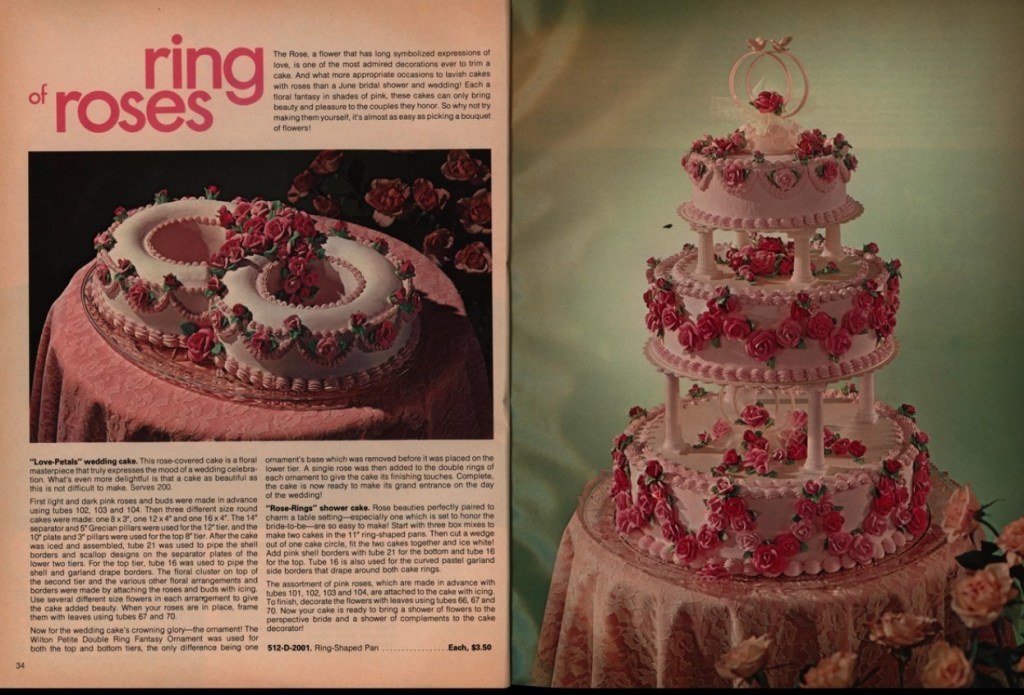
      The Wilton 1974 Cake Decorating Yearbook loved roses

      This is a cake shaped jewelry box created by Crafty Dessert, available on her online shop
      Emi Jay hairclips
      Robes by Roz Avenue

      LoveShackFancy by Pottery Barn

      Bianca’s 2024 Holiday Gift Guide

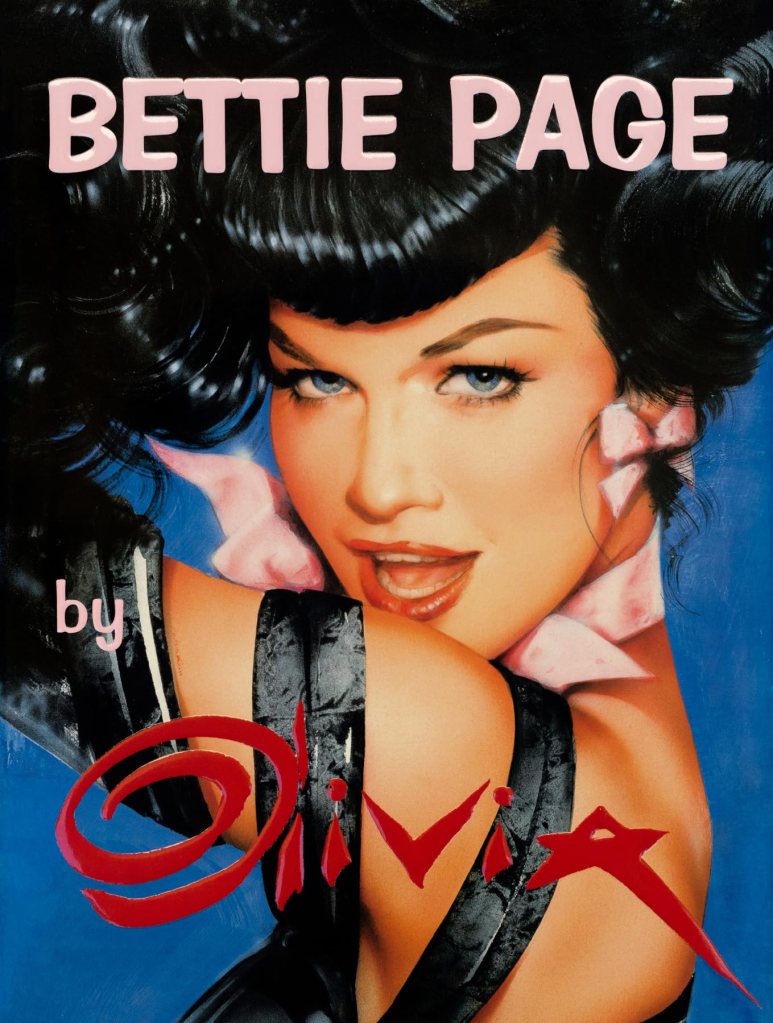
      Each year, I enjoy finding unique and intriguing gifts that you can consider including in your holiday shopping when you think about what you’d like to gift. Despite the reality that consumerism is not the source of joy that this holiday season should bring, and focusing on togetherness with one another should be the emphasis, if you are so inclined to think about unique and out-of-the-box gifts for an Old Hollywood afficionado, or little luxuries that can elevate your home experience, these are just a few things to consider when you do your shopping this season! Consider this list as a jumping off point, for gifts related to the coffee table book collector, for the beauty product expert, for the retro board game enthusiast in your life.

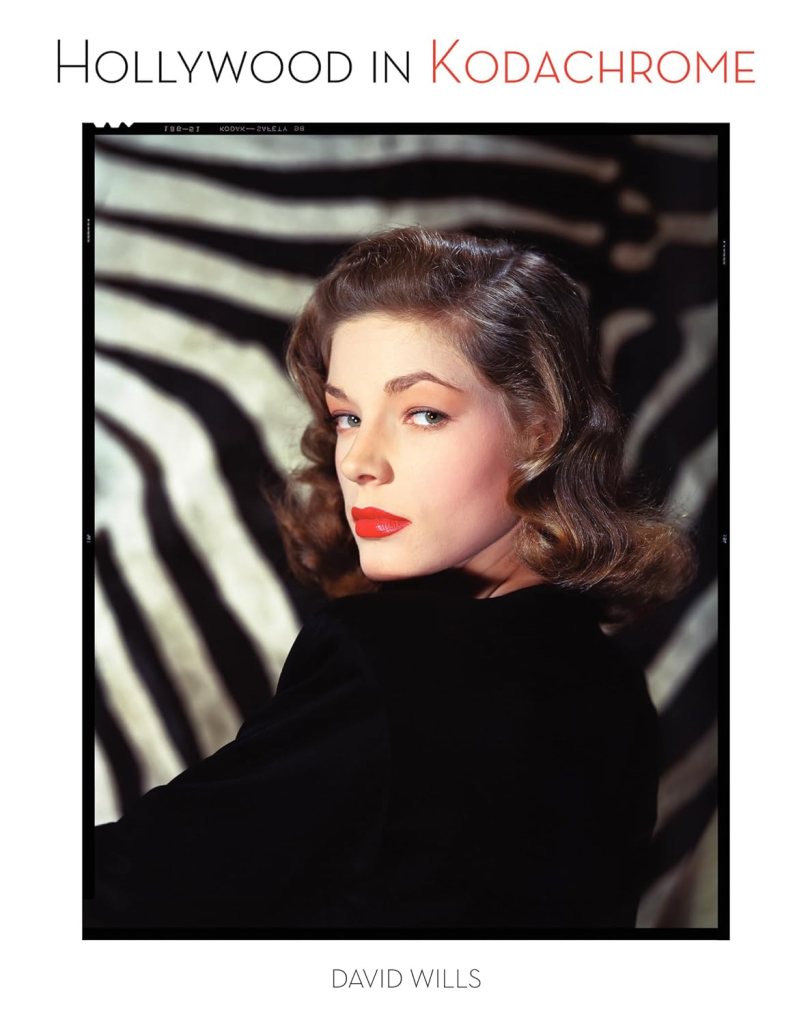
      I like to think about how the picturesque beauty of Old Hollywood can be brought into our style today again, and in high definition… The makeup, hairstyles, clothing and overall style of 1940’s and 1950’s America are ones that can be brought back in subtle, contemporary ways. The shade of red lipstick that Lauren Bacall wears in Kodachrome or the daring pin-up artwork of Olivia de Berardinis, or the new “Supreme Crème” complexion perfector cream by Westmore Beauty, there is so much to appreciate about classic glamour, especially during the holiday season! Embrace being your most extraordinary, glamorous self this holiday!

      xx Bianca

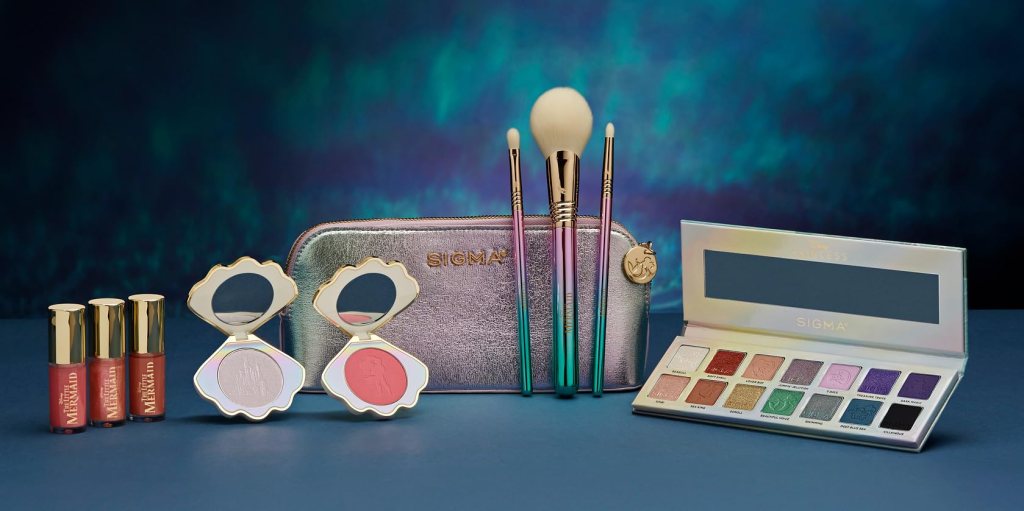
      Sigma Beauty Disney The Little Mermaid Makeup Collection

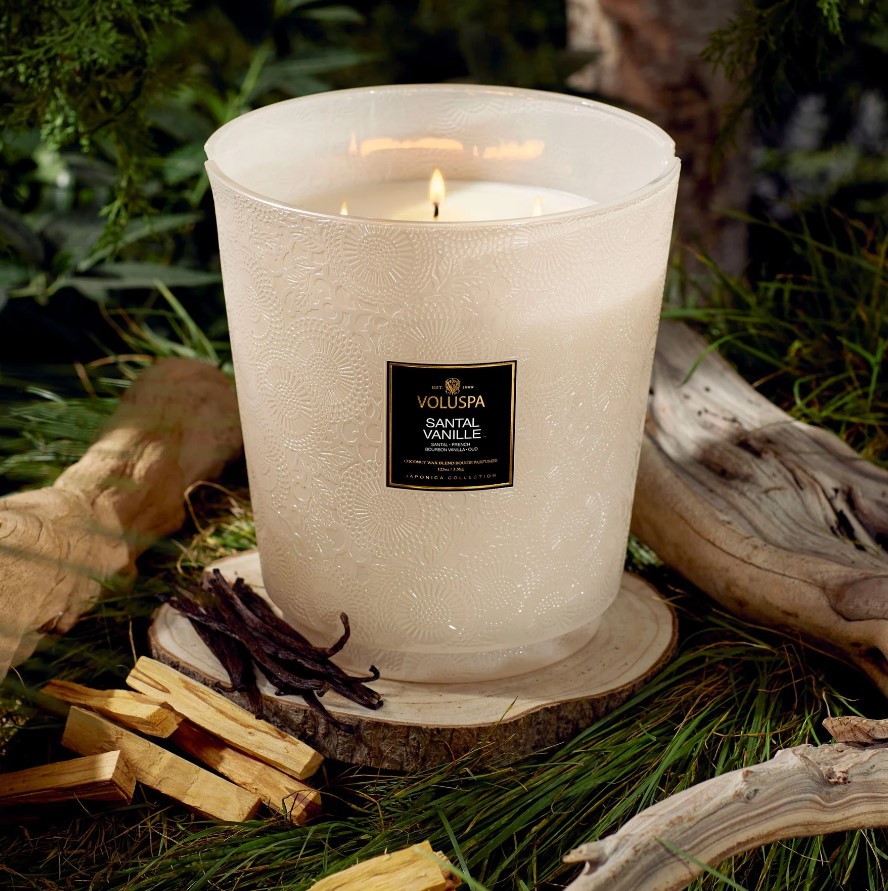
      Voluspa’s Santal Vanille Large Candle

      The Secret Gratitude Book by Rhonda Byrne

      Hollywood in Kodachrome by David Wills

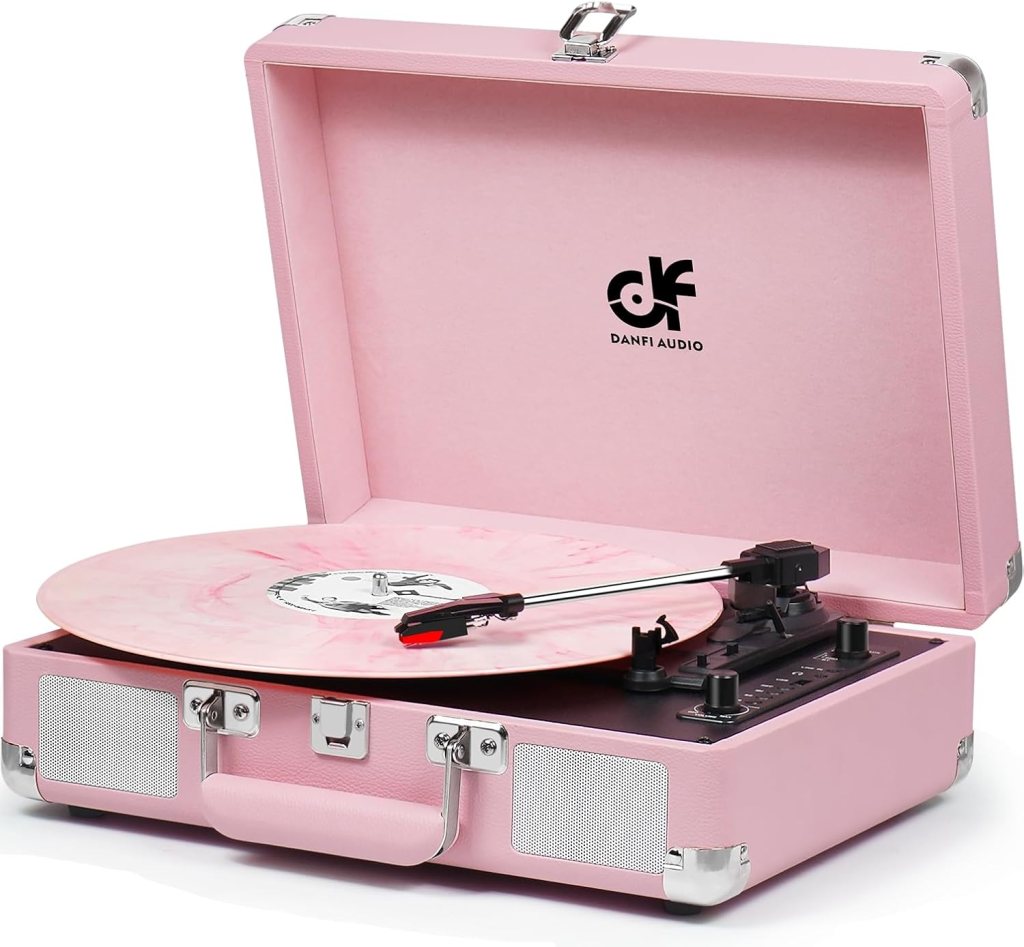
      Vintage Pink Suitcase Record Player by Danfi Audio

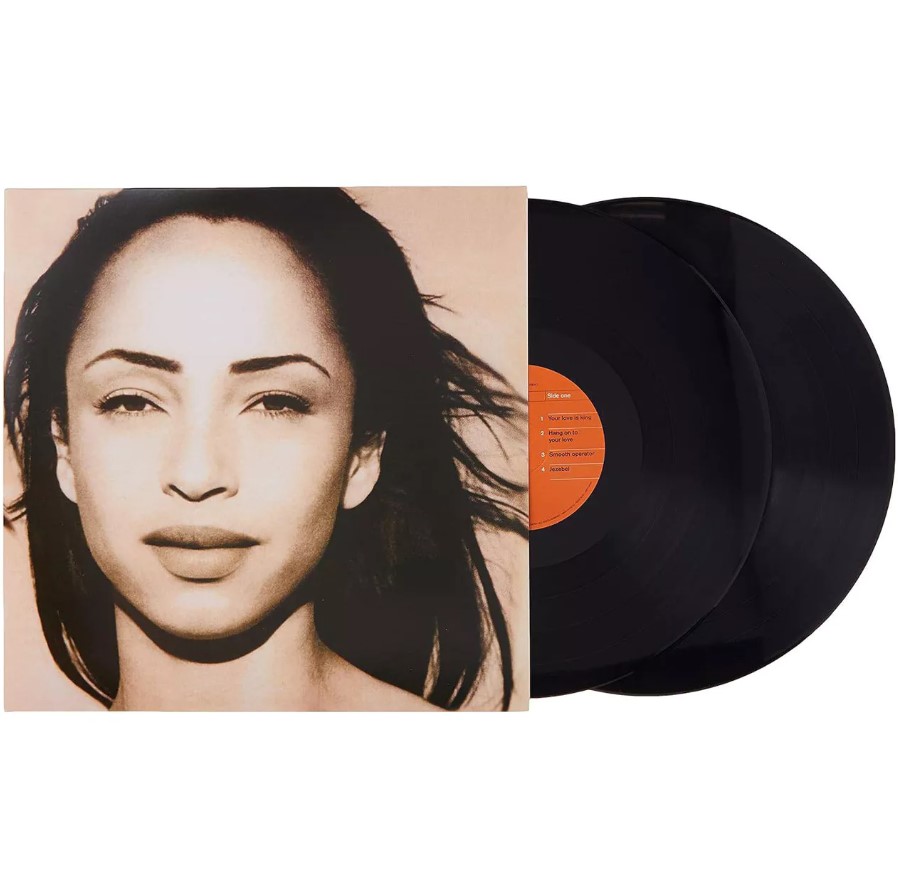
      Best of Sade Vinyl Records

      Spin Master Games Dominoes

      Spin Master Games Backgammon

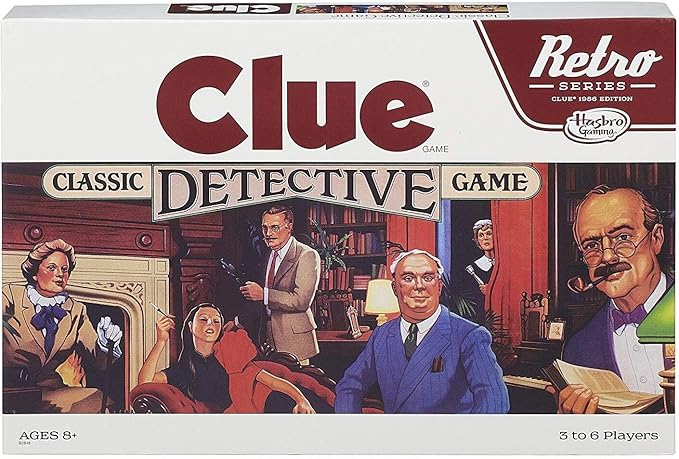
      Clue Retro Series Board Game by Hasbro

      Westmore Beauty Supreme Creme

      NIVEA Lip Care Variety Pack

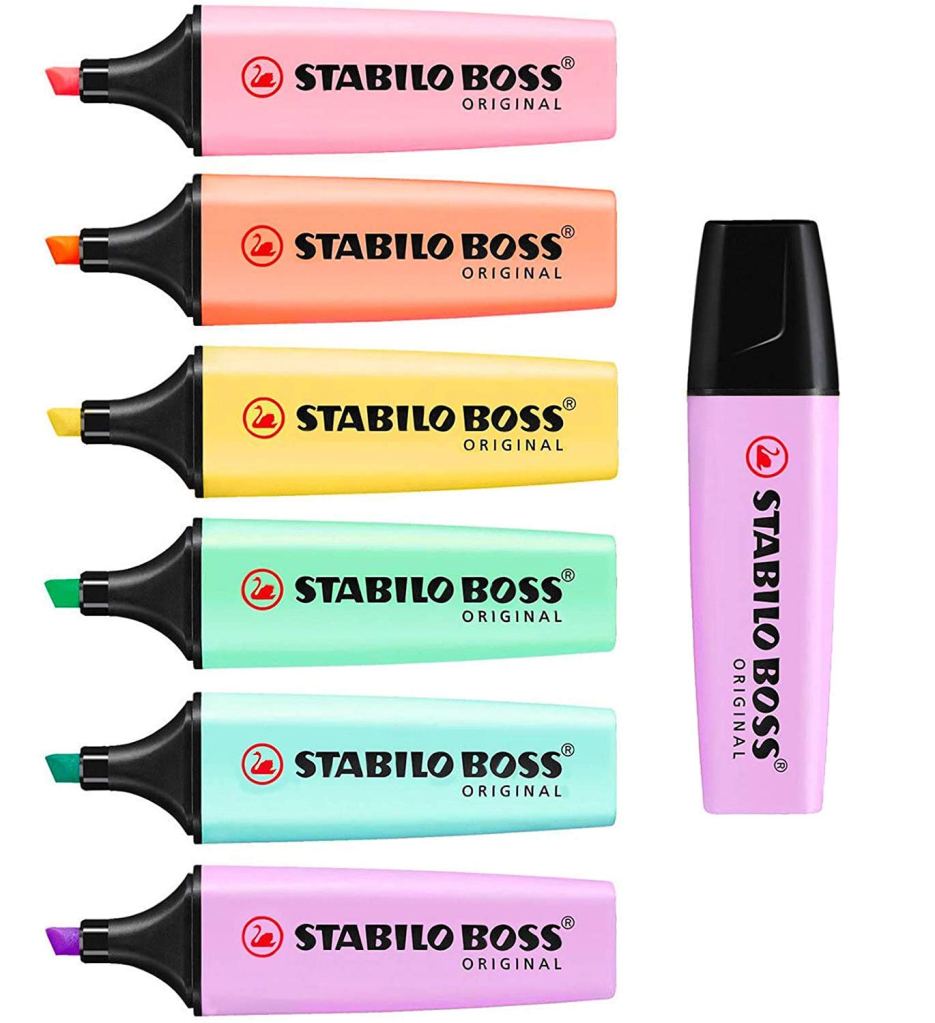
      STABILO BOSS Pastel Highlighters

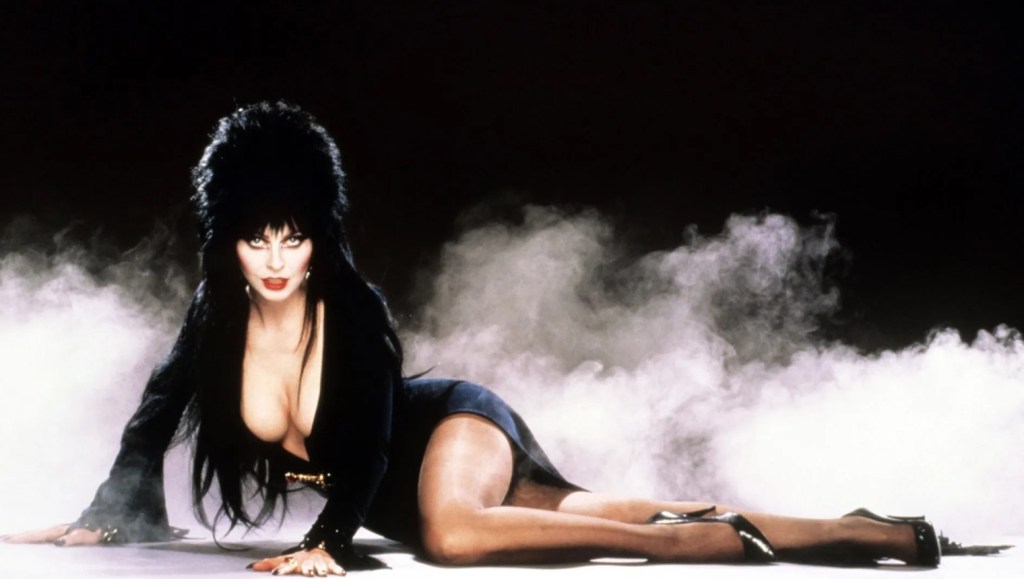
      The Legendary Elvira, Mistress of the Dark

      Happy Halloween! Elvira, Mistress of the Dark, is undoubtedly, the Queen of Halloween, for all time to come. Cassandra Peterson, the woman behind the character, has been in costume since her character’s spooky film debut in 1988. Since Halloween is upon us, I think it’s fascinating to highlight the feminine depths of Elvira’s spooky character, a legendary figure of the Halloween season since her campy film debut in the 80’s. She is perhaps one of the most fascinating characters of America’s Halloween culture. Her costume has not changed much since her debut, which means her character remains consistent and memorable for the public. In 2021, Julien’s Auctions held an auction of Elvira’s personal collection. It sold remarkably well! Her original costume dress sold for $10,000 alone. I think there is much to appreciate about how Elvira contributed to Halloween culture in general.

      I am most fascinated by Elvira’s femininity and the overlap of the occult has with strong feminine energy, which has historically been relegated into arenas of witchcraft and became generally stigmatized as something to fear by mainstream Western society. For example, the origin of Friday the 13th, was a Pagan day for worshipping Divine Feminine energy. It would later be transitioned as a patriarchal day to fear in general (spooky Friday the 13th is quite feminine!) and has various religious and cultural roots. For example, it’s said that in Christianity, Judas was the 13th supper attendee of the Last Supper, who betrayed Jesus, and then Jesus was crucified on a Friday. This is one example of Friday the 13th being perceived as a fearful day, when in actuality, the historical origin of the number 13 for Friday the 13th is that women usually have 13 menstrual cycles in a year and Friday is a day to worship the female from Paganism. The various connection points of Friday the 13th are fascinating to observe. The belief of bad omens for Friday the 13th has been embedded in cultures for quite a while, though. Arnold Schoenberg, the Austrian-American composer, was so fearful of the number 13, he omitted the 13th measure in some of his musical compositions. The musician Taylor Swift has a deep belief in the good luck the number 13 has brought her throughout her life.

      The feminine origin of Friday the 13th now been recently resurging through a renewed cultural interest in the history of the divine feminine again, which is ironically re-entering into mainstream discourse. I think this is similarly aligned with the mainstreaming of strong feminine energy for Halloween culture. For example, it’s become a norm for celebrities to dress up in the weeks leading up to Halloween in near perfect costume recreations of characters like Elvira. In 2022, Kylie Jenner famously recreated Elvira’s costume which introduced Elvira to a younger generation.

      Kylie Jenner as Elvira

      I appreciate how Cassandra Peterson crafted a persona and character which feels like a parody of the occult and continues to elevate femininity in spite of the fearful and spooky mask of makeup she wears. She is also a fashion icon for it. According to W Magazine, it was when Elvira was a child that she asked her mom if she could become the “Queen of Halloween” for her costume. That year, she ended up dressing as Morticia Addams, of the fictional and spooky Addams Family. The Addams Family was created as stand-alone comics by Charles Addams for The New Yorker between 1938 and 1988. The comics became films, and Morticia is seen as the Matriarch and feminine energy of a group of old-money people who delight in the macabre (perhaps a fascinating social commentary on institutions which do not reform become macabre). The TV series debuted on ABC in 1964 and ran for two seasons. The origin story of Elvira is most certainly tied into the origin story of Morticia Addams.

      The Morticia Addams role reprised by Carolyn Jones, Angelica Huston, and Catherine Zeta-Jones through the years looks similar to Elvira, Mistress of the Dark for a reason… Elvira was inspired by her!

      Elvira was born in Kansas in 1951. During her childhood, she has stated she was with fascinated horror themed toys instead of Barbies. Later into her career, she would become involved with Playboy and would guest star on the hit E! television show, The Girls Next Door, where she would often make jokes about how dying her hair blonde be a spooky thing for her — the macabre was always her element. She hosted the film, Hef’s Halloween Spooktacular, which was about the making of the annual Playboy Halloween Party, often known to be the most spooky Halloween party in all of Hollywood. She bonded closely with Bridget Marquardt (the real-life woman who inspired the film The House Bunny) as Bridget was the resident of the Playboy Mansion who was most committed to Halloween and the horror genre. To this day, they remain connected over their feminine connection the macabre. I think there is something noteworthy about how women can find common ground in any topic, and genuinely support one another, no matter how different their personality and style may be!

      Bridget Marquardt and Elvira at the Playboy Mansion in 2006

      In 2021, Elvira released a memoir about her life entitled, Yours Cruelly, Elvira: Memoirs of the Mistress of the Dark. Her book is a must-read if you’re a fan of Halloween culture. In the meantime, enjoy watching her many films this Halloween night!

      Keep Tahoe Blue – The League To Save Lake Tahoe

      If you are from California, or have lived here for a while, you most likely have encountered the “Keep Tahoe Blue” stickers that many folks put on the back of their vehicles – perhaps most especially if you are making the drive up to Lake Tahoe. The League To Save Lake Tahoe, started in 1957, is an environmental watchdog organization comprised of dedicated volunteers that focus on a variety of topics of the lake’s health and ensuring that invasive species do not alter the water’s clarity and transparency – thus, focusing on keeping Tahoe blue! This organization also has UC Davis researchers studying microplastics in the lake and also has released research that algae is the primary factor in Lake Tahoe’s blue color, not clarity. Beginning in 2017, UC Davis researchers examined the entire shoreline with a helicopter and drone several times per year, which enabled a clearer understanding of the algal blooms occurring in the lake and as a growing threat to Lake Tahoe’s ecosystem. This is occurring due to warming weather temperatures and changing water levels. Public funding is scarce and private funding must be at the forefront of this cause. Additionally, advocacy and awareness are integral to this cause as well! According to this year’s research release, the lake’s clarity depth is now 68.2 feet as of 2023, compared to 71.9 feet in 2022. This is a pressing environmental cause, especially related to the summer due to warming temperatures (many people go and visit the lake to escape their lower elevation home temperatures, so it’s especially important to be mindful when visiting).

      The work of the League is to focus on tackling invasive species, combatting pollution, and advancing lake restoration. Also, the League is combatting any sort of expansion or industrialization in the Tahoe Basin region which could negatively impact the lake’s overall health and clarity. In addition to that, the League also promotes best practices to respect the lake while visiting. We are certainly in a global environmental crisis where the weather forecast is not simply the weather forecast any longer, and I think it behooves all of us to become more prescient and aware of organizations such as this one. The League has already been institutionally known for spreading environmental awareness and encouraging citizens to get involved! While Tahoe is known for being a seasonal getaway for many, and the reasons why people visit are numerous, from snow sports to enjoying the lake’s beauty, Lake Tahoe’s clarity remains in danger and should continue to be protected by groups such as these. You can make a difference, too. Please help by donating and volunteering, and be sure to care for the lake if you visit.

      If you plan to visit the lake anytime soon, please be aware and practice the following:

      • Keep the beach clean
      • Throw away all trash (even if it’s not yours and put in a trashcan or dumpster)
      • Collect food scraps
      • Carpool
      • Take public transportation

      Remember, we all want to Keep Tahoe Blue. The second deepest lake in the United States, this lake is visited by millions of visitors per year, but with the right effort and care taken by its many visitors, the lake can continue to stay pristine and beautiful!

      Bug Out Bag 2024: An Introduction to Prepping

      Survivalism or “Prepping” has become a social movement, with the essential belief that proactively preparing ourselves for emergencies such as natural disasters or events related to social disorder will enable better chances at surviving various crises. There is no explanation needed for how disorderly our current world affairs are to know that preparing for crises is essential. The spectrum of crises is vast and there is certainly a range of preparedness tactics to use, especially with learning skills related to military grade tactics (building shelter, learning how to make a fire for survival, procuring food, foundational first-aid, and signaling for help). The “Bug Out Bag” is going to be a 72-hour kit which will be personalized to your needs and environment. Personally, my guiding principle is to use common sense and follow FEMA’s guidelines from their Ready.gov Checklist as a way to begin preparing on a household level. There is no need for the country to fall back into the toilet paper hoarding craze of the early days of the pandemic. Using good sense is essential and an important pillar for preparedness is also understanding that in a crisis we will need to share resources and support one another. The key is to be knowledgeable about a variety of scenarios and prepare within good reason, to keep products up-to-date (not expired items) and to actually know how to use your tools. I believe prepping is a symptom of the problems that we face and it is a natural reaction to unrest, so it should be incumbent for you to learn the basics.

      Another approach to considering emergency scenario planning is considering scenarios related to your environment (wildfires, earthquakes, floods, tornadoes) when studying how to navigate emergency scenarios. One thing is certain – complex, multi-layered crises are not going to go away and we need to understand that is our shared reality, especially with regards to climate change events. Mass migrations will become more common when the environments we inhabit become unsustainable for living. In America, however, I think social unrest is a more pressing issue, in addition to climate change events. In my opinion, the instability of the global geopolitical arena is more than unsettling and preparing with common sense is critical. FEMA has guidelines for a reason – there are many different sorts of emergency scenarios and scenario planning is an important part of learning how to adequately prepare. You should be following government standard planning procedures, so in most instances, having a 72-hour emergency backpack prepared and in reach is the most basic step to being a prepper. These are referred to as “Bug Out Bags,” and the bag should be filled with essential items and tools that will get you through at least 72-hours if you were placed in an emergency where you were required to escape your home imminently.

      In addition to your Bug Out Bag, you will want to have a handbag on hand that keeps your everyday items (wallet, keys, etc.) to supplement what you have in your emergency backpack, also called a WUSH Bag (Wake Up, Something’s Happening Bag). Another critical part of preparedness is considering how heavy the weight of your backpack is – this is something you would need to be able to possibly hike with on for prolonged periods. Anything too cumbersome will not be suitable… Also, keeping a low profile backpack is best (neutral colors without logos) to blend into environments is an important thing to consider. For example, 5.11 Tactical backpacks are military backpacks with logos that you could consider removing or concealing the logo, as some wilderness experts will go so far to point out that the logo on a backpack can be conspicuous in certain situations. Anything related to being mindful of your situation and circumstances is going to be most critical.

      Something I have not read as often while studying this topic is the importance of mindfulness techniques and meditation. Andrew Huberman’s Lab at Stanford University often discusses NSDR – Non Sleep Deep Rest, another name for Yoga Nidra. Learning a 10 minute Yoga Nidra meditation to calm the entire nervous system will also be an important tool in especially stressful circumstances. It is also a technique used by the U.S. Army to offset PTSD.

      If you want to have military level discipline for this venture, you could consider having everything right next to you when you go to sleep. This seems excessive in theory, but it is quite prudent given how the world will remain unsettled for the forseeable future. The Bug Out Bag and WUSH Bag is going to be your start up chance at survivalism. Now, you can begin building out your emergency supplies and learning tactical skills for emergency scenario planning.

      Bug Out Bag Supply List

      • Bottled Water
      • LifeStraw Personal Water Filter
      • Reusable Water Bottle
      • Protein Bars
      • Beef Jerky
      • Dried Fruit
      • Essential Documents (Waterproof Folder) + USB Sticks
      • Backup Battery
      • Paper
      • Pen
      • Pencil
      • Knife
      • Lighter
      • Matches
      • Whistle
      • Car Escape Tool
      • Mini First Aid Kit
      • Tweezers
      • Q-Tips
      • Bandana
      • Hat
      • Glasses
      • Contacts & Contact Fluid
      • Change of Clothes
      • Windbreaker Jacket
      • Thermal Blanket
      • Toiletries
        • Soap bar
        • Deodorant (travel size)
        • Toothbrush (travel size)
        • Toothpaste (travel size)
        • Lotion (travel size)
        • Sunscreen SPF 50
        • Lip Balm SPF 50
        • Hair Ties
        • Hairclip
      • Reusable Bag
      • Trash Bag
      • Scissors
      • Duct Tape
      • KN95 Masks
      • Gloves
      • Personal Memento(s)
      • Optional
        • Playing Cards
        • Coloring Books

      Your “WUSH” Bag (Wake Up, Something’s Happening)

      • Cell Phone
      • Cell Phone Charger
      • Wallet (Carrying small amounts of cash)
      • Keys
      • Glasses
      • Ear Plugs
      • Hand Sanitizer
      • Tissues
      • Mini Box Cutter
      • Self Defense Tools
        • SABRE Pepper Gel
        • Anti-Wolf Stick
        • Personal Alarm – 130 Db
      • Makeup Bag
        • Lip Balm
        • Brush
        • Hair Ties
        • Bobby Pins
        • Band-Aids
        • Tampons

      The Westmores of Hollywood & Classic Beauty

      The Westmore Family is a well known name, yet perhaps now overlooked in the current beauty industry narrative, yet this family was so integral in the shaping of our contemporary beauty standards that this family created what we know as the “makeup chair” in Hollywood. The Westmores are an esteemed family who led makeup departments of film studios, wrote numerous books and worked to have the makeup chair as a standard norm in Hollywood studios. The family would go on to advocate for there to be an Academy Award for Best Makeup and Hairstyling. The family’s name made an impact in Hollywood beginning with George Westmore, who created the first makeup department in 1917, where he freelanced through major film studios of the time. This experience also acquired a deep knowledge of how Hollywood studios operate, which would impact generations to come, with the achievement of a star on the Hollywood Walk of Fame for the family.

      George would go on to have six sons in leading makeup department roles in Hollywood studios, out of his 19 children during his marriage to Ada Savage. I am fascinated by the idea that each of so many of his sons were passionate enough to pursue a burgeoning industry, which undoubtedly crafted our idea of glamour and classic beauty, which holds firm in its concepts today. The family also found success in the emerging field of classic horror films, such as Frankenstein (1931). When Bud Westmore led Universal Studios, he took over for the role of makeup for Frankenstein – a truly artistic endeavor to create such an impactful and iconic film monster. According to Wikipedia, by 1926, four of George’s sons, Monte, Perc, Ern (Perc’s twin), and Bud all became chief makeup artists of four different Hollywood studios. They each became the champions of beauty in Hollywood, and they formulated the ideas of how women should look on screen. Their passion and impact was truly for the betterment of Hollywood studios. Monte, the first makeup artist to use airbrush makeup, tragically passed away due to a heart attack because of the demands of working on the film production of Gone with the Wind (1939). Monte was the only makeup artist working on such an extensive and expansive film production. His work on that film was the first use of airbrushing of makeup. Remaining family members went on to build the House of Westmore Salon, which served both Hollywood stars and the public alike.

      The Westmore family brought innovation to Hollywood. They enabled Hollywood studios to have an in-house makeup artist, but they also crafted a narrative for the public to also hold themselves to a personal standard of grooming, which is to say that when you feel your best, you look your best. This is something that stands true today and will remain a timeless concept!

      I own one of their books on the topic of 1940s beauty and most of the ideas presented are focused on ensuring skincare that suits your skin type and the overall enhancement of natural beauty with specific tools that are geared to bringing out the best of the features that person has. I think that’s more inspiring than some of the beauty standards we are seeing today, which emphasize so much “change” in the features of someone, so much so that people have normalized the idea of plastic surgery. This is not healthy for the most part to believe that changing oneself is a good thing, and it’s important to remember that we are all unique for a reason! Social media has unfortunately created unrealistic beauty standards through photoshop and filters and have impacted an entire generation to not be comfortable with their own features now. Beauty should be about elevating your best features and not changing them. It’s important to remember that beauty does come from within and that the attitude and mindset one carries is also reflected in your style makeup!

      The Westmore family was not only critical in its development of major film studio makeup departments, they also learned to collaborate. Ern Westmore, for example, went on to work closely with Max Factor, another well-known Hollywood name. Ern, for his part, worked on Bette Davis giving her a fuller more natural brow and focused on creating the classic lip line we know her to have.

      In contemporary Hollywood, the family has continued to work on major productions, including films like Blade Runner in the 1980s, and perhaps most notably, for the Star Trek series. Ultimately, the passion and commitment to quality and understanding of character development and presentation in Hollywood is how the Westmore family has persisted for so many generations. Today, the brand lives on through Westmore Beauty with his great-great granddaughter’s commitment to timeless beauty sharing its commitment to 100+ years of innovation.

      The scion of the Westmore Family, George Westmore

      Sources:

      Wikipedia

      Westmores of Hollywood

      Coquette Style and The Divine Feminine

      In our complicated modern world, we see bursts of expressions in people which reflect what can be understood as the “divine feminine.” According to The Good Trade, “the divine feminine is the spiritual concept that there exists a feminine counterpart to the patriarchal and masculine worship structures that have long dominated organized religions.” For example, the most well known being the Virgin Mary in Roman Catholicism. However, the idea goes beyond religious iconography.

      This concept of the divine feminine also inhabits a space outside of religion and explores the idea of how feminine representations show up throughout cultural discourse. The term “divine feminine” is not a mainstream term quite yet, but I think it is approaching mainstream now. The idea of the divine feminine is not necessarily holding a religious connotation, but it holds the ideas around how femininity appears in its many forms, and not solely represented in the female sex. The ideas surrounding femininity and spirituality have a multi-faceted way of being understood and are subject to opinion and transcend any boundaries of gender norms or heteronormativity.

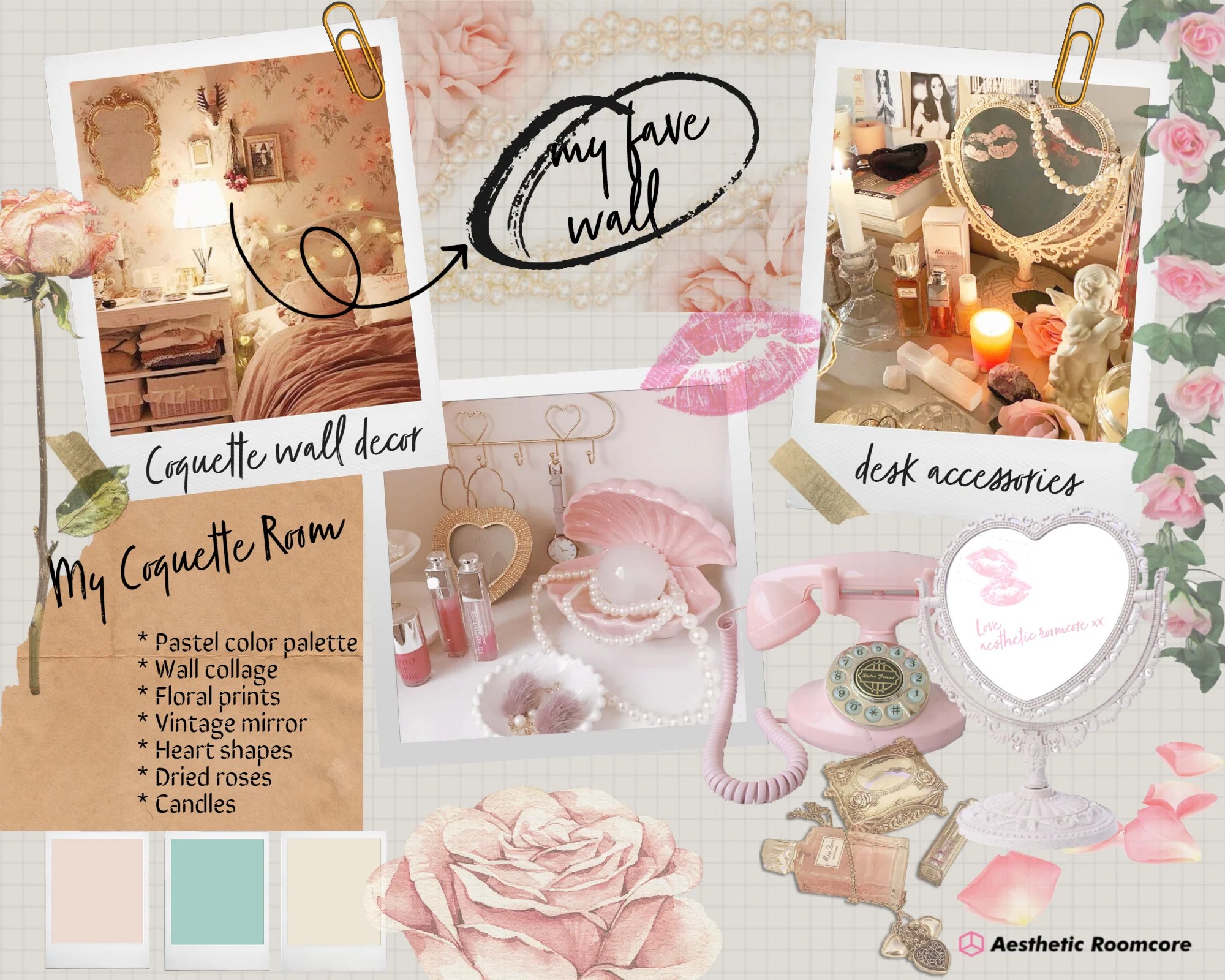
      Divine femininity is a good thing for civil society as it enables people to achieve a full expression of their sense of self. As such, the ideas which underpin divine femininity is an inherently inclusive structure that enables the embracement of feminine concepts in fashion and beauty as a way of expressing oneself in any context. This has widespread implications for our idea of how we “show up,” in society – for example, how dress codes are perceived as appropriate in certain work environments as one example. This also extends to how comfortable women feel in their own bodies as well. According to Women.com, the idea of coquette style is being “unapologetically feminine.” This is a great description around embracing femininity without qualms. Byrdie.com described the style as “reclaiming hyper-femininity.” Across the range of ways that one can express their own style, the coquette aesthetic is one which gives ample freedom to embrace womanhood.

      To clarify the expression of the divine feminine and its appearance in popular culture, it is important to note the intersection of social media and fast fashion due to the popularity that hashtags signify for the fashion industry. Within that space, there is an opportunity to identify particular styles which then take on trend based representations of what might be a response to popular culture events happening at that time. For example, most recently “Barbiecore” for the release of last year’s hit movie, Barbie, or “Mermaidcore,” for the Disney The Little Mermaid‘s release last year as well. For the divine feminine, all of these trends can be understood within the broader umbrella of femininity. However, I think the emergence of the style “Coquette Core,” is likely the most clear embodiment of the divine feminine as an aesthetic sensibility.

      In summary, embrace your rosy style. Embrace it.

      For example, Coquette Style can be described as including such through fashion:

      • Pastel colors (especially light pink)
      • Lace
      • Bows
      • Victorian Era style
      • 1950s style
      • Balletcore aesthetic
      • Cottagecore aesthetic
      • Princesscore aesthetic

      As described on Wikipedia, “This aesthetic has been characterized as both a way to relive and express creativity… and a way to fully escape into femininity without feeling guilty about it.” This is a particularly fascinating description, because so much about contemporary fashion and style elevates the idea that successful women can look more “manly” and therefore be equated with being more “respectable.” This is deeply untrue. I strongly believe that self expression takes on many forms, but I also believe that trends do impact us more than we may admit, so the reality that women may shy away from their feminine style is something not to be ignored. I fully embrace the idea that women can be both very feminine, successful, intellectual, and career driven without compromising the integrity of the other.

      Stay rosy.

      xoxo

      Bianca

      Pin-Up History: Betty Grable

      Betty Grable made an impact on America. In the 1940s, Betty Grable was the highest paid woman in America. She had the highest salary of a woman in the country in the years 1946-1947. Throughout her career, she made over $3 million. Betty, undeniably, held a grip over American culture… over the course of her 42 films during the 1930s and 1940s, they grossed a net of $100 million. For those times (and today), those numbers are astounding. During WWII, she surpassed Rita Hayworth as the top pin-up girl, which Life magazine referred to as “100 Photographs That Changed The World.”

      Born Elizabeth Ruth Grable on December 18, 1916 in St. Louis, Missouri, she was the youngest of three children of a Midwestern family. She was pressured to become a performer by her mother and achieved many accolades and won beauty contests frequently. Despite this, she suffered from a fear of crowds and sleepwalking. Her career in Hollywood began in 1929, shortly after the stock market crash, when she traveled with her mother to California. She studied at the “Hollywood Professional School,” and attended dance classes as well. In 1930, she signed under Samuel Goldwyn and became one of the original “Goldwyn Girls.” She led one of the musical numbers titled, “Cowboys,” yet received no on screen credit for the performance. She went on to sign with RKO Radio Pictures in 1932. It is infamously remarked by Marilyn Monroe how she used to stare longingly at an RKO tower from her orphanage window as a child, which helped her solidify her dream of becoming a performer – Betty and Marilyn would later perform together alongside Lauren Bacall. The stars do align!

      Following her time with RKO, Betty would sign with Paramount Pictures, even further advancing her career in Hollywood. However, her performances at the time were being overshadowed by those of Judy Garland, especially from The Wizard of Oz, which captured America’s heart in the 1930s. However, she persisted in Hollywood and by 1939, she was performing alongside her husband, Jackie Coogan, in a film called Million Dollar Legs. For a time of such embedded objectification of women in Hollywood, it feels rather ironic that a woman’s career successes could be rooted in that. However, I believe much of female performances by leading ladies in Golden Age Hollywood have been overlooked tremendously for the actual work that they did, with too much emphasis on the idea of their image. This is especially commented on in Richard Barrios new book about Marilyn Monroe’s performances, On Marilyn Monroe, which details the incredible body of work she helped create (and how she was a discerning script reader for films and characters), and this was often overlooked or heavily critiqued by film critics who had no tact in understanding some of the nuanced genius of these performances.

      Grable would continue to move film studios, landing in 1940 at 20th Century Fox, and by then, she stated that she felt “sick and tired” of performing and that she was considering retirement. She was given close attention by the head of Fox at the time, Darryl Zanuck (who infamously did not like Marilyn Monroe and held her career back as much as he could). In 1940, this was far before Marilyn’s beginnings at Fox, Grable was cast as lead in Down Argentine Way, replacing Alice Faye, who had been the most popular musical film star at the time. For many who study Golden Age Hollywood like I do, it becomes exceedingly clear that men were deciding the career outcomes of women and they were playing puppet master to who would advance in their career. This does not, however, negate the quality of these performances.

      Often, even in times of career burnout (as Grable had discussed wanting to retire), she again stepped up and did a fantastic performance. Over and over again, women have shown persistence in times of tremendous challenge and strength in the face of male dominant, chauvinistic systems created to cast them out just as quickly as they arrived. I would argue that women of Golden Age Hollywood were true icons for this reason. They carried the weight of contractual burdens of the system, performed nearly to no end, and maintained an image of near perfect good looks… no wonder their personal lives were often left troubled.

      If there is anything to be truly appreciative of in these remarkable storied lives of Hollywood’s bygone icons, is that there are ways to renew your own appreciation in the importance of living a balanced life, and of the understanding of our limitations for our own health and wellness, not to see as a hinderance, but as a way to guide your decisions in healthy living. Many of these female performers were pushed to limits which became unhealthy. Betty Grable, among many other women in Hollywood, were being stretched to maximum capacity, were excessively critiqued, and yet, created and generated so many profits for Hollywood (and were considered incredibly attractive). The best way we can appreciate their impact today is by remembering their work and respecting them for it.

      In 1943, Betty Grable was voted the “Number One Box Office Draw,” by moviegoers – outranking male icons such as Bob Hope, Clark Gable, and Humphrey Bogart. This favorite box office vote was again regained in 1950. By the early 1950s, Betty could not find scripts she wanted to perform for and her career began to decline. Marilyn Monroe replaced her in Gentlemen Prefer Blondes.

      Holistically, women in Hollywood were put in competition too often and were isolated in that way, too. Betty was a pioneer through some of Hollywood’s most incredible times. According to director Martin Scorsese, “Looking back at the pictures of the ’30s and ’40s, the period now known as the Golden Age of Hollywood, you can feel, more and more, just how controlled many of the performances were, especially in relation to movies made after the arrival of Brando and James Dean in the ’50s. There’s a tension between directors and actors that I find extremely interesting now.” Scorsese summarizes all there is to be said about the time that Betty performed in. I think we should celebrate her for this.

      Betty Grable passed way of lung cancer in 1973 at age 56 in Santa Monica, CA.

      Source: Wikipedia

      Betty Grable and Carmen Miranda in Springtime in the Rockies (1942).