
Rosy Sustainability

A Lakota woman photographed by Deborah Anderson for Women of the White Buffalo documentary.

From my perspective, sustainability efforts and Corporate Social Responsibility (CSR) is a landscape that includes NGOs/nonprofits, thought leaders, collaborators, and action takers bound by specific goals. There is incredible opportunity now for widespread cross-sector sustainability practice standardization, especially with regard to leaders (individuals and their respective companies) taking action for sustainability efforts.

I view one of my roles as a lifestyle blogger who is committed to spreading information related to sustainability efforts is to stay atop of sustainability goals, programs, and global actors and sharing out the most germane information which will keep sustainability efforts top of mind. I firmly believe that sustainability practices can be integrated into the core of business models, and furthermore, I see a future where a commitment to these goals can be seen at an enormous scale.

Below you will find a few of the organizations making a large impact on various populations and communities, with an emphasis on protecting the environment and supporting Indigenous peoples. These organizations embody rosy values which Rosy BVM will always stand for and these organizations fighting for a more sustainable, just, equitable, spiritually balanced world should continue receiving support in the future.

Rosy Causes

UN Women

UN Women is the United Nations entity dedicated to gender equality and the empowerment of women. A global champion for women and girls, UN Women was established to accelerate progress on meeting their needs worldwide. UN Women supports UN Member States as they set global standards for achieving gender equality, and works with governments and civil society to design laws, policies, programmes and services needed to ensure that the standards are effectively implemented and truly benefit women and girls worldwide. It works globally to make the vision of the Sustainable Development Goals a reality for women and girls and stands behind women’s equal participation in all aspects of life.

Amazon Watch

Amazon Watch is a nonprofit organization founded in 1996, and based in Oakland, California, it works to protect the rainforest and advance the rights of indigenous peoples in the Amazon Basin. The organization partners with Indigenous and environmental organizations in campaigns for human rights, corporate accountability, and the preservation of the Amazon’s ecological systems.

One Spirit

The One Spirit mission is to help the Lakota meet the basic needs of their people and provide a culturally rich life for their youth. We support the Lakota in their goal of achieving food sovereignty and self-sufficiency in their communities.

One Spirit’s programs promote an intercultural relationship that recognizes that we are all related and that American Indians are an equal and valued part of our society.

On September 27th, 2011 the Tribal Council of the Oglala Sioux Tribe unanimously voted to formally recognize and support One Spirit and the One Spirit programs. The Tribal Council had been increasingly concerned about organizations and individuals who raise funds in the name of the Lakota people but have little or no accountability as to how the funds are spent or how much actually reaches the Reservation. The organization is honored to have the unanimous support of this governing body of the Lakota people.

Heaps Decent

Heaps Decent is an Australian organisation empowering diverse young people to express their creativity through music and multi-media. Heaps Decent currently offers ongoing music programs at multiple locations including schools, juvenile justice centres, drop in centres and studios as well as running distinct arts projects with partners such as Shopfront Contemporary Arts and Performance, the Sydney Opera House and the Department of Juvenile Justice.

Oceana

Oceana was established by a group of leading foundations — The Pew Charitable Trusts, Oak Foundation, Marisla Foundation (formerly Homeland Foundation), Sandler Foundation, and the Rockefeller Brothers Fund — after a 1999 study they commissioned discovered that less than 0.5 percent of all resources spent by environmental nonprofit groups in the United States went to ocean advocacy.

No organization was working exclusively to protect and restore the oceans on a global scale. To fill the gap, the founders created Oceana: an international organization focused solely on oceans, dedicated to achieving measurable change by conducting specific, science-based policy campaigns with fixed deadlines and articulated goals.

Sustainability News Resources

CSR Europe

Sustainable Brands

The Global Goals for Sustainable Development

Practicing Gratitude Unlocks Your Potential

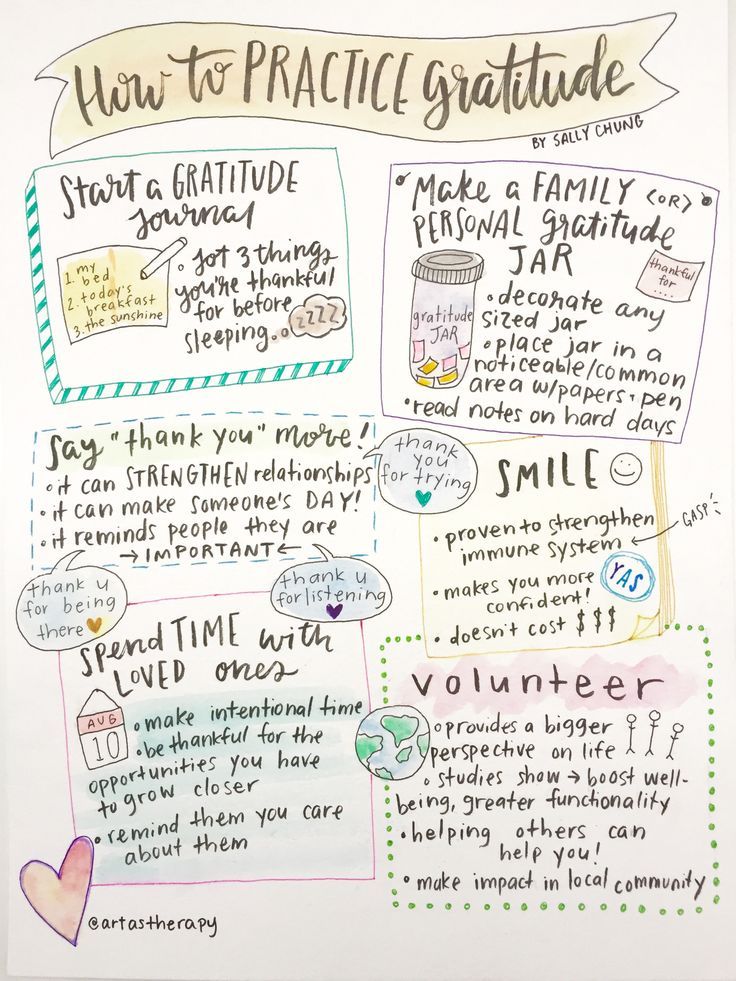
As we enter the first week of Fall (while time may begin feeling like a construct of the mind more than ever), we are indeed entering into the Fall season. Perhaps it’s with the spirit of the Thankgsiving holiday to come, Fall gives us the opportunity to reset our priorities as we approach the holiday season and reflect and be more grateful than perhaps other seasons. This brings me into the topic of this blog post: Gratitude is a practice. Gratitude is something that I seek to practice consciously everyday of my life. The more I practice it, the most fulfilled and rooted in purpose I find myself in how I view and feel in my life circumstances. It’s truly the “half glass full” versus the “half glass empty” analogy put into practice. When you recognize how much you do have in your life, it’s much easier to reframe what you then may think as perhaps lacking – when you see how much you have to be grateful over, you will remember this more frequently and it will give you a deeper sense of fulfillment.

Practicing gratitude becomes easier with time. You can do this as you wake up and it can be as simple as being grateful for the gift of living another day. You can also become more structured about how you want to practice gratitude: for example, I have a habit now where I write down at least 10 things (anything!) that I am grateful for in a journal each morning. This helps me realize how much I am grateful for and helps set a great energy for the day to come. There is scientific research that backs how beneficial practicing gratitude is for your health. According to Happify, gratitude can do the following:

People who regularly practice gratitude by taking time to notice and reflect upon the things they’re thankful for experience more positive emotions, feel more alive, sleep better, express more compassion and kindness, and even have stronger immune systems.

The Science Behind Gratitude

There is science to this; for me, I even believe that my gratitude practice reduces my stress levels. I think this is significant because I am able to put things in perspective right as I am beginning my day and this doesn’t give room to fall into the trap of feeling sorry for myself or sit with any feelings of jealousy etc. I already have set my intention for the day: I act with gratitude. I hope this inspires you to reconsider how you integrate feelings of gratitude into your everyday routine and to always think positively; this benefits your health on an individual level, and further, on a community level, you give the best of you to those who are around you.

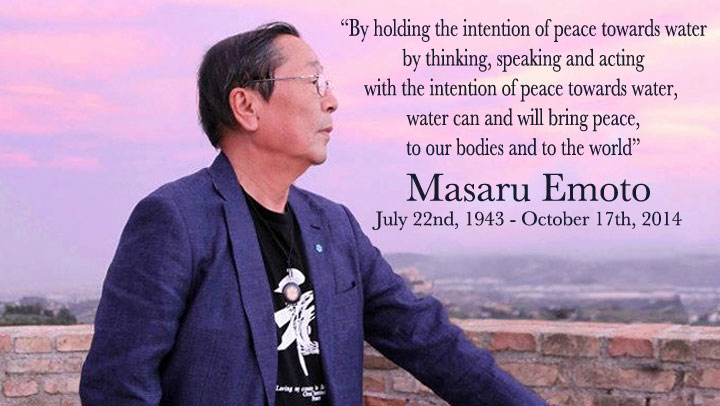
Dr. Masaru Emoto’s Studies of the Vibrational Effects on Water

“If we consider that the human body is a universe within itself, it is only natural to conclude that we carry within us all the elements.”

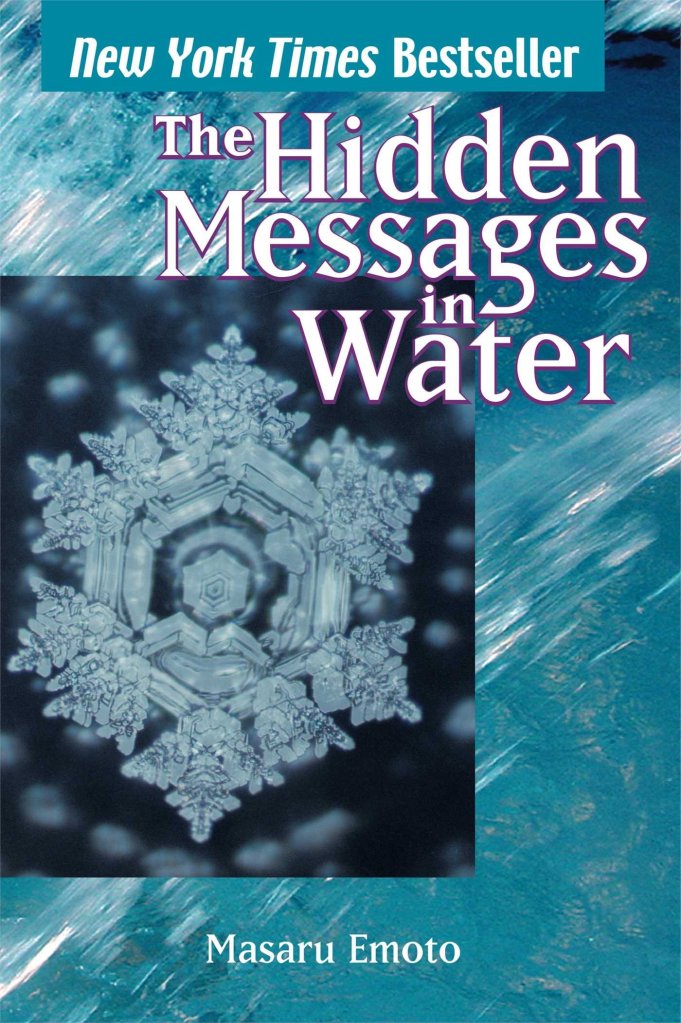
― Masaru Emoto, Hidden Messages in Water

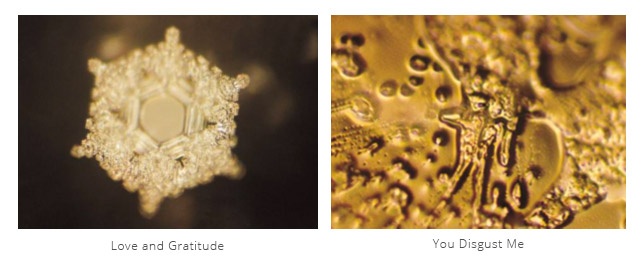
Japanese water researcher Dr. Masaru Emoto demonstrated how the human consciousness has a direct effect on the molecular structure of water. Dr. Emoto’s hypothesis is that water is a messenger: transmitting from one molecule to the next. He studied the aesthetics of water to different vibrations, freezing the water, and then studying it with microscopic photography. While his studies focus on the molecular restructuring of water and subsequent reshaping of water from different vibrations, one can make the assertion that hist studies’ results have outward and inward implications – outwardly, our vibration to the world impacts the world since Earth is covered with water. Inwardly, the experience of vibrations to the body is also significant because the human body is composed of roughly 70% water.

Dr. Emoto’s molecular images of water display a shocking but simple truth: sounds that are inherently “good” shape the water into a beautiful crystal display, exactly like a snowflake. Sounds that are inherently “bad” shaped the water into bacterial looking shapes. His studies created a tangible and visual explanation for the impact that water has within us and around us. Taking this one step further, these explanations have implications with our personal practices in life: practicing gratitude and positive thought generation does maintain health for your body and it also applies to the health of the overall planet.

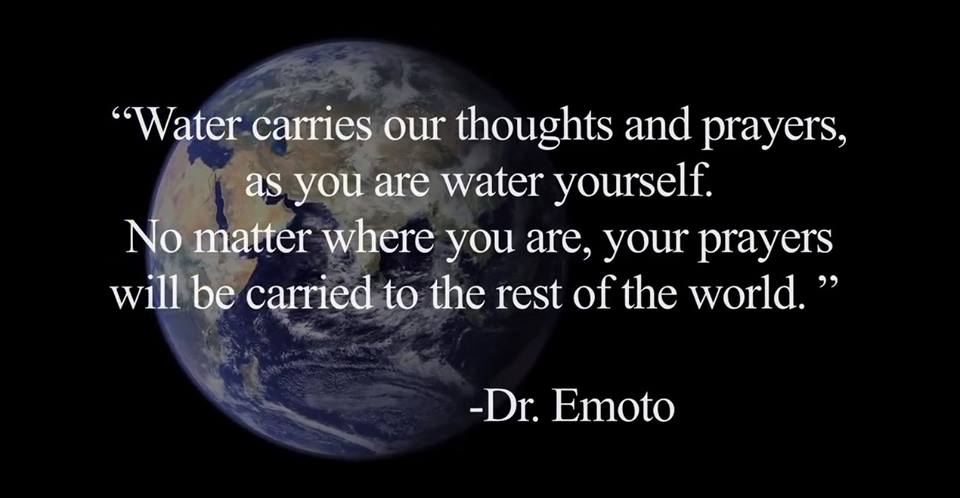
Each person has a life force of energy [power] within them and water plays a role in how that energy [power] is used. Dr. Emoto was aware of the power of his studies and stated that practicing positive thinking into prayer by considering this thought: “No one particular religion has been able to secure the exclusive rights for the power of prayer. No matter who you are, we all have the ability to take advantage of this amazing and wonderful power. Once you realize this, you will then be filled with the desire to help others realize this as well. More and more people are resonating with this understanding, and this could result in a more wonderful future for mankind.” Dr. Emoto reminds us to be grateful and honor the power of our life force by applying it for good each day, for we are each pieces of one whole universe.