The Most Feminist Disney Princess: Jasmine

This is a topic that I thoroughly enjoy debating with people: who is the most feminist Disney Princess from the era of Snow White to Jasmine?  Of all of the Disney Princesses, between Snow White (1937) through Jasmine (1992), it’s truly clear to me that Jasmine is the most feminist of them all.  That also makes sense given that she is the most “modern.” Between these Princesses, there is Snow White (1937), Cinderella (1950), Aurora in Sleeping Beauty (1959), Ariel in The Little Mermaid (1989), Belle in Beauty and the Beast (1991) and Jasmine in Aladdin (1992).  A set of the Princesses are from Walt Disney’s lifetime (Snow White: Walt’s deepest love that he put his life savings to developing her into film, Cinderella, and then Aurora). The other set of Princesses is post-Walt Disney’s life and were created in the 80’s and 90’s (Ariel, Belle, Jasmine) as part of the Disney Renaissance, a period of time between 1989-1999 where Disney produced critically and commercially successful animated films.

The more contemporary Princesses had scores notably created by Howard Ashman and Alan Menken. Howard wrote the lyrics and Alan composed the music and together they were part of the Renaissance of Disney Animation. It was in 1988 that Ashman pitched the idea of Aladdin to Disney. Ashman, essentially on his deathbed with an HIV diagnosis, wanted to focus his efforts on Aladdin, but was requested to focus his efforts on Beauty and the Beast instead. Mr. Ashman passed away from complications of AIDS in 1991, just months before the release of Beauty and the Beast. He would not live to see Belle or Jasmine on screen, which is tragic. Some of his songs after his death were incorporated into Aladdin. I look at Princess Jasmine in particular as a special character considering how Howard Ashman would have perceived her character in Aladdin… with the hope that he sees Jasmine the same as I do. It’s also worth noting that Jasmine is the first Princess of non-European descent, which introduced the Princesses to racial diversity. Voiced by Linda Larkin, Jasmine is the first Princess character to be voiced by two different women: Linda Larkin provides Jasmine’s speaking voice, while Lea Salonga provided her singing voice. Howard Ashman had a great interest in working to develop a film that he was not able to. I think Jasmine would surpass all expectations.


For my generation, I think it’s clear that Jasmine is the most feminist and here’s why:

  • Jasmine’s character is quite literally of the royal life: she is part of a royal court most clearly throughout Aladdin. In comparison, Snow White does not really live out her “royal life,” nor does Cinderella, nor Aurora (she is only made aware later that she is a Princess by her fairy godmothers who have been raising Aurora in hiding).  This is significant because Jasmine has a belief system that is rooted in civil rights and an abolishment of the class systems.  To Jasmine, love is equal, and has no class. The other Princesses do not explore that topic as vividly as Jasmine, if at all. Cinderella is an early predecessor to this concept, though. Cinderella represents an early image of social mobility – she goes from being a servant to a Princess. Ariel and Jasmine are the only Disney Princesses in that era which are “living out” life in a royal court. Belle, on the other hand, becomes a Princess later, but all the while she is trapped in a castle with her abuser, she basically suffers from Stockholm Syndrome. Truly, Belle’s convictions are sincere, but a Beast who locks you up in a castle and never apologizes for his actions? That’s not a comforting tale to me. Ariel, on the other hand, shares a similar desire as Jasmine to leave the comforts of the royal court, and in Ariel’s case, she hopes to become human, giving up her magical powers of being a mermaid. Ariel, naively, believes that being human is a better scenario than being a mermaid. It’s romantic though to see that her love of Eric overcomes her so much that she is willing to convert her physical being to be with him. This is, however, a troubling message to young girls: women should not have to seriously adapt themselves to be with the one that they love and young girls should be taught this very early on. Ariel’s transformation into being a human and staying a human is an ironic twist for a Disney plot, since it erases the spiritual narrative in the original tale by Hans Christian Andersen. The original story outlines the importance of spiritual life, whereas Ariel’s spiritual life is becoming mortal, which somewhat defeats the point of the original story. The Little Mermaid is nonetheless a joyful film. Ariel and Jasmine do share the most in common of all of these Princesses and this is significant when examining the feminist undertones.
  • Jasmine recognizes her sexual power and uses it accordingly.  When Jafar needs to be distracted, Jasmine kisses him.  Many would say that this ‘sends the wrong message’ to young girls. This comes from personal experience: all girls will eventually realize that their value is much more than their sexuality, and it would be a gross understatement to simplify Jasmine’s character as seeing “only value in your sexuality.”  That is categorically untrue, and people know that. You would be assuming the population is dumb if they didn’t.  Women knowing that there is power in their sexuality can be liberating and empowering, which has nothing to do with sexual objectification. Jasmine, being a Princess trapped into marrying a suitor who is only wealthy would be objectifying.  She rails against that.
  • Jasmine has no qualms with speaking truth to power. When she finds out that Aladdin has been detained, she fearlessly approaches Jafar and inquires why this is. Jafar lies to her and tells her that Aladdin has been executed at his direction for being a thief. Jasmine mourns Aladdin until they meet again.
  • Jasmine wants independence and happiness above all else, which is part of the Pursuit of Life, Liberty, and the pursuit Happiness. This is an American ideal outlined in the Declaration of Independence.
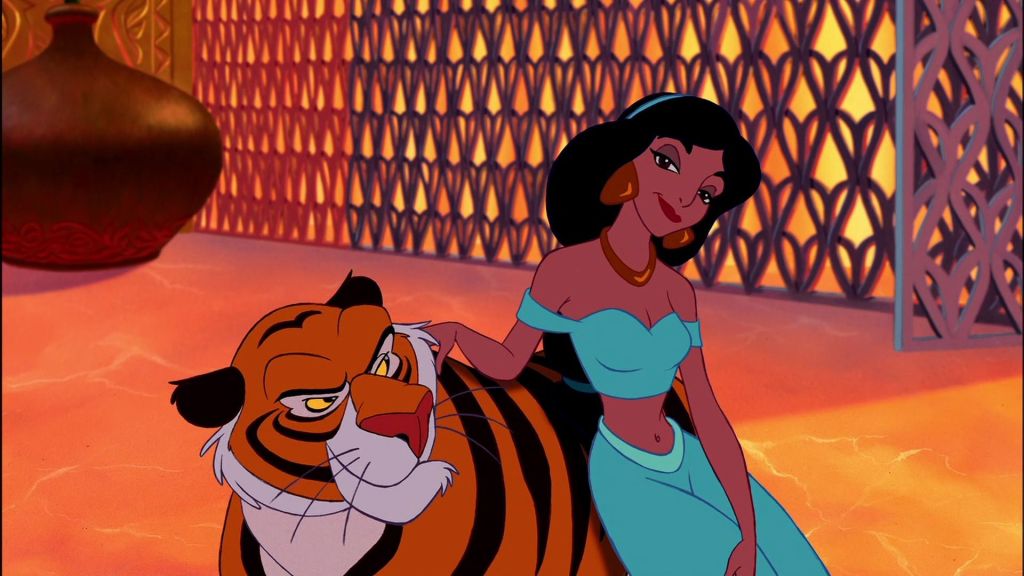
  • Jasmine has a pet tiger because she values the wild side of life. Originally, the complementary character to Jasmine’s court was going to be a hand maiden, and not a pet tiger! The doting hand maiden character was replaced by Rajah, the pet tiger. This is worth noting because Jasmine is considered a “supporting character” as Aladdin is a “high comedy” (she is not a central character like Ariel or Belle in their respective films), therefore, producers wanted to put more focus on Jasmine when she did have her scenes.
It’s remarkable how much material there is to deconstruct all of the Disney Princesses during the time period of 1937-1992, but the deeper I have considered each narrative, the more it’s worth highlighting just as how much Jasmine stands as a feminist character in comparison to her peers. She should continue being elevated as such.

Rosy Conversation with Misty Ahmadi

As we continue celebrating Women’s History Month, I recently had the pleasure of interviewing Misty Ahmadi, a young marketing professional based in San Francisco.  Misty is the Director of Social Media, SEO, and Product Management for Hearst Bay Area. She leads the Social Media Productization for the San Francisco Chronicle. Misty and I met serendipitously last year while at Create & Cultivate in San Francisco.  It seems only right that two young ambitious women would meet through a women’s conference such as Create & Cultivate. 

Misty discussed her career in Marketing, her experiences being a young professional in the Bay Area, and some of the “hot topics” in the marketing field which includes SEO and brand management. She highlights the need for brands to always keep their customers at the forefront of their business. Misty has her own marketing LLC that she runs on the side, Hey There Marketing, which she launched last year as a side business to her full time role at Hearst Media. Misty is  a graduate of UC Berkeley and Texas A&M. I am pleased to share our conversation on Rosy BVM. 

xx Bianca 

Our Conversation

Bianca: You are currently the Director of Social Media, SEO, and Product at Hearst Media. What do you find most energizing about your role in this capacity? It sounds like you are a conduit between many entities. 

Misty: This role is one of the most unique ones I’ve taken on! It’s a hybrid between strategy, product, corporate planning, management, and sales education, so no two days are alike. 

I love helping others succeed, this comes from my background as a teacher. And I can do this no matter whom I’m working with – clients, strategists, sellers, or other corporate teams. The path to success isn’t always clear, so helping my team come up with innovative strategies for our clients and how to combat push back from them helps my team become better at their roles and gain skills they can continue to leverage… even if it takes extra time on their end! I also help other social teams grow across Hearst and the cross collaboration from those opportunities is unbelievable. I love when we get to learn from one another because we’ve created a safe space to ask questions, test, and learn. 

Bianca: SEO, otherwise known as search engine optimization, is such a huge topic of discussion for people these days across all sectors. What are your thoughts about it? 

Misty: Every good marketer should have a basic understanding of SEO. It helps make your writing and content planning so much more powerful and measurable. I think it’s a topic people are scared about because it takes time to do well and the progress and impact isn’t always linear. So if you want to stand out and be more well rounded, learn SEO. 

If you want to learn about SEO, start out with Moz. Try it out when building your own website too! 

Bianca: You received your undergraduate degree at UC Berkeley and your Master’s in Marketing from Texas A&M! What drove you to pursue a Master’s in Marketing? 

Misty: While I pursued my undergraduate degree in psychology and education at UC Berkeley, I also was interested in taking marketing classes as well. Since my original intention was to be a teacher, the marketing classes were my “fun” subject classes. After teaching in Japan for a couple of years, I realized that I could see more of a career, long term, in marketing. I started to research courses, certificates, and jobs in marketing and decided that for me, the best option would be to get a masters degree in order to catch me up on the subject of marketing and offer the opportunity for marketing-related internships. I also looked at the cost of getting a masters and my earning potential upon completion of the program. Getting scholarships, paid positions on campus, and picking a university in a low cost of living area really helped keep my graduate program costs low and allowed me to get what I thought was a good ROI on my education investment! 

Bianca: I love to see  when other young women pursue a “side hustle.” How long have you been working to develop your LLC, Hey There Marketing? What do you hope to do with it in the future? 

Misty: I made my LLC less than a year ago when an opportunity arose to do a short term consulting gig. The gig ended up falling through, but it pushed me to think about how I’d brand myself as a marketing consultant and to start to seriously think about the type of work I’d like to take on. 

In the future I’d like to be able to take on more clients looking to ensure that their content and social media strategies are truly customer-centric. 

Bianca: Being a young female professional in the Bay Area has its own set of challenges, what inspires you to continue boldly doing the work that you do? 

Misty: I like to use my personal social media time for positivity and inspiration. By following accounts like Create & Cultivate, Ladies Get Paid, and Makers Women, I love to see stories of other women rising above and taking ownership of their space. 

I also hope to one day have children of my own and I want them to be raised in a world where someone can take on any role they want – visible representation matters so much. 

Bianca: Since your work is at the intersection of multi-channel social management, content creation, and brand management, what would you say is the most important part to maintaining consistent messaging for a brand? 

Misty: I would say the most important part to maintaining consistent messaging for a brand is to ensure that you’re keeping your customer at the top of your mind. For someone new to branding, is it easy to understand what you’re talking about? Is it relatable content to both new and old customers? It’s a lot to handle, but firm brand guidelines can help make it possible. 

Bianca: What is your favorite part about living in the Bay Area?

Misty: I love how it’s possible to find your community, no matter your interest. And of course I have to say my CALIFORNIA Golden Bears! 

Thank you, Misty, it’s been a pleasure learning about your experiences in marketing and how women can work to support other women! 

Samantha Parkington: The American Girl Doll That Shaped My Politics

This was Christmas 2001 and I was elated to receive Samantha.

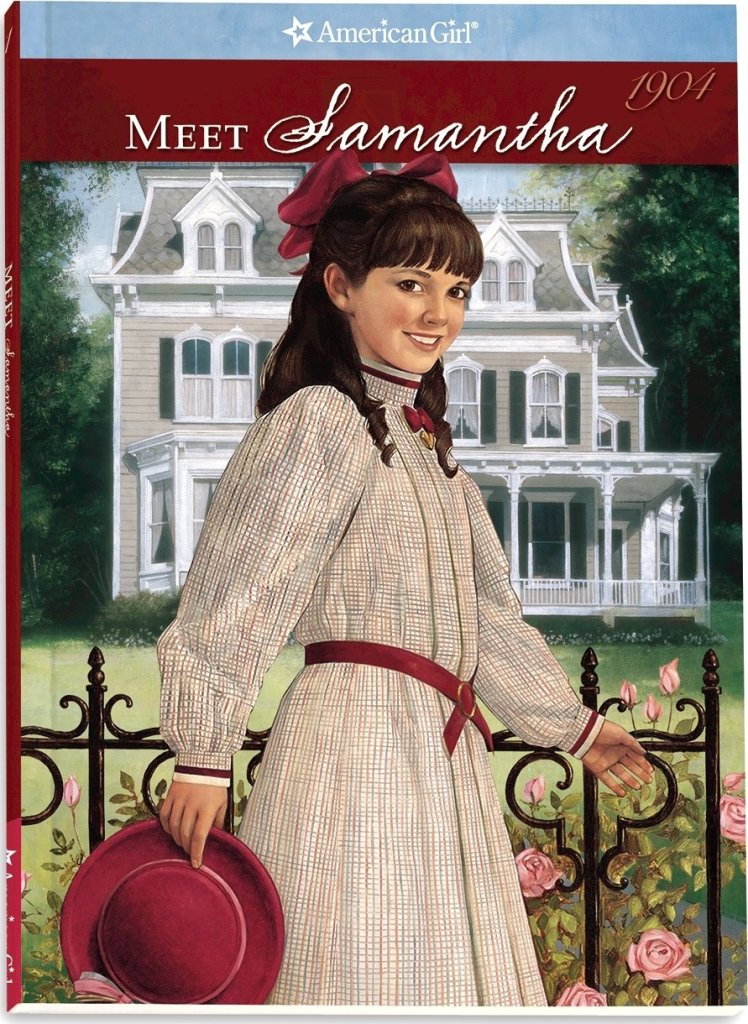
In continuation of celebrating Women’s History Month, I am celebrating Samantha Parkington, the American Girl doll that shaped my politics. When I was 8 years old and in 3rd grade, I learned about Samantha Parkington, the American Girl doll whose story is set in 1904 Victorian era New York. Her story is rooted in progressivism and the Women’s Suffrage Movement. I read about her in school and dreamed of receiving the American Girl doll for Christmas, which is somewhat ironic because one of the storylines in one of the books about Samantha I was reading was about how she dreamed about receiving a very special doll for Christmas. It was like a little girl’s doll dream inception.

I did receive Samantha for Christmas at my complete and utter elation (see photo below). That year I was in 3rd grade was also the year of 9/11, it was a tumultuous time for the world filled with much uncertainty, which made receiving Samantha for Christmas even more comforting. Samantha inspired me in so many ways – her story was compelling in a number of unique ways. Despite being raised comfortably upper class in Bedford, New York, Samantha’s character dealt with real life suffering: her parents passed away in a tragic boating accident and therefore left Samantha orphaned. Her story helped shape my conceptions of empathy.

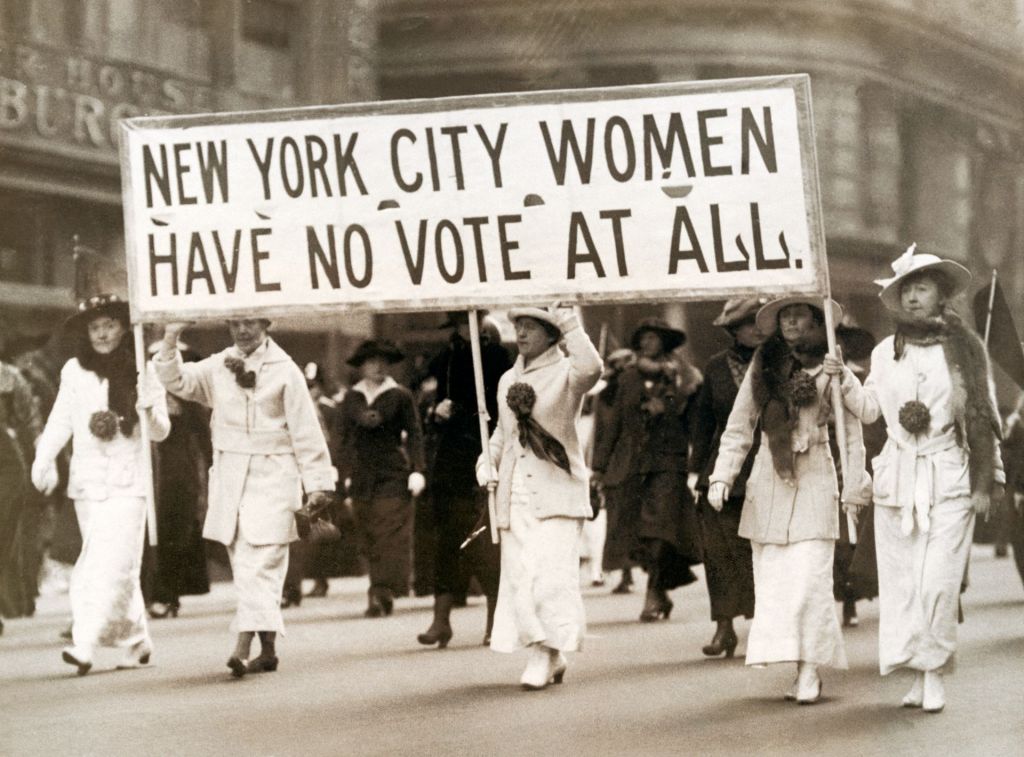
Her Uncle Gard, who serves as a father figure of sorts to Samantha marries a suffragist, who becomes Samantha’s aunt, Cornelia. Cornelia is one of the first women to join in the protests in New York City for women’s rights to vote. I learned about the Women’s Suffrage Movement this way.

Women gained the right to vote in 1920 in America.

Samantha’s stories has layers of justice orientation to it, which is wonderful for young girls and boys to learn about. While she was raised comfortably in high society, Samantha experienced an emotional suffering that made her a multi-dimensional character. Furthermore, a significant part of the plot of her story is how she befriends the maid servants of a neighboring house, Nelly and her sisters (girls who are her age) and teaches them how to read. This opened my eyes to the horrors of child labor at an early age.

Since Samantha and her story captured my heart, I wanted to share this with the author of her story, Valerie Tripp as a 3rd grader. I wrote a letter to Valerie about how much I learned from Samantha’s stories and how much this doll meant to be as I was learning more about progressive causes. I also included a drawing of Samantha. I received a letter back that expressed her happiness. I learned at a young age that speaking up for what is right can have a positive impact on the world and Samantha’s story helped shape this understanding at a very young age.

When I was a student in community college, I took a public speaking course. One of the prompts was to share a story from your youth that meant a lot to you and how that experience shaped you. Naturally, I chose Samantha for how she was the catalyst for my political views to come; at the least, she helped me understand the need for civic engagement in society in all facets of life. I brought the doll along to my college class and I nervously remember how that would be received. The class ended up loving the speech that I made about Samantha (to my relief) and I received an A in the class.

To my chagrin a couple years ago, Mattel, now American Girl’s parent company pulled Samantha from their doll line (for reasons beyond my understanding) and at the outrage of many fans of Samantha, she was finally brought back a couple years later. It still astonishes me that a toy executive could be that callous in removing a character which represents so much goodness. Thankfully, Samantha’s tale did not end there. She is still available to my heart’s content.

Teacher, rule breaker, and speech maker are all descriptions of Samantha

My speech was centered in the idea that stories can help shape our outlooks in life and learning this at an early age helped to shape much of my values today. In Samantha’s case and what I learned from her story, these values are rooted in compassion, generosity, women’s rights, and an awareness in the pursuit of a more fair and just world. I think we can all agree that she serves as a wonderful role model for young girls. Thank you, Samantha.

A Brief History of Lingerie and Women’s Empowerment Through It

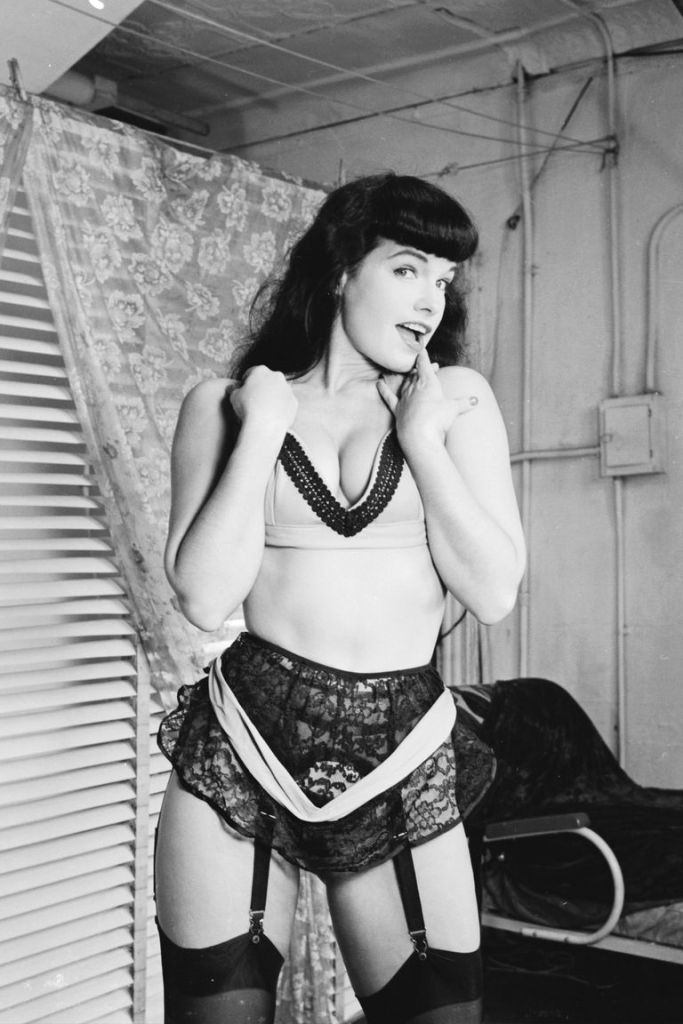
Bettie Page helped to mainstream lingerie in the 50’s.

Historically, women’s lingerie has been dominated by male run business structures, including the design of it. For example, the infamous Victoria’s Secret brand is most well known in mainstream America for having shaped the conception and mental image of modern day notions of female sexuality as a concept based on a certain body type and style that was being sold to women who did not fit this prototype. Thankfully, this image of a prototype of the idealized female body is being reassessed as being unfit and irrelevant to women’s experiences of their sexuality.

Moreover, Victoria’s Secret has unfortunately not been the only brand to have a male-run business model for lingerie. La Perla, the Italian lingerie house, was run only up until a couple of years ago entirely by men. The creative direction and stylization was entirely run by men as well, which makes no sense to produce a product that is fundamentally not understood by its creator…

How can you know how comfortable a bra is going to be if you’re not wearing it? It’s absurdity in product design for sure. When I was a college student, I did a project for a sociology class at UC Davis about how skeptical I was about Victoria’s Secret as a brand. I studied how they kept women interested by offering certain sales and memberships, kept a steady supply chain of consumers through their younger “PINK” collection oriented towards college women who would then “graduate” into their adult collection, and studied how they were an example of “affective consumption.” Victoria’s Secret had entered into the psyche of the American male and female and played with the emotional connection people have to their sexuality. This is not even to mention the accusations that their cotton was sourced by child labor in Burkina Faso. If there is anything positive to note about the brand, they were one of the first brands to be part of the cross-pollination of mainstream product to enter into high end fashion because of their illustrious fashion shows, which had a kind of Carnevale theme to it. Besides that, the brand has done significant damage to glorifying fabricated and untrue ideals of women’s sexuality.

The project that I did about how Victoria’s Secret uses affective persuasion to sell its brand for a sociology class at UC Davis.

For a time, Americans heard the word “sexy,” and one of the first things that they may have thought of was Victoria’s Secret. That’s the effect of affective consumption and that needs to unequivocally be undone especially when you are considering the mental health implications for young women, which could potentially lead to eating disorders and body dysmorphia. Consumers are leaning into the idea now that they don’t have to buy into that image of “sexy.” You define your own sense of sexuality and there are also historical paradigms which help shape the times that we are in, but ultimately, you define your sense of sexy, nobody else.

I’ve always shucked the concept of someone telling me anything to take their word for it unless there is a logical reason to back their word. It’s healthy to be a skeptic, especially when you think there is something off and I wondered when I was younger why I felt like the VS brand did not even come close to encompassing the entirety of feminine sexuality. I understood quickly that the image Victoria’s Secret was selling to me was not entirely accurate.

In my opinion, lingerie should be delicate and comfortable: there is no reason to compromise on either of those standards. Recognizing that those ideals are an attainable standard for the mainstream consumer without lingerie feeling like it’s part of an exclusively luxury market is part of a cultural renaissance currently happening where women continue to take control of their own bodies as well as find the ideals that help them to express their personal style.

The fact is that women for a long time have craved a deeper connectedness to their femininity when they want to be feminine (it began with Cleopatra), and there’s nothing wrong with that whatsoever. What is wrong in society are the systems which are in place that have historically shamed women for wanting to share their sexuality. Ultimately, that’s tied to women feeling more empowered and a fundamental part of the oppression of women is to take that power away from them.

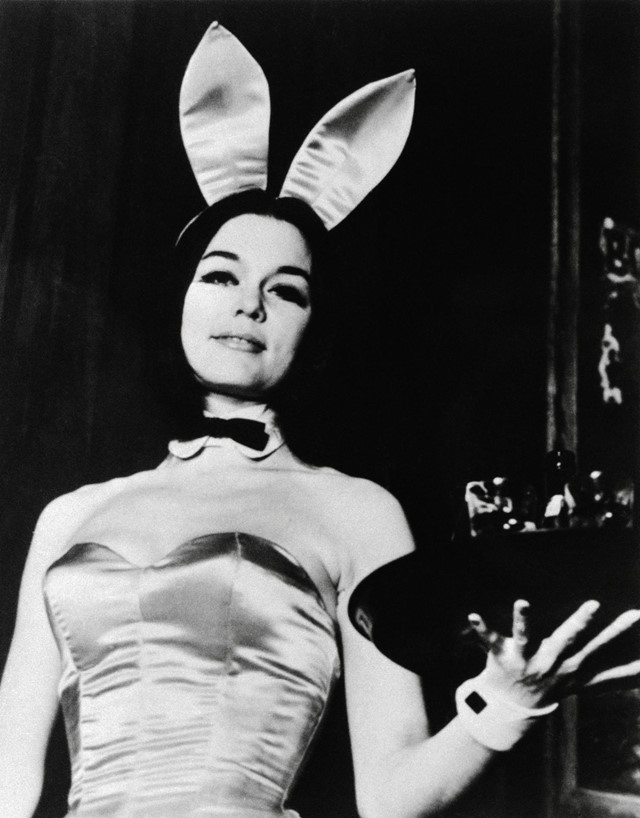
Different strains of feminist discourse have also confused women throughout history. For example, Gloria Steinem’s investigation of the Playboy brand at the Playboy Club when she went undercover as a Playboy bunny in 1963 brought about a new critical angle for the time. However, it was only just in the 1950’s that the brand emerged and Steinem’s undercover work was noble, but it also created a tension between two different topics: women who were not being treated right because of their objectification as employees of the brand versus women who are willing to engage in their own objectification for the sake of their own autonomy. These are two distinctly different topics, but it became apparent that a feminist prototype would begin to emerge as a result, which was not ideal for the plight of feminism.

This unfortunately has also played into the layers of complexity surrounding the feminist plight at large: women’s empowerment is as simple as fairness. Feminism is about fairness. What does that entail? In the case for how women express their sexuality, it means that women will always be respected regardless of what they choose to put on their body or how they express their sexuality.

Gloria Steinem undercover as a Playboy bunny.

Looking sexy has nothing to do with your intelligence level, which sadly still needs to be said. Historically, women have even been physically oppressed by their undergarments: the corset is the example how “evolved” we have become. Though, with the revival of neo-burlesque, it’s not uncommon for women to want to wear corsets by their own choosing for the sake of performance, but they certainly are not for everyday wear given their restrictive nature for breathing and the body.

The corset culture has been revived through the concept of the “Waist Trainer,” which, to me, is just an absurd modern variation of the corset. The same goes about how I do not believe in shapewear… In my opinion, the shapewear industry is just another way to tell women how their body needs to be artificially enhanced. I want my body to be celebrated as it is, my skin to breathe without being covered with a lot of fabric, and I am going to continue to share that message with others.

Ultimately, women are in charge of what they like to put on their bodies, but it’s also fair to say that women have been manipulated into thinking what is best to put on their bodies for the sake of male approval in society. Women continuing to realize and having the confidence to do what best suits them in how they choose to share their femininity and sexuality is an important part in alleviating women’s suffering, reducing societal pressures, supporting other women’s choices, and ensuring we are continuing to support women’s empowerment.

A corset from 1899
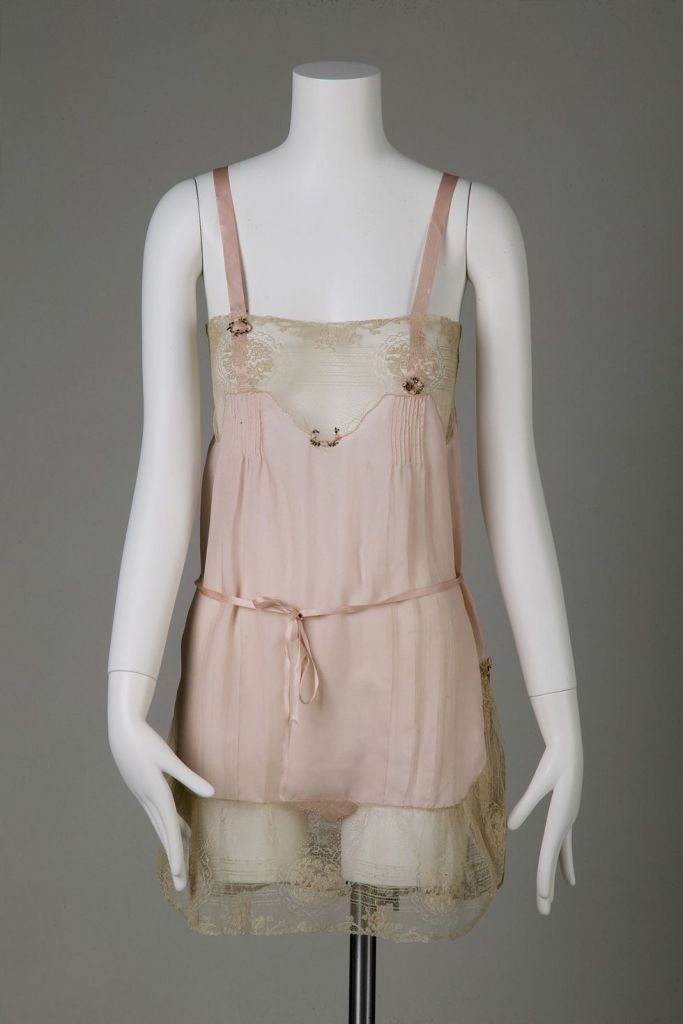
A wedding night chemise from the 1920s indicated a dramatic change from corsetry.
The first advertisement denoting cup size in 1944.
A clever Palmers advertisement in reference to Playboy.
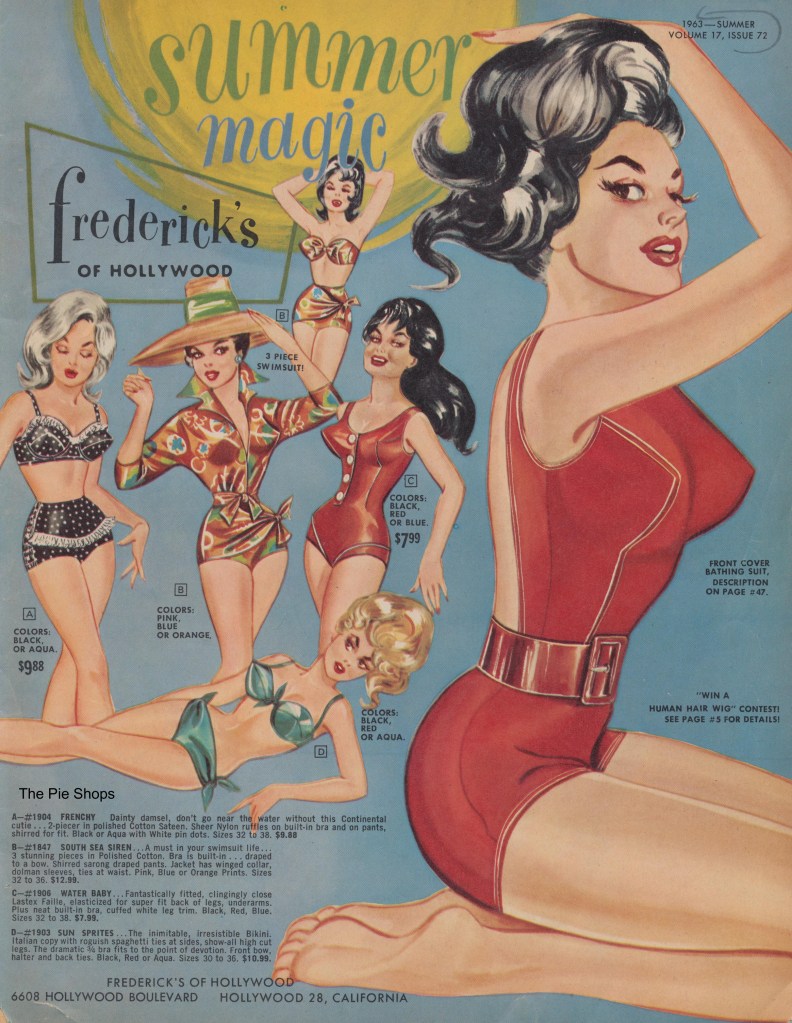
Frederick’s of Hollywood helped to glamorize lingerie.

Here are a handful of brands, high end and mid-tier, that encompass wonderful lingerie ideals:

Palmers

Honey Birdette

Avec Amour

Bluebella

Bordelle

Maison Close

La Perla

Agent Provacateur

Yandy

Felina Intimates

Dita von Teese Lingerie

Trashy Lingerie

Harness Brazaar