
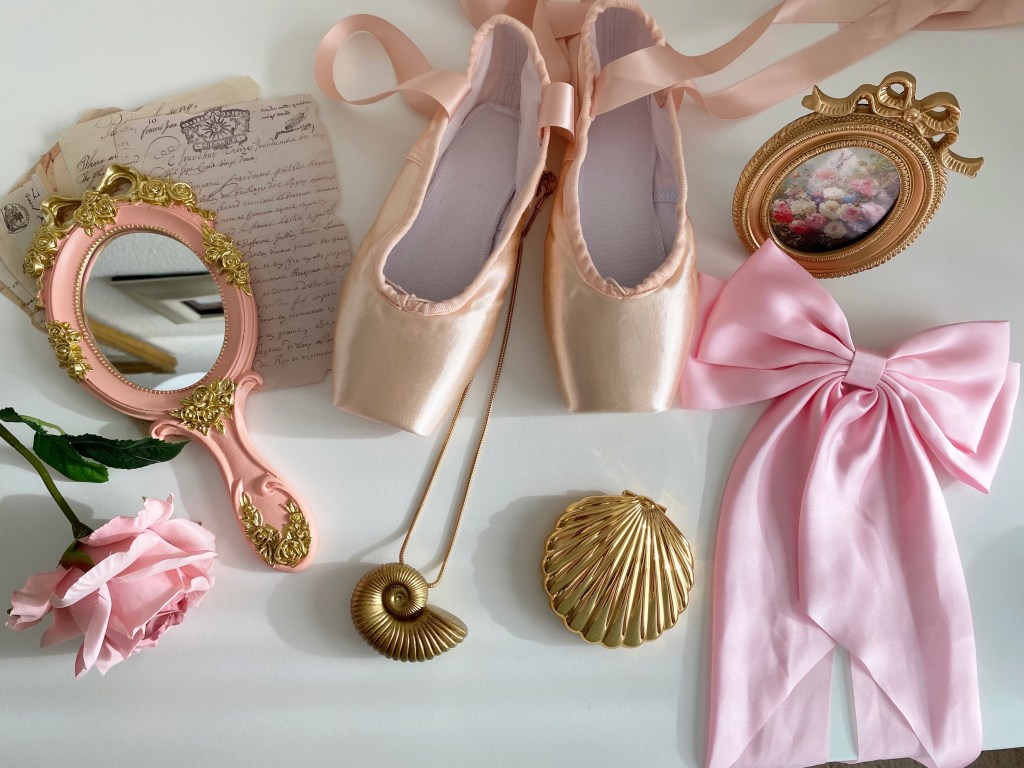
Sacred Softness: Feminine Energy as Resistance

Why emotion and gentleness are radical in a world obsessed with control

There’s a quiet revolution happening—not with fists raised or voices shouting, but with soft hands and open hearts. It’s the kind of resistance that doesn’t demand attention but changes everything. It’s the revolution of sacred softness.

In a culture that prizes productivity over presence, sarcasm over sincerity, and hustle over healing, choosing to lead with your femininity—your intuitive, emotional, gentlest self—is a bold act of rebellion. This is more than an aesthetic (though yes, you can wear plenty of blush and lace while doing it). It’s about reclaiming the divine power that comes from within when you choose tenderness in a world hardened by fear.

💗 Softness is not weakness—it’s wisdom.

Our society teaches us that strength looks like armor; that to be taken seriously, you must dull your sparkle, shrink your feelings, and “keep it together.” But sacred femininity teaches something else: vulnerability is strength, intuition is intelligence, and grace is power. The Blessed Virgin Mary, as a symbol, didn’t achieve power through force—she changed the world through her devotion and sacred presence. That is holy softness. I like to think about how the water eroding a rock is more powerful than the rock itself, and it’s the softness of the water’s movement which does this.

🌙 Emotionality is sacred technology.

Your emotions aren’t flaws to fix. They are signals—divine information flowing through your spirit. In embracing emotional depth, we tune into truth beyond logic. We begin to trust that crying can be cleansing, rest is productive, and saying “I feel…” is just as important as “I think…”

This is spiritual intelligence. It’s what guides you back to what’s real and aligned. In a world that glorifies numbness, to feel is truly a sacred act.

🕊️ Grace is a spiritual strength.

When you choose grace over gossip, patience over proving, or kindness over control, you are creating space for love as a way of being. Grace naturally softens others. It creates sanctuary. And in today’s world—where everyone is fighting to be heard—offering a pause or a gentle look is resistance.

Grace doesn’t mean you let yourself be walked over. It means you know your worth so deeply that you don’t need to demand it. Your presence, your peace, your elegance—these things do the talking for you.

🌹 The Rosy Rebellion

Sacred softness isn’t passive—it’s powerful. It’s what fuels the healer, the artist, the lover, the mystic. It’s for the women in vintage slips who discover their sacred perfume and who smile gently while knowing exactly what they’re here to do.

To be soft is to be receptive. To be receptive is to be radically open to divine wisdom, beauty, and change. That’s not small. That’s sacred. Being soft, and through that process, building resilience, is our best hope for the future.

Put on the lace. Feel the feelings. Say a prayer. Slow down. In doing so, you’re not falling behind—you’re changing the frequency of the world.
Reflections on Tolle, Jung, and Individuality

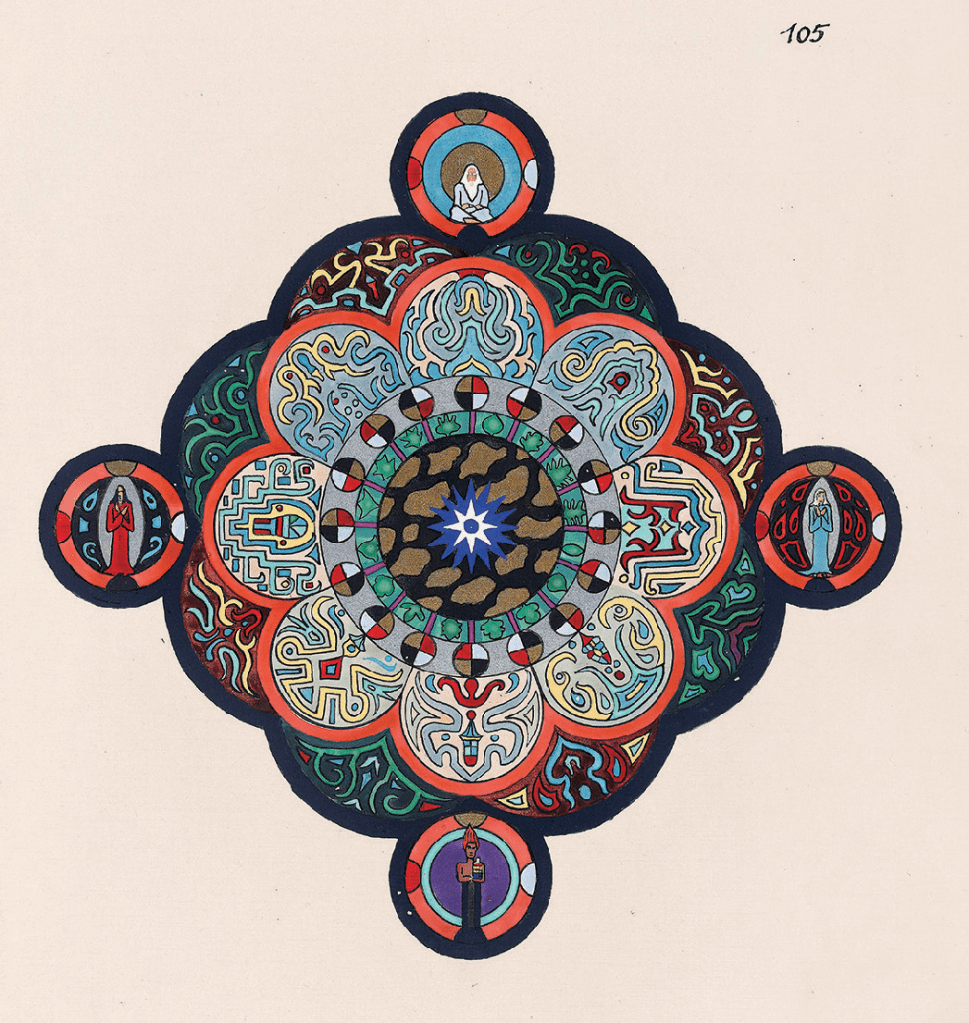
The Art of C.G. Jung

Over the past couple of years, I have been committed to learning about ideas which focus on cultivating and enriching spiritual enlightenment and liberation for a health focused and purpose-led life (perhaps this came to the forefront of my mind because of the pandemic causing existential considerations of what matters to people and systems).  For me, this exploration came in the serendipitous encounter of Eckhart Tolle’s book A New Earth in my neighborhood’s Little Free Library book stand.  I went on to read his first bestseller The Power of Now, which ultimately led me into reading and blogging about an entire spectrum of New Age writers including Louise Hay, Wayne Dyer, Masaru Emoto, and then Deepak Chopra and my journey into studying Ayurveda as in depth as possible as a novice to a complex topic that includes thousands of years of tradition from India. 

Overall, many of these New Age writers had me in an intellectual grip without a doubt…I felt a sort of spiritual transformation reading these books, which is not a small thing to say. I began meditating quite often and learned different ways of meditating. I think meditation is a tool to unlock subconscious thoughts and believe it’s a tool that should be taught earlier in our lives than later. It affected my approach to how I thought about what matters – how we approach each and every day and how our attitudes shape our micro and macro experience in the world is what defines our human experience.  However, this is not to say that it transformed my personality.  If anything, it affirmed what I already had set forth with creating: a world of rosiness and softness as a vehicle for navigating complex information.  My New Age studies became an opportunity to journey into understanding the “self” vs. the “Self.”  The work of egoic detachment never stops, and in my opinion, is a rather fruitless endeavor over time.  From the ideas Eckhart Tolle presents around “presence” and “nowness” as the only state of our lives to be concerned with, I have found there to be some essential faults with his teachings when put into practice.  Ultimately, those lived experiences led me to two truths that I can separate and examine: The first truth is that there is a universal oneness of source energy we are all a part of. This is technically separate from ideological concepts around God, but can be merged together with God dependent on your cultural ideological conception of God. I am a Roman Catholic and have found inner peace through my Christocentric journey. I also support the peaceful existence of alternative religious doctrine which adheres to a peaceful reciprocity of this goodwill. In my opinion, we are all part of a “source energy” that we all collectively belong to and theology complements that journey to optimal health and spiritual wellbeing. The source energy that brings us to this life also takes us from this life (it is up to you how you comprehend the idea of God as an entity separate or part of oneself, we are bonded through a source energy in any event).

    The second truth we can explore is that our experiences shape us as individuals: culture, ideology, social norms and we should do our best to develop our individuality. These things do shape us into who we are – it’s too much to ask of ourselves to abandon all of what comprises us as individuals to focus on awakening as a collective as Eckhart Tolle asserts through his teachings.  The real importance of individuation necessitates physical survival – the ego survives for a reason.  We are composed of all those “things” (gender, culture, religion) which Tolle tells us to negate ourselves from to have spiritual enlightenment as a collective.  This is truly nonsense in practice. His discussion points around disconnection from the “thinking mind” and ego become too abstract to truly find purposeful action within.  We all live and navigate within highly complex systems. Tolle’s ideas around liberation from the ego are too disconnected from real life and how societies operate. As a result of this deep reflection for myself, I have begun to embrace and study Carl Jung’s interpretations around the “shadow self” and how doing “shadow work” is how one can truly find their life’s purpose.  His connection to mandalas and Eastern Thought are especially important tools for these reflections.  

    Jung connected to ideas from Buddhism and believed in respecting and including the whole of an individual’s experience, including their “shadow” aspects.  In my opinion, the Jungian shadow is what will unlock liberation and maintain individuality for each of us.  In Eckhart Tolle’s view, the meaning of life is through a negation of the ego (individualism) and attaching oneself to a universal collective source energy as being a form of endless joy… his ideas around separation from the ego brings the nirvana of universal source energy as our entrance into conceiving infinity (given the science of black holes in the universe – infinity definitely exists). However, just because infinity exists does not mean humanity survives through a furthered attachment to universal source energy, nor do cultures survive this way.  Humanity survives through connection between individuals who create life and further generate individuality this way.  Individuation is our liberation. The ego is too hard to detach from as human beings and there are biological reasons for this.  The ego will not be the demise of humanity – the ego will enable our survival.  Tolle states how collective consciousness is part of the next phase of human evolution.  I highly doubt we will have the ability to culturally dissociate that much, especially during a time in the world where cultural separations became glaringly apparent.  I do connect to the ideas Tolle presents related to the importance of our present moment and do think he presents tools which empower people to overcome challenges and hardships through a focus on what you can do to take positive action in the moment. Beyond that, I see individuality and connections to other individuals as the answer to our liberation and not collective consciousness as liberation.

    I believe that the real inner truth we can find within ourselves is that humanity will survive longer when we focus on ourselves as individuals. We find peace in the boundary separations of our individuation by respecting individuality as our core truth.

      Coquette Style and The Divine Feminine

      In our complicated modern world, we see bursts of expressions in people which reflect what can be understood as the “divine feminine.” According to The Good Trade, “the divine feminine is the spiritual concept that there exists a feminine counterpart to the patriarchal and masculine worship structures that have long dominated organized religions.” For example, the most well known being the Virgin Mary in Roman Catholicism. However, the idea goes beyond religious iconography.

      This concept of the divine feminine also inhabits a space outside of religion and explores the idea of how feminine representations show up throughout cultural discourse. The term “divine feminine” is not a mainstream term quite yet, but I think it is approaching mainstream now. The idea of the divine feminine is not necessarily holding a religious connotation, but it holds the ideas around how femininity appears in its many forms, and not solely represented in the female sex. The ideas surrounding femininity and spirituality have a multi-faceted way of being understood and are subject to opinion and transcend any boundaries of gender norms or heteronormativity.

      Divine femininity is a good thing for civil society as it enables people to achieve a full expression of their sense of self. As such, the ideas which underpin divine femininity is an inherently inclusive structure that enables the embracement of feminine concepts in fashion and beauty as a way of expressing oneself in any context. This has widespread implications for our idea of how we “show up,” in society – for example, how dress codes are perceived as appropriate in certain work environments as one example. This also extends to how comfortable women feel in their own bodies as well. According to Women.com, the idea of coquette style is being “unapologetically feminine.” This is a great description around embracing femininity without qualms. Byrdie.com described the style as “reclaiming hyper-femininity.” Across the range of ways that one can express their own style, the coquette aesthetic is one which gives ample freedom to embrace womanhood.

      To clarify the expression of the divine feminine and its appearance in popular culture, it is important to note the intersection of social media and fast fashion due to the popularity that hashtags signify for the fashion industry. Within that space, there is an opportunity to identify particular styles which then take on trend based representations of what might be a response to popular culture events happening at that time. For example, most recently “Barbiecore” for the release of last year’s hit movie, Barbie, or “Mermaidcore,” for the Disney The Little Mermaid‘s release last year as well. For the divine feminine, all of these trends can be understood within the broader umbrella of femininity. However, I think the emergence of the style “Coquette Core,” is likely the most clear embodiment of the divine feminine as an aesthetic sensibility.

      In summary, embrace your rosy style. Embrace it.

      For example, Coquette Style can be described as including such through fashion:

      • Pastel colors (especially light pink)
      • Lace
      • Bows
      • Victorian Era style
      • 1950s style
      • Balletcore aesthetic
      • Cottagecore aesthetic
      • Princesscore aesthetic

      As described on Wikipedia, “This aesthetic has been characterized as both a way to relive and express creativity… and a way to fully escape into femininity without feeling guilty about it.” This is a particularly fascinating description, because so much about contemporary fashion and style elevates the idea that successful women can look more “manly” and therefore be equated with being more “respectable.” This is deeply untrue. I strongly believe that self expression takes on many forms, but I also believe that trends do impact us more than we may admit, so the reality that women may shy away from their feminine style is something not to be ignored. I fully embrace the idea that women can be both very feminine, successful, intellectual, and career driven without compromising the integrity of the other.

      Stay rosy.

      xoxo

      Bianca