
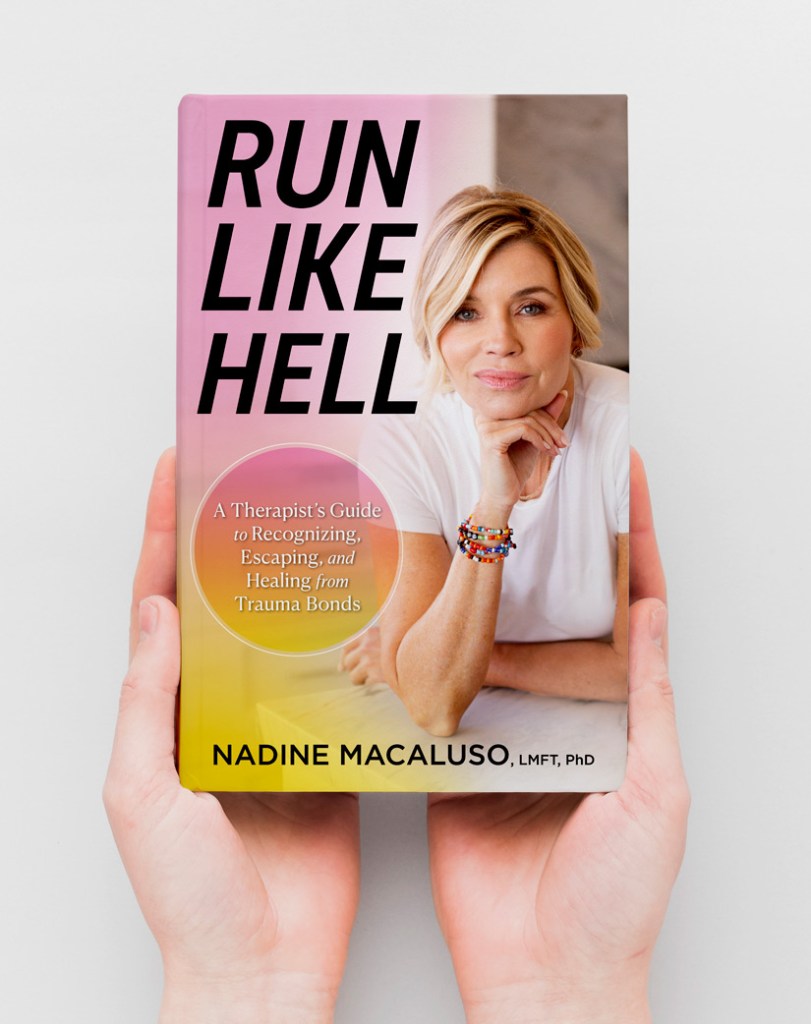
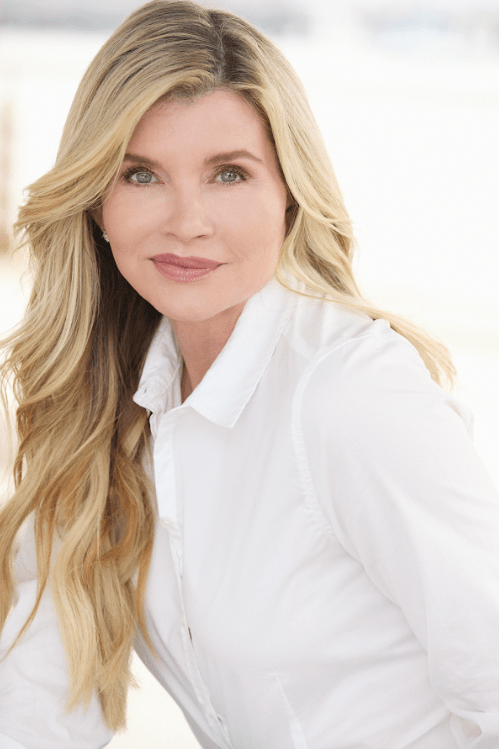
Dr. Nadine Macaluso, known to her patients as Dr. Nae, is the real-life inspiration behind Naomi Belfort’s character in “The Wolf of Wall Street.” She survived a turbulent eight-year marriage to Jordan Belfort, marked by abuse, greed, and trauma.
Following her experiences, Dr. Macaluso relocated to California. Her journey of trauma and healing inspired her to return to school at age 39, where she earned her Master’s in counseling and a Ph.D. in somatic psychotherapy. She further specialized with a two-year postdoctoral training in the Neuro-affective Relational Model (NARM).
As a therapist, Dr. Macaluso combines her education and personal experiences to help others heal from trauma. Her practice focuses on assisting patients in connecting with their authentic selves, fostering confidence, resilience, and agency. Dr. Macaluso firmly believes in the potential for post-traumatic growth, instilling hope in her patients and guiding them to reach their potential in life and love.
Please follow these links to Dr. Nae’s Trauma Bond Recovery Community as a resource and you can download the first chapter of her book, “Run Like Hell,” for free here.
On Trauma Bonds, Healing, and the Journey from Survivor to Surthriver
Advising Margot Robbie for The Wolf of Wall Street
What I most wanted Margot to understand:
I wanted her to understand that beneath the surface glamour, living with abuse and coercive control is a daily battle for survival. It’s not just about the dramatic moments that make it to film – it’s the constant hypervigilance, the walking on eggshells, the way your nervous system rewires itself to anticipate danger. I explained to her that when you’re trauma bonded, you’re simultaneously the person being hurt and the person desperately trying to maintain connection with the source of that hurt. This paradox is what makes these relationships so confusing and difficult to leave.
The abuse isn’t always visible bruises; it’s the systematic erosion of your sense of self, your confidence, and your ability to trust your own perceptions. I wanted viewers to feel that internal struggle – the cognitive dissonance of loving someone who harms you, the way trauma bonds hijack your attachment system and make leaving feel like emotional death.
Communicating “Helpless and Voiceless to Power”
There was a pivotal moment when Margot confided that she was afraid to tell Martin Scorsese she didn’t want to be naked for a scene. I told her, “That feeling you have right now – that fear of speaking truth to power, that worry about the consequences of asserting your boundaries – I felt that every single day in my marriage. Embody that feeling, and you’ll be accurately portraying how I lived.”
This wasn’t just about Jordan’s financial power or his volatile personality. It was about how systematic emotional abuse creates learned helplessness. When someone consistently punishes you for having needs, opinions, or boundaries, you eventually stop expressing them. You become voiceless not because you have nothing to say, but because you’ve learned that speaking carries too high a price. The power dynamic in a trauma bond isn’t just about external control – it’s about how that control becomes internalized until you police yourself more effectively than your abuser ever could.
From Personal Experience to Professional Purpose
The women in my practice were my inspiration to write “Run Like Hell.” Day after day, I sat with women who were trauma bonded, betrayed, and coercively controlled, and I saw my own story reflected in theirs. I realized that while the details differed – not everyone’s abuser made headlines or had movies made about them – the patterns were remarkably consistent. The trauma bond blueprint is universal.
I went back to the research with fresh eyes, combining my lived experience with clinical expertise. I wanted to create the resource I wished I’d had – something that named what was happening, explained why leaving was so hard, and provided a roadmap for healing. The message I most wanted to share is this: You’re not crazy, you’re not weak, and you’re not alone. What you’re experiencing has a name, it has a neurobiological basis, and most importantly, it has a path to healing.
Community as Medicine
My Surthriver Community has been profoundly healing, not just for the members but for me personally. Every day I help a survivor, it adds meaning to my own trauma. It transforms something that was destructive into something generative. When I see women supporting each other, sharing resources, and celebrating each other’s victories – no matter how small – I’m witnessing the antidote to isolation that keeps so many trapped.
Building this community of over 300,000 followers isn’t about numbers; it’s about creating a counter-narrative to the shame and secrecy that surrounds abuse. Every story shared, every comment of support, every woman who recognizes herself in another’s experience chips away at the isolation that trauma bonds depend on. My own healing accelerates when I witness others reclaim their lives – it’s living proof that transformation is possible.
The Epidemic We Must Confront
Intimate partner abuse is indeed a dangerous epidemic leaving a trail of wounded women and children in its wake. The coalitions and awareness efforts we need must be comprehensive and multi-systemic:
• Legal reform that recognizes coercive control as abuse and provides real protection for survivors
• Education programs in schools that teach healthy relationship dynamics and help young people recognize early warning signs
• Healthcare provider training so medical professionals can identify and appropriately respond to signs of abuse
• Workplace policies that support survivors without penalizing them for the chaos abuse brings to their lives
• Media literacy that challenges romantic narratives glorifying toxic relationships
• Community support networks that provide practical resources – safe housing, legal aid, financial assistance
• Trauma-informed therapeutic services that understand the neurobiological impact of abuse
Most critically, we need a cultural shift that stops asking “Why didn’t she leave?” and starts asking “Why did he abuse?” and “What systems enabled this?”
The Body Keeps the Score
Somatic psychology drew me because I recognized that trauma lives in the body, not just the mind. When you’ve been abused, it’s not just the experience itself that needs healing – it’s how that experience imprinted on your nervous system, altered your stress response, and changed your relationship with your own body.
Narcissistic abuse specifically creates a profound disconnection from the body. Survivors often describe feeling like they’re floating outside themselves, watching their life happen. This dissociation is protective in the moment but becomes problematic when the danger has passed. Somatic work helps survivors reconnect with their bodies as sources of wisdom rather than sites of betrayal.
The body remembers everything – it holds our trauma, but it also holds our capacity for healing. Through somatic practices, we can literally rewire our nervous systems, moving from chronic hypervigilance to regulated presence. This isn’t just emotional healing; it’s neurobiological restoration.
Finding Your Path to Healing
The magic of my online community lies in the validation women provide each other. When you’ve been gaslit and isolated, hearing someone else describe your exact experience is revolutionary. It’s the moment you realize you’re not crazy – the situation was crazy. The shame begins to lift when you understand that what happened to you is part of a larger pattern, not a personal failing.
Through my book “Run Like Hell” and the Surthriver Community, women can:
• Learn to identify trauma bond patterns and understand the neuroscience behind why they’re so hard to break
• Access practical tools for managing trauma symptoms and regulating their nervous systems
• Connect with others who truly understand the complexity of loving someone who harms you
• Work through the “12 Steps to Heal from Your Trauma Bond” framework
• Transform from survivor to surthriver – someone who doesn’t just survive but creates a life of meaning and purpose
The journey begins with that first moment of recognition – when you see your story in someone else’s words and realize you’re not alone.
Healing as a Lifelong Practice
Healing is absolutely a lifelong practice, not a destination you arrive at and unpack forever. But within that practice, there are plateaus – moments of integration where you realize how far you’ve come. These plateaus give you hope and energy for the next phase of growth.
I think of healing as an upward spiral. You might revisit similar themes – trust, boundaries, self-worth – but each time you’re approaching them from a higher vantage point with more resources and wisdom. What triggered you into a week-long collapse five years ago might only cause a few hours of dysregulation today. That’s not failure; that’s progress.
Healing also isn’t linear. Some days you’ll feel like you’ve gone backwards, but you can’t unlearn what you’ve learned. Every setback is an opportunity to practice your tools with more complexity. And eventually, your healing becomes generative – it spills over to your children, your community, and other survivors who need to see that transformation is possible.
The goal isn’t to forget what happened or pretend it didn’t affect you. The goal is integration – to make meaning from your suffering and use it as compost for new growth. That’s what it means to be a surthriver: to take the worst thing that happened to you and transform it into purpose, connection, and a fierce commitment to breaking the cycle.
About Dr. Nadine Macaluso
Dr. Nadine Macaluso is a licensed marriage and family therapist, author of “Run Like Hell: A Therapist’s Guide to Recognizing, Escaping, and Healing from Trauma Bonds,” and founder of the Surthriver Community. Her personal story of survival and transformation was portrayed by Margot Robbie in the Oscar nominated Martin Scorsese film, “The Wolf of Wall Street.”
Thank you, Dr. Nae! Your book and insights are a truly rosy contribution to Rosy BVM!






 rosybvm.com