
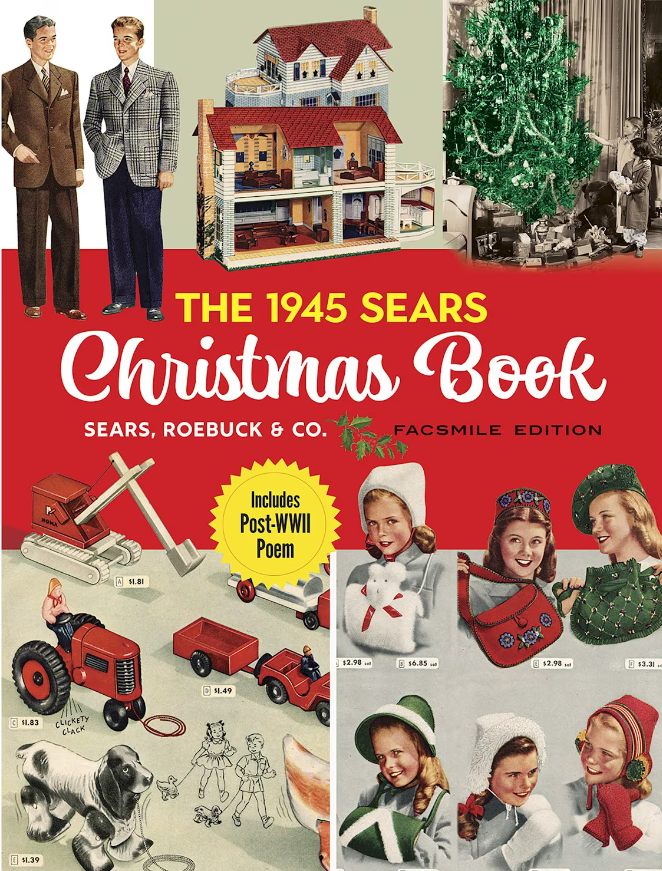

Beginning in 1933, Sears released their Christmas Book catalog in August or September, which was later rebranded to be called the Sears Wish Book. Even as early as the 1890s, Sears sold Christmas related items, such as wax candles for the tree and the first Christmas tree ornaments appeared in 1900 from Sears. In 1910, Sears began selling artificial trees and stockings for Christmas. In a truly fascinating study of American life, Sears had an all-encompassing lifestyle brand going – from lawn mowers to washing machines, from clothes to toys, at one point, Sears even sold full-scale mail-order houses you could build (Wikipedia page on this here), homes built from 1908 to 1942. These homes undoubtedly spurred the American DIY (Do-It-Yourself) movement. Sears sold more than 70,000 home building kits, which are mostly located in Illinois, Ohio, Pennsylvania, and New York. Some of these homes still stand today and with great quality materials to boot. Some homeowners today decide to create modern replicas of the templates of the Sears homes from the original masterplans of those homes. It is actually incredible how much Sears, as a brand, embodied the American Dream and inspired the American DIY spirit.

A Sears Modern Home in Benson, North Carolina
As far as the catalogs went for Sears, by 1968, the Wish Book was a whopping 605 page catalog. The catalog, in particular, has charms and style that created the template for American trends in consumer style. Up to 7 million copies of the catalogs were printed each year as well. The catalog was also an opportunity for there to be no racial bias in folks making purchases, whereas in the Sears stores, there could be ‘better products saved for white people,’ according to PBS. The catalog allowed anyone and everyone to purchase nice things. Additionally, if you did not write well in English, there were linguists who translated orders written in different languages. This is an example of pursuing the American dream in an equitable form.
By 1998, the Wish Book was transitioned online, and by 2023, it seems to have been phased out all together, but the Wish Book of the 1940s is available for print from PBS and is a fantastic Christmas present for your loved ones – a peek back into the years of a very different America, one where some aspects were joyful and festive, and other elements which were tremendously problematic. Additionally, due to the wartime based context, the consumer demands became revitalized and in new ways. Nonetheless, the ways in which Americans pursued their ideal lifestyle of “having a home and better life” certainly arose from wartime hardships. While this theme of the American Dream can resonate with many Americans even today, it is fascinating to note how the Sears concepts shaped so much of our conceptions of American style. The mainstream styles which Sears presented to Americans gave people the opportunity to step into the ideal image of their “hopes for a better life.” I find it especially fascinating how clothing in the 1940s, for example, had so much thought put into the outfit for the activity. I think the Sears of a bygone era is a great template for a company which can find its place in our current times again.


 rosybvm.com