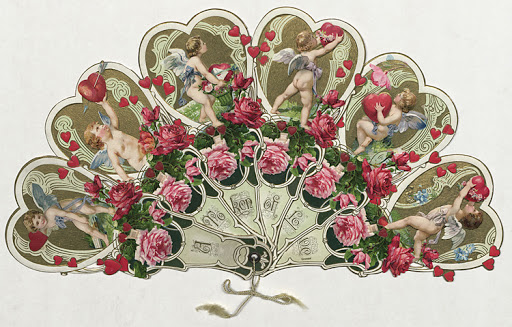
Celebrating Ella Fitzgerald

In honor of Black History Month, I would like to celebrate the talented legend and the “First Lady of Song,” Ella Fitzgerald.  In her lifetime, she won 13 Grammys and sold over 40 million records worldwide.  Born in Virginia in 1917, Ella made her professional debut at the age of 17 at the Apollo Theater in Harlem.  Despite the horrible shock and loss of losing her mother to injuries from a car accident at age 15, Ella was able to maneuver herself through the trying times and made her musical debut at only 17.  She would reflect in her later years that it was looking back on her struggle could be grateful for her success.

Before she began her singing career, she worked as a runner for gamblers, picking up their bets and dropping off money.  Ella worked tirelessly to establish herself and she was known for having a wide-ranging flexible voice.  In 1955, a pivotal career breakthrough occurred for her when Marilyn Monroe was able to secure Ella an engagement at the Mocambo Nightclub in Hollywood.  Marilyn personally lobbied that the owner book Ella.  Speaking of Marilyn, Ella said according to her website, “I owe Marilyn Monroe a real debt. It was because of her that I played the Mocambo, a very popular nightclub in the ’50s. She personally called the owner of the Mocambo, and told him she wanted me booked immediately, and if he would do it, she would take a front table every night. She told him – and it was true, due to Marilyn’s superstar status – that the press would go wild. The owner said yes, and Marilyn was there, front table, every night. The press went overboard. After that, I never had to play a small jazz club again. She was an unusual woman – a little ahead of her times. And she didn’t know it.”  Marilyn used her privilege for good and it was delightful.

Off stage, Ella was known for being shy and reserved, and yet, she knew that her true calling was performing in front of an audience.  Ella was a remarkable woman.  Moreover, she unfortunately experienced discrimination.  Her manager, however, spoke clearly that Ella refused to accept any discrimination and was clear that Ella deserved equal treatment wherever she went.  Ella’s star was on the rise despite all of the tremendous hurdles she faced.  Outside of her musical career, she cared for child welfare and donated generously to organizations for youth.  There is now a foundation in her name. Following in her footsteps, Ella’s son, Ray Brown Jr., is also a jazz musician.

Ella and Ray Brown Jr.

In 1987, President Ronald Reagan awarded Ella the National Medal of Arts. It was one of her most prized moments. France followed suit several years later, presenting her with their Commander of Arts and Letters award, while Yale, Dartmouth and several other universities bestowed Ella with honorary doctorates. Ella passed away in her home from a stroke in 1996. Ella’s legacy will always remain, the First Lady of Song.

It’s stated on her website that by the 1990s, Ella had recorded over 200 albums. In 1991, she gave her final concert at New York’s renowned Carnegie Hall. It was the 26th time she performed there.
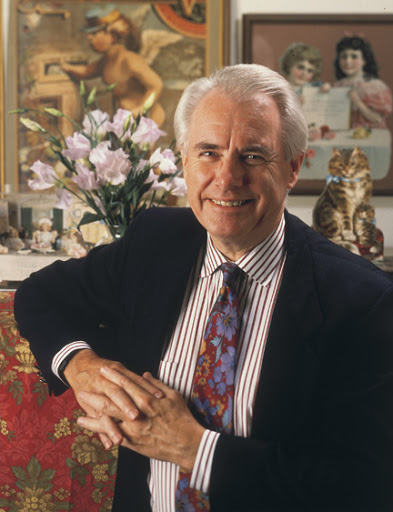
The Grossman Collection at Winterthur Museum

Mr. Grossman was the founder of The John Collection of Antique Images assembled 1974-2012 as one of the foremost collections of graphic ephemera in the United States and maybe the world. Over 250,000 printed and handwritten paper artifacts representing the finest commercially printed images produced approximately between 1820-1920 form a comprehensive portrait of Victorian everyday life.

johngrossmancollection.com

John Grossman, born in Iowa in 1932, had a fascinating career – one that included a passion for art starting in high school and into his adult life. He served in the Army between 1952-1954, but returned to his blossoming art career in San Francisco, where he worked as a lettering artist. A few years later, he spent time at the Sorbonne in Paris and then returned back to San Francisco. In 1967, he was appointed Vice Chairman, and later appointed Chairman, by Ronald Reagan to the California Arts Commission. His painting, “California Golden Hills” was presented to the Emperor and Empress of Japan by Ronald Reagan. In 1984, with his wife, Carolyn, he founded a stationary company, The Gifted Line, which had a strong interest in Victoriana. The Grossmans have been prolific emissaries of Victorian culture and have also had an impact on the history of California arts. Mr. Grossman passed away in 2016 and his collection is now available to view at the Winterthur Museum in Delaware. The collection of 250,000 images documents life in America between 1820 to 1920. Among the collection’s pieces is the first commercially released Christmas card, commissioned by an English artist in 1843.

A member of The Ephemera Society of America since 1981, and a past member of the Board, Grossman was the recipient of the 1990 Maurice Rickards Award presented by the Society for his promotion of the public awareness of ephemera. His research paper, “Chromolithography and the Cigar Label,” was presented at the Society’s fifth symposium in Colonial Williamsburg, Virginia, in 1995. It was published in The Ephemera Journal, Volume 9, 2001. His presentation “Labeling America'” on the George Schlegel Lithographic Company, was given at the Ephemera 25 Conference, 2005.

johngrossmancollection.com

I have personally always adored Victorian related ephemera. My mother has passed down her love of greeting cards to me, and I found a particular passion for learning about Victorian calling cards. Cards during the Victorian era, in particular, are not only aesthetically pleasing, they also embody a hospitality and care, and overt loving nature, for those around you. I was first introduced to the images of the Grossman Collection by seeing the stamp of it on a Punch Studio branded card collection I had. I later learned of how prolific this collection is and also how Mr. Grossman made an extensive impact on the arts in California in particular. Mr. Grossman’s collection is unrivaled in its nature and its comprehensive imagery is especially unique in telling the story of how Victorian life and arts presented itself to people of that era, between 1820-1920. Beyond a far gone era, the charm and artistic value of the Grossman Collection will remain timeless.