
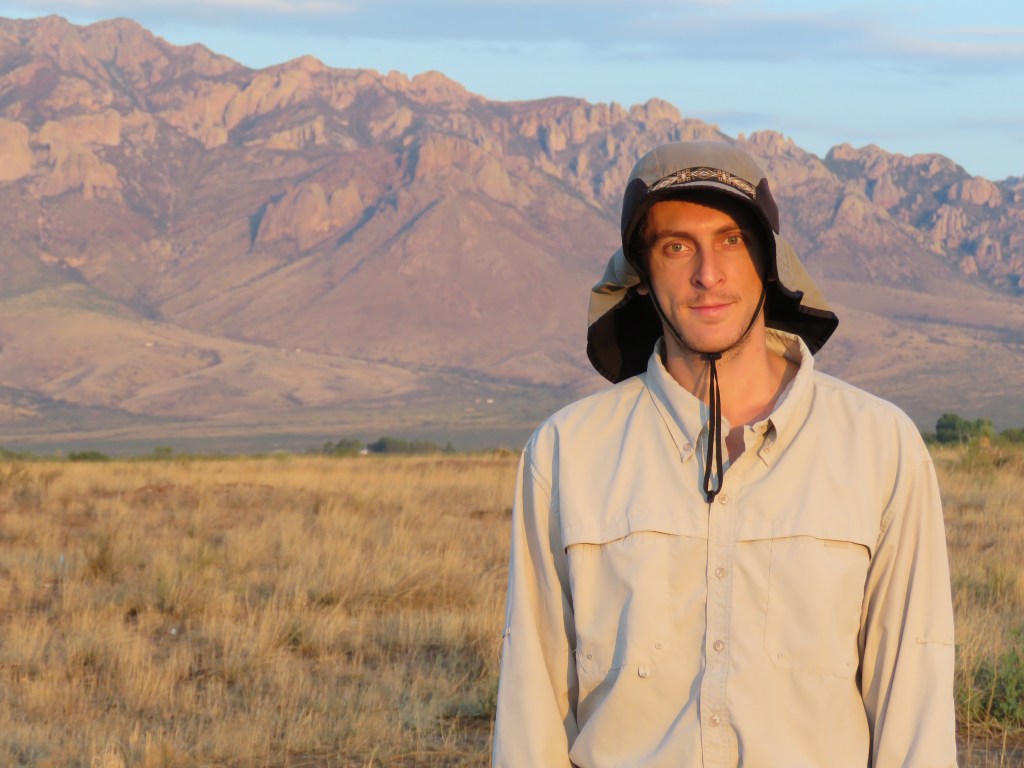
About Daniel Ari Friedman
Daniel Ari Friedman received his PhD in Ecology & Evolution in 2019 from Stanford University, where he studied the genetics and neuroscience of collective behavior in ants. He received his Bachelors in Genetics from the University of California, Davis in 2014. Daniel is currently a postdoctoral researcher at UC Davis where he works with Professors Brian Johnson (UC Davis) and Tim Linksvayer (Texas Tech) researching the evolution of insect genomes and gene expression.
Daniel is a Partner in Remotor Consulting, a consultancy focused on education for remote teams, and at FM Analytics, a group exploring predictive models and financial assets. At the end of a tumultuous 2020 he co-authored a book with Richard J. Cordes entitled The Great Preset: Remote Teams and Operational Art. This book is a compilation of research from 2020 related to online communities, maps, narratives, memes, games, high-reliability organizations, and more. Daniel is also a talented artist and draws in his spare time. You can find his Flickr art portfolio here.
Daniel is actively involved in science participation efforts such as the Active Inference Lab and Complexity community of practice. During graduate school he co-organized the Stanford Complexity Group, presenting a range of educational and interactive events related to Complexity Science in academia and beyond. Since 2019 he has been a co-founder and co-organizer of Complexity Weekend which focuses its mission on creating lasting impact by forming diverse global teams that use Complexity as an approach to address the pressing problems of our time.
Our conversation spanned from his research in academia, to broader discussions related to art and science participation. Complexity served as a lens to understand how online communities are like ant colonies and like other kinds of networks. Daniel generously shared his thoughts for this interview. You can find his website here to learn more and find updated information.
Our Conversation
Daniel, you are currently a postdoctoral researcher at University of California, Davis, and you graduated from Stanford University with a PhD in 2019. Congratulations! Can you provide a high level summary of your dissertation and research focus on the collective behavior in ants?
Thank you, Bianca, for all these great questions! It is inspiring to see all the excellent work and interviews you’ve done since we met each other while undergraduate students at UC Davis.
Working with my PhD advisor Professor Deborah Gordon and many collaborators, my dissertation research from 2014-2019 was about the ecology of foraging behavior in red harvester ant colonies. Ant colonies regulate their foraging activity in a dynamic and adaptive fashion, even though individual nestmate ants do not know how much food the colony has, or how favorable the outside world is for foraging. In long-term observation studies on a population of harvester ants, Professor Gordon had found that colonies of the same ant species at the same field site display persistent behavioral differences in how they respond to environmental changes. To explore how molecular differences were associated with this variation among colonies in the regulation of foraging, we used methods such as gene expression analysis, measurement of brain chemicals, and pharmacology in the field.
We found that variation among ant colonies in collective behavior was associated with physiological differences related to water loss, neurotransmitter metabolism, and hormone signaling. Previous studies had considered the molecular biology of behavioral differences among ants within a colony (for example reproductive vs. non-reproductive nestmates), usually in lab settings. Our research was some of the first that looked at how epigenetic and neurophysiological variation among ant colonies was associated with collective behavioral differences in natural settings. The work was interesting to carry out, because many types of techniques were used inside the lab and outside in the field (literally a field in southeast Arizona). Also ants are awesome; we will return to this point later.
What is your work as a postdoctoral researcher like now? Especially given the remote nature of everything or can you go into the lab?
As a postdoctoral researcher, I have some more freedom to set my own agenda with respect to research, teaching, and service projects. Heading into 2020, I had proposed research that was mostly computational, involving teams of remote collaborators. So during 2020 and into 2021, we have been able to continue this research safely. I was working from home for much of 2020, and these days work mostly from an office on UC Davis campus. The main things I am researching now are insect genetics and online communities.
Your studies have a fascinating emphasis on the overlapping nature of ant behavior and how they comprise a living network. This reminds me of other kinds of networks, such as social or neural networks, and Complex Systems Theory in general. Did your studies in ant behavior bring you to this passion that you have for Complexity?
This is awesome how you have phrased it, as an overlap between the general properties of nature and the specific cases of ant behavior (the “Minute particulars” as William Blake might have called them). Yes, I would say that studying ants has provided a space for cultivating an enthusiasm for Complexity. Ants themselves are like Complexity, because they are found almost everywhere, transcend mono-disciplinary approaches, and are enticing for curious investigators of all ages!
Here is how I got from ants to Complexity: ants have a long history of being studied by many different disciplines (biology, computer science, philosophy, etc.). At the same time, ants are very approachable; they are found on/under the ground in various ecosystems, on all continents except Antarctica. By pursuing the fascinating characteristics of the ant colony over the years, I got involved with a few dimensions of Complexity. The approach and community of Complexity helped me see patterns across different systems – for example how is the ant colony like a brain, an economy, or the internet? Once I was “learning by doing” by co-organizing events (with the Stanford Complexity Group, and later Complexity Weekend), it was like a positive feedback loop.
You are a co-founder of Complexity Weekend, a community of practice where people come together to share ideas, form teams, and work towards problem solving together. Complexity is a lesser known term outside of the science world. Since you are deeply involved in this community, what do you think is its best definition? How can people get involved?
Complexity means many things to many people: part of the fun here is that we all have our own unique perspective and lifelong Complexity journey. Complexity for me is about finding patterns across systems and co-designing policies for an uncertain world. It is related to topics like systems thinking, design, innovation, cybernetics, synergetics, and more. Complexity is like a beginning point for a story or group discussion, not an endpoint or synonym for “intractable”.
Complexity draws on the STEM fields (Science, Technology, Engineering, Mathematics) as well as areas such as art, philosophy, history, and intercultural communication. There are theoretical aspects to Complexity, but also active practitioners across sectors such as social work, law, design, facilitation, and performance. In Complexity we are often interested in the developmental, contextual, and dynamic aspects of a system, as opposed to merely the superficial traits. That’s what makes it a deep yet accessible approach and community: in light of all of these big topics, we can always return to “beginner’s mind” and our roles in team projects!
It is great if people want to get involved. All backgrounds, locations, and levels of expertise are welcome to check out complexityweekend.com to participate in Complexity Weekend. To learn more about Complexity in general, people could check out the excellent #ComplexityExplained resource or the online offerings from the Santa Fe Institute.
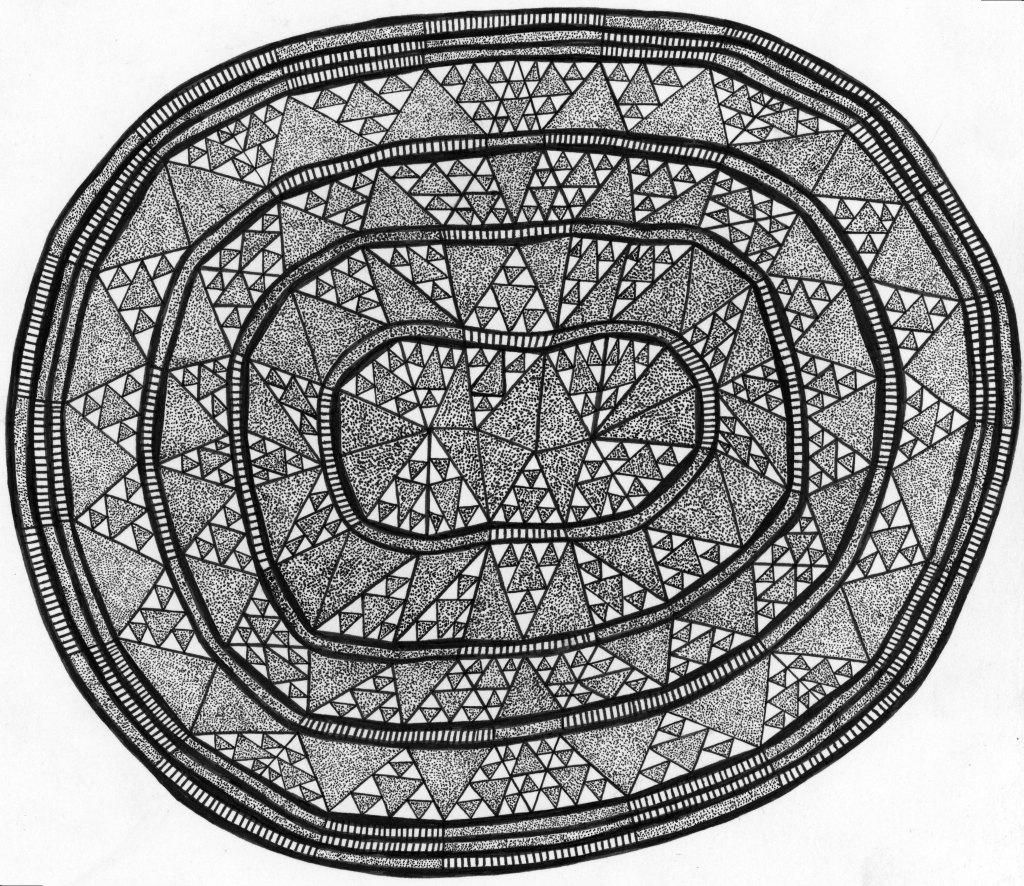
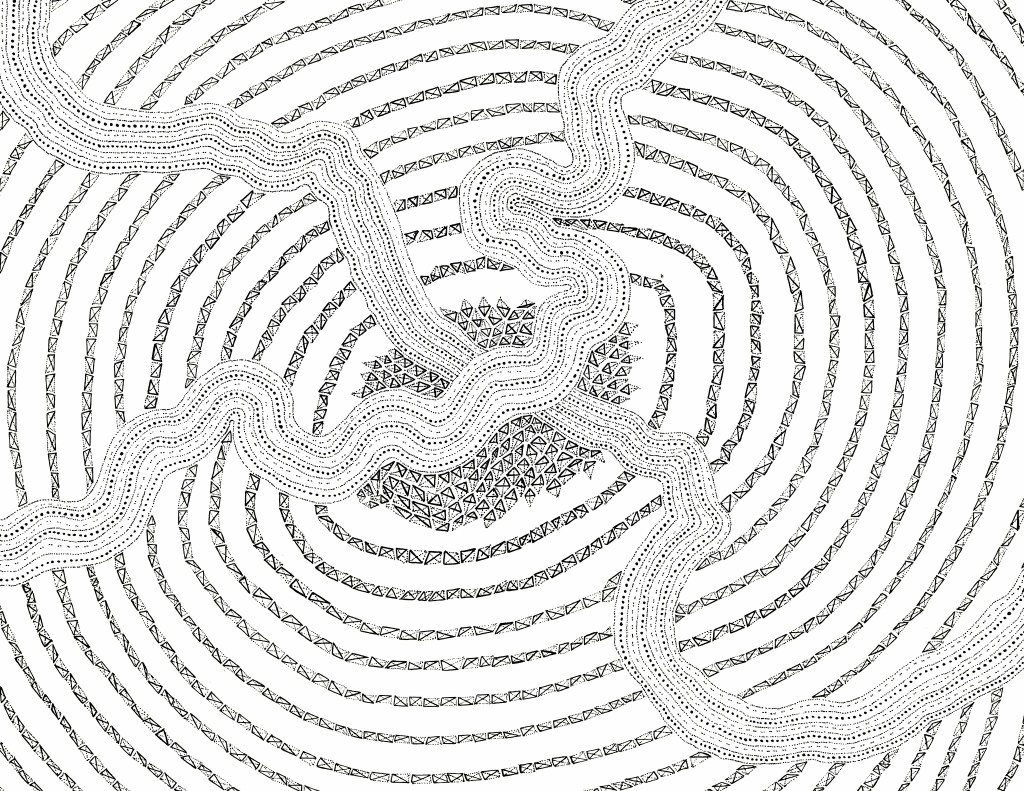
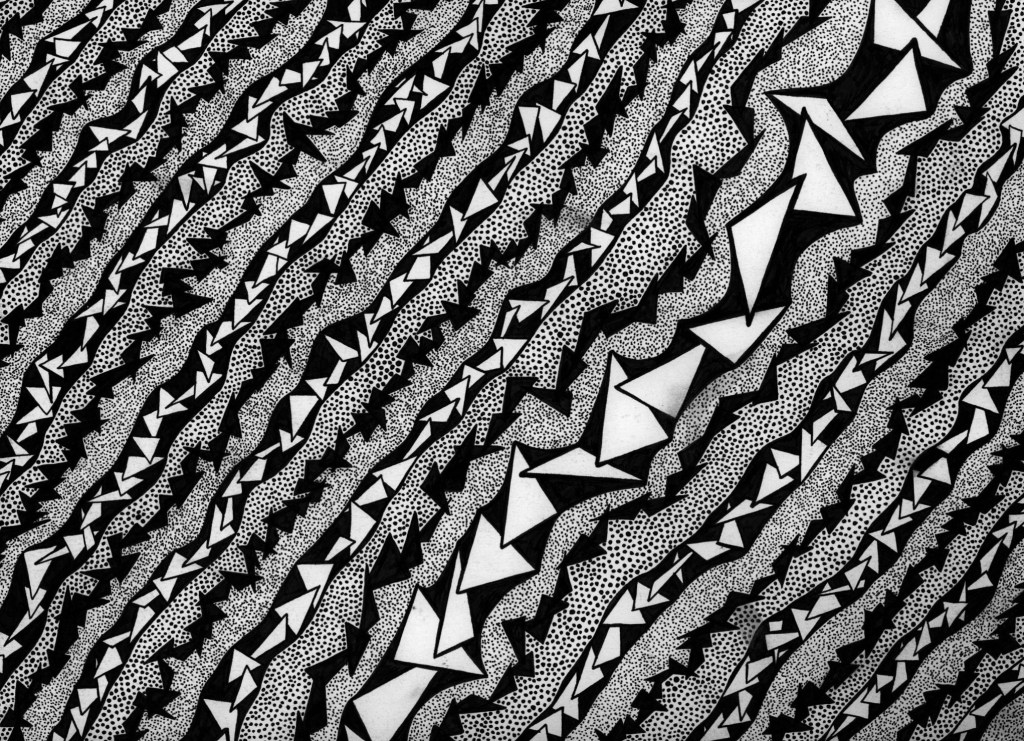
In addition to your scientific work, you are a talented artist! Your artworks show an incredible amount of precise detail. Your art feels unprecedented. How long does it usually take you to complete a piece? Do your artistic endeavors help you destress?
I have been practicing drawing since I was in high school. Between high school and graduate school, I only did abstract black & white drawings that took perhaps 10-20 hours each. Since starting graduate school (before/after this drawing), I have been experimenting with rapid production (less than 1 or 2 hours) as well as the use of words, symbols, and colors. Art helps me develop aesthetically, have quality analog time, connect with my values, and engage in nonlinear idea integration.
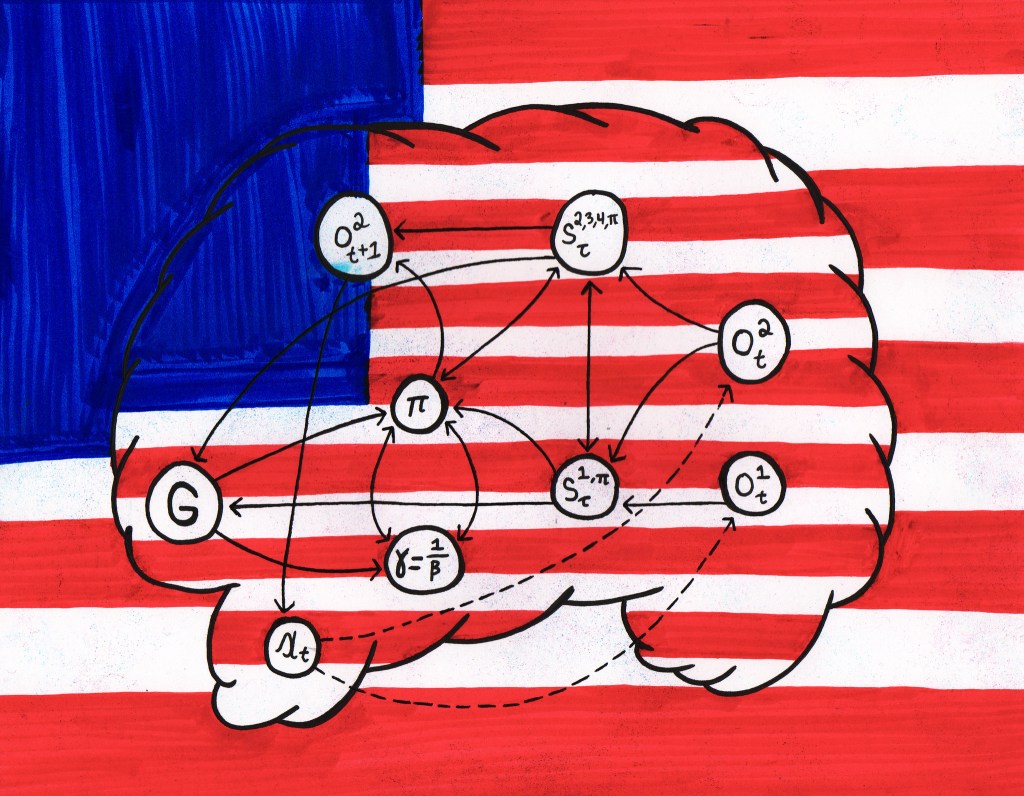
If people have requests for a drawing of a specific word/idea, I am usually open to fulfilling those commissions. If I have no suggestions from the outside world, I tend to default back to drawing things like triangles, tetrahedra, eagles, flags, memes, waves, fire, ants, etc.
Also improvisational drawing can be a social activity. Along with my partner, Alexandra, we have published a paper in 2018 exploring how partner and group drawing are related to topics such as relationship health, narrative co-construction, and neural synchrony.
Your art recently took on a more overtly political nature, with a reverence for the United States and humanism combined. Is the complex system of politics we exist within part of what has made you more reflective on patriotism and art? It’s a combination that has my interest piqued!
This is a great phrasing and a challenging question. In some ways, the drawings are the traces of my working through some of these ideas in your prompt. Art is an experiential process and I’d say that the drawings are their own sole representation – it’s out of my hands now. Elsewhere I have provided commentary on a USA-themed drawing and I hope to write and draw more on this topic in the future.
The simple answer about the patriotic drawings is that sometimes I want to make a drawing that is templated off of a recognizable image, such as a famous photo, poster, or emblem. This “seed image” helps scaffold the intention for the session. At different times in my life, I have found inspiration from different images that resonate with me as a American citizen and as a human (invoking faith, honor, fidelity, vigilance, inclusion, participation, etc.). In this way drawing is an activity to explore themes that I cherish, while also remixing, evolving, and contrasting different motifs.
The song “Hail to the Chief” is the personal anthem or “theme song” of the President of the United States. I don’t think this song is explicitly or originally about drawing, though there are versions of this song containing these powerful words: “Flourish, the shelter and grace of our line!” I strive for the day when humans will come together across perceived dimensions of variation, and flourish within the shelter and grace of lines improvisationally drawn together.
I understand from reading your work, that ant colonies behave like a single connected entity, and can serve as unique research systems for network studies and collective behavioral purposes, correct? What do you think the future of applying research from ant behavior and networks can look like? It’s a multi-disciplinary topic indeed, but I think your work speaks volumes for how it has a wide ranging application.
Cool questions! Starting with the first inquiry about colony-level behavior: Yes it is the case that the ant colony operates as a coherent entity, but this does mean that there is any magic or non-local mind control communication occurring among nestmates. Rather, each nestmate is sensitive to the type and rate of different kinds of local interactions they experience. These interactions are mostly chemosensory; they are like taste or smell (the antennae of the ant can detect many types of chemicals). Depending on the nature of these interactions, the nestmate becomes more or less likely to perform certain behaviors in the short term, and over longer time scales these interactions shape the physiology and gene expression of the nestmate. Also the ants are embedded within feedback loops of environmental modification, this is called stigmergy.
Over the generations, colonies consisting of nestmates that implement successful decentralized algorithms for survival, architecture, and reproduction, will persist. Colonies that are composed of nestmates with maladaptive behavioral proclivities, will cease to exist. The ant colony is really an organism in the evolutionary sense (e.g. not a “superorganism” made up of smaller organisms). Thus nestmates are tissues within this organism (nestmates are tissues that move, like blood cells in a body). So in a sense, the way the colony operates is a lot like the way a cell, or organism, operates – Complexity!
As for “applied ant research,” I think we can work to make the future bright here (or maybe one should say, make the future smell good?). There are several domains I am excited about here. One area to watch would be in logistics, transportation, and robotics – could ant swarms help us understand how to design resilient supply chains, urban commutes, and emergency protocols? This will be important as aerial and terrestrial autonomous vehicles are increasingly interacting with swarms of humans.
Another area of application for ant research would be based upon this analogy between ant nest architecture and online systems design (whether small remote teams, or large distributed communities). In this realm of “digital stigmergy” it is interesting to think about how automated or human actions online (like edits to a wiki, or activity on social media) reflect the modification of a socio-technical or informational niche. This modification then changes the probability that some other agent performs a modification, and/or that some kind of action occurs “in the real world”. By studying the evolution and ecology of ants in natural settings around the world, we could understand what kinds of algorithms for communication and resource distribution are effective in different ecological settings. Then perhaps some features of ant colony resilience, decision-making, and information propagation would be transferable to digital ecosystems. The only way to find out is to keep on digging and foraging…







 rosybvm.com